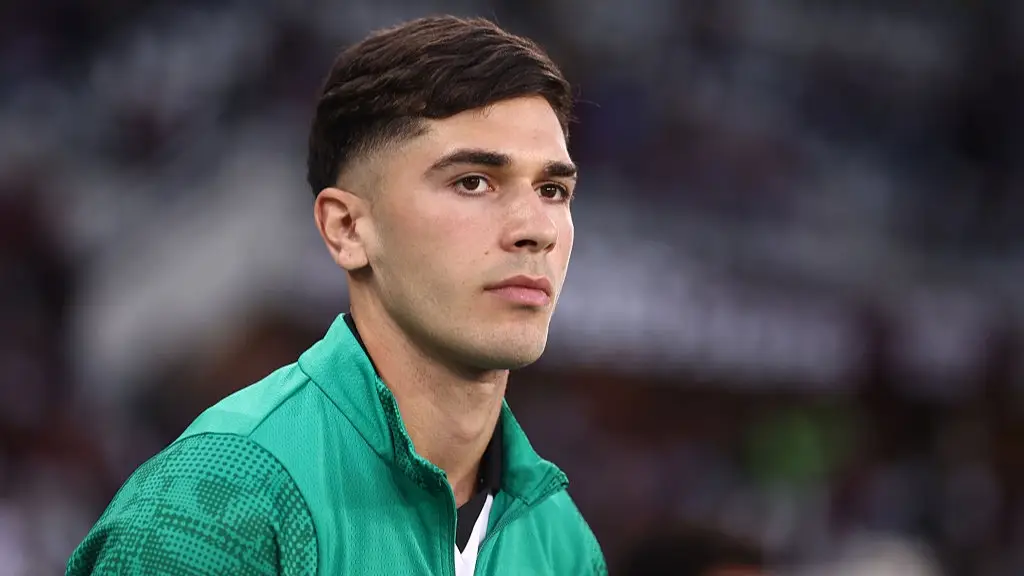
Italian international switches allegiance to play at World Cup for other nation

A player who had hoped to represent Italy at the upcoming 2026 FIFA World Cup will now represent another nation at the tournament after switching his international allegiance.
Italy failed to qualify for the North American tournament, which will feature 48 teams for the first time, after losing to Bosnia and Herzegovina on penalties in the UEFA play-off back in April. As a result, the four-time champions will miss a third successive World Cup.
While Italy will not compete, the usual suspects such as Spain, Germany, England, Portugal, France, the Netherlands, Argentina and Brazil will all be hoping to lift the trophy on July 19.
Meanwhile, several nations will make their World Cup debuts, with minnows Curaçao and Cape Verde among those making their first appearances at the finals.
Advert
Despite Italy not qualifying, Italian youth international Cristiano Volpato, 22, may still feature after being included in Tony Popovic's preliminary Australia squad. This comes despite him previously turning down the chance to play for the Socceroos at the previous tournament in Qatar, as he did not want to make a "rushed decision" regarding his international career.
Australia's final 26-man squad will be announced on June 1.
Volpato was born and raised in Sydney, New South Wales, Australia, but holds dual citizenship, allowing him to represent Italy at Under-21 level. He has also played for Italy at Under-19 and Under-20 level.
In 2020, he left Sydney to join Roma's academy before signing for Sassuolo in 2023. Volpato has registered seven goals and 11 assists in 72 appearances for the Serie A side.
Australia will face Paraguay, the USA and Türkiye in Group D of the tournament.
What are FIFA's rules for switching nations?
As you may know, several well-known Premier League players have represented more than one nation at youth or senior international level.
Manchester City winger Jack Grealish is one example, having played for the Republic of Ireland at youth level before going on to win 39 England caps at senior level.
Declan Rice, arguably more controversially, even played three friendly matches for the Republic of Ireland before switching allegiance and going on to win 72 caps for the Three Lions.
Put simply, if a player has dual nationality and has represented the nation they are leaving only at youth level, they are permitted to switch.
If a player has featured for the country they are leaving at senior level but also holds another nationality, they can still switch, provided they have not played for that country since before turning 21, have not made more than three senior appearances, at least three years have passed since their last international appearance, and they have not represented that nation at a major tournament.
Players can also switch if they lose their original nationality without their consent due to government rulings.
Topics: FIFA, Football, Italy, FIFA World Cup
 Luke Davies