F1 and F3 trainer reveals gruelling physical and mental work drivers must do for each race ahead of British GP

Single-seater motorsport at the highest level, led by Formula 1, is like no other when it comes to physical and mental fitness, with drivers having to work all year round towards very specific regimes.
For instance, when F1 drivers apply force on the brake pedal under heavy braking, it is measured that they experience a G-force of up to six - equalling six times their own body weight.
For a driver whose body weight is 60kg, as an example, they would experience a force equivalent to 360kg on their bodies under the highest pressure scenarios.
What that means in simple terms is that a driver's neck is the most important part of their body when it comes to physical training, as the average human neck simply would not be able to withstand that level of G-force for any sustained period of time.
Advert
Drivers are also trained to be able to withstand the even higher G-forces caused by major crashes. In 2007, BMW's Robert Kubica escaped with only minor injuries after a 75G crash at the Canadian Grand Prix, and only missed a single race as a result.
But there is far more that goes into preparing race drivers for the gruelling nature of competition, spanning well beyond the physical side and into the mental side of motorsport.
Racing driver trainer Ben Jacobs, who previously worked with former Williams driver Logan Sargeant from F3 all the way up to and including F1, is currently training F3 star - and fellow Australian - James Wharton during the 2026 season.
"Especially with these younger drivers, everyone is different. Everyone struggles, sort of, in different ways," Jacobs explains to SPORTbible.
"The neck is definitely a big part of it all. Your upper body, your shoulders, your arms - it depends how heavy the steering is, how hot or cold it is. All those track conditions play a big part in the physical challenges.
"And we're halfway through the European season, so fatigue will play a part in it all. It's about trying to refresh the drivers physically and mentally as well.
"Every driver's a bit different in how you prepare for it all. With my driver at the moment, he's trained extremely hard over the winter, so it's more about just topping it up now. It's sort of just topping up again, with a bit of strength and that kind of stuff. Recovery plays a huge part in it all.
"So it all depends on the driver, but you definitely want to focus on the core group of your neck, your upper body... your core plays a huge part. And you'd be surprised how much your lower body moves in the car. The lower back takes a lot of strain, so your glutes and your trunk area has to be very strong so it doesn't put a lot of pressure on your lower back."
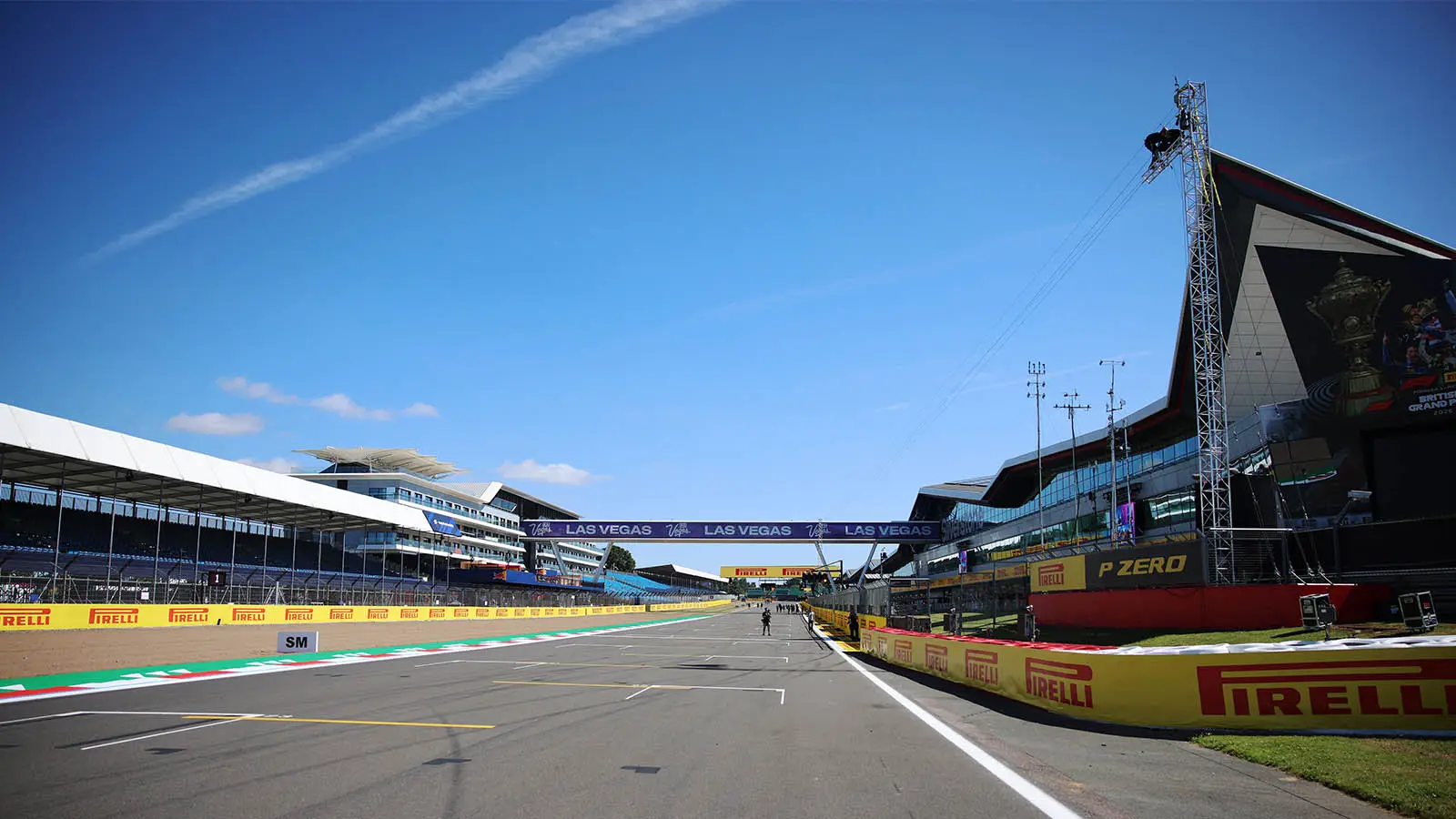
F3 is at Silverstone this week as one of the support series for the main British Grand Prix, with a sprint and feature race taking place.
Wharton finished in 10th place in the sprint as the second-highest finishing Prema Racing driver, and will start Sunday morning's early feature race from ninth on the grid.
The free-flowing nature of the Silverstone circuit, coupled with its high number of high-speed and medium-speed corners, makes it one of the more unique propositions on the calendar for drivers and, although conditions are not expected to be as hot as would be expected at other circuits, there is still a significant amount of preparation and training involved.
"Silverstone, compared to other tracks, it's definitely a driver's track," Jacobs says. "Everyone loves Silverstone. Everyone enjoys it, and I feel like it brings the best out of the drivers.
"There's a lot of great high-speed corners, and it's a very physical track. Everyone finds it a challenge compared to the Red Bull Ring [the previous race's circuit in Austria] and others.
"Trying to prepare for it, it's not like you do anything different. You're just halfway through the European calendar, so you could be on a good momentum or you might be struggling a little bit. So it will be definitely more of a mental race, because you could be going into it either trying to find that momentum, or you're in good momentum."
As Jacobs mentions above, balancing fatigue becomes even more of an important factor for drivers when it gets towards the end of a long, gruelling season at any level of motorsport - while training reaction times are vital too.
The first few corners of a race are where split-second decisions are key, and can potentially be the difference towards a race-ending crash and getting beyond the first lap and potentially fighting for the points-scoring places that are all the more significant for drivers battling up the ladder towards F1.
"Preparation is everything, it's key," Jacobs states. "So preparing for Silverstone - doing all your preparation for the track, your sim work, working through all your data with the engineers, going to the factories, preparing mentally, going through everything you need to do to prepare for when you go up to the track.
"And then on top of that, preparing mentally, and the performance side of it all. Your hydration and sleep - sleep is a crucial one, definitely, because you know you're travelling a lot at the moment.
"And then you go into the mental side of things, and how everything's been going? What can I do differently? Is my preparation right, with the physical and mental side of things?
"Once you get to the track, it's just those little top-ups. Focusing on the visualisation, your breathing. You see a lot of drivers these days visualising, on video, corner by corner. Even with braking, and all that kind of stuff.
"There is a lot that goes into it, but if you prepare for it all, everything should be very natural, very comfortable, and you should be going into the weekend very confident."
"Most drivers, because they've been doing it for so long, their reaction speed is pretty impressive," he continues. "The speeds that they are going at are quite amazing, especially for these younger guys.
"You don't understand how quick they are going and how quick their reaction speed has to be at a lot of times. So for training that kind of stuff, what I like to do is put drivers under a bit of fatigue before they go into reaction work, focus work, or focus training.
"I try to focus on putting the mind under fatigue. There's all different ways you can do that - people like all the light work or the tennis ball work, and then there's apps you can use these days.
"Again, every driver's different. There's no one way fits all or no, this is the best way to do everything.
"I like to try and do all different kinds of things, and then you can bring in other sports as well. All the racquet sports are very good. Drivers are enjoying padel, so the padel works really well under fatigue, especially under these sorts of conditions.

"Then you've got to be adaptable as well, because there's so many different scenarios that can happen in one day, in one race. It's a lot of work, a lot of effort, and it all comes down to preparation, again."
With all that in mind, what in particular is it about racing driver training that surprises people who Jacobs comes across outside of the sport?
"Motor racing is such a unique sport, and there are so many variables outside of your own power that can influence a whole race weekend," he explains.
"So it is very hard to then train your performance and mind, mentally especially, to deal with all these scenarios. The mental side of things, especially now more than ever with motor racing because of the pressure and how much money is involved with everything, the expectation is extremely high. And for all these younger guys, you know, they start out very, very young on the road trying to make it to wherever they want to make it. So it's extremely hard mentally for these young kids.
"I think you'd be surprised how strong a lot of them are, on the mental side of things. But then, on the other side, the speed that they're going at, with the pressure that they're under, with the physical force, in these extremely hot races... if you were an [average] 15, 16, 17-year-old, trying to go at 200-plus kilometres a hour, going round these circuits. I think I just got my licence at 17, never mind doing all of this.
"On the physical side of things, you don't need to be an insane athlete, but I think when you add the physical side of things with the mental side of things, with how young they are, with all the pressure that's going on in the background, it's impressive what they can do."
 Ryan Smart