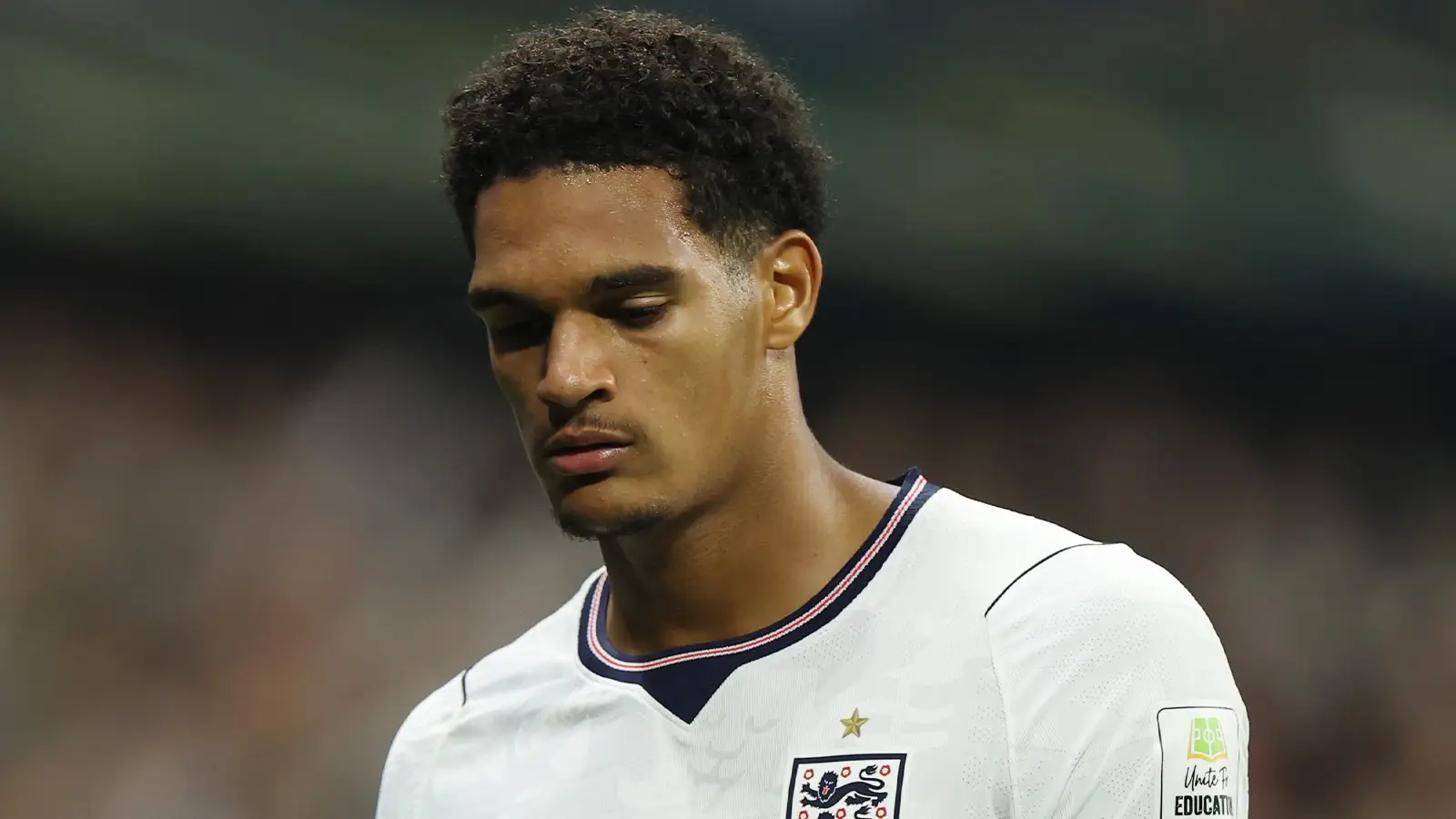
FIFA reach verdict on Jarell Quansah red card being overturned days before Norway game

FIFA have made their decision regarding Jarell Quansah's red card during England's World Cup win against Mexico.
England had to see out their lead with 10 men in the round of 16 match at Estadio Azteca in Mexico City, where the Three Lions also faced an hour-long weather delay and the stadium's 2,200-metre altitude.
Quansah was dismissed on the back of a VAR review after a mistimed tackle on El Tri's Jesus Gallardo.
Thomas Tuchel's men dug in and emerged as 3-2 winners, setting up a quarter-final tie against Norway in Miami this Saturday.
Advert
The Bayer Leverkusen defender was playing at right-back, which has become a problem position for Tuchel, thanks in large part to the injury sustained by Chelsea's Reece James.
England are expecting James to be available for the Norway fixture, but were understood to be considering an appeal against Quansah's red card.
Despite the accidental nature of the challenge and FIFA's brazen decision to suspend the ban that would ordinarily have been automatically imposed on United States striker Folarin Balogun following his red card against Bosnia and Herzegovina, the governing body have opted to exercise their right to extend Quansah's automatic one-match suspension.
FIFA can extend a player's ban after a red card in the World Cup, but many pundits will be surprised by the vast difference between the decisions on Quansah and Balogun, both of whom were sent off for accidental or mistimed instances of serious foul play.
Quansah has been banned for two matches and will miss the quarter-final and England's potential semi-final against Argentina or Switzerland.
"England defender Jarell Quansah has been banned for two matches following his red card in their World Cup last-16 victory over Mexico," reports ITV Sport.
It's been widely reported in the furore over Balogun's reinstatement for the USA's defeat against Belgium that there is no proper mechanism by which FIFA's unilateral decisions can be officially appealed.
Rob Harris of Sky Sports posted on X, formerly Twitter: "Understand FA cannot appeal against Quansah's two-match ban.
"FIFA says this with no mention of Article 27 which led to Balogun's suspension being frozen."
Given the inconsistency with which the Laws of the Game and the World Cup rules have been applied in the United States, Canada and Mexico this summer, Quansah can feel aggrieved to be missing a minimum of a quarter of the tournament for a tackle that was worthy of a red card but by no means warranted the kind of extended ban that should be reserved for aggravated offences.
FIFA continue to invite criticism over haphazard disciplinary decisions
Football's governing body and FIFA president Gianni Infantino have made a series of decisions related to World Cup 2026 that have attracted criticism and scrutiny.
The introduction of mandatory hydration breaks without consultation raised concerns about the game's format being changed in the name of commercial gain, while more serious matters at the geopolitical level have been allowed to affect the competition as a result of Infantino's lack of distance from the sitting president of a host nation.
Balogun's reprieve, the ultimate outcome of a murky review process in which Donald Trump is known to have interfered, might not be the most egregious breach of good character but it serves as a direct comparison against Quansah's extended ban.
The similarities and differences between the two are bound to raise further questions, not least among UEFA members who already have their backs up.
Topics: Football, FIFA World Cup, England
 Chris Nee