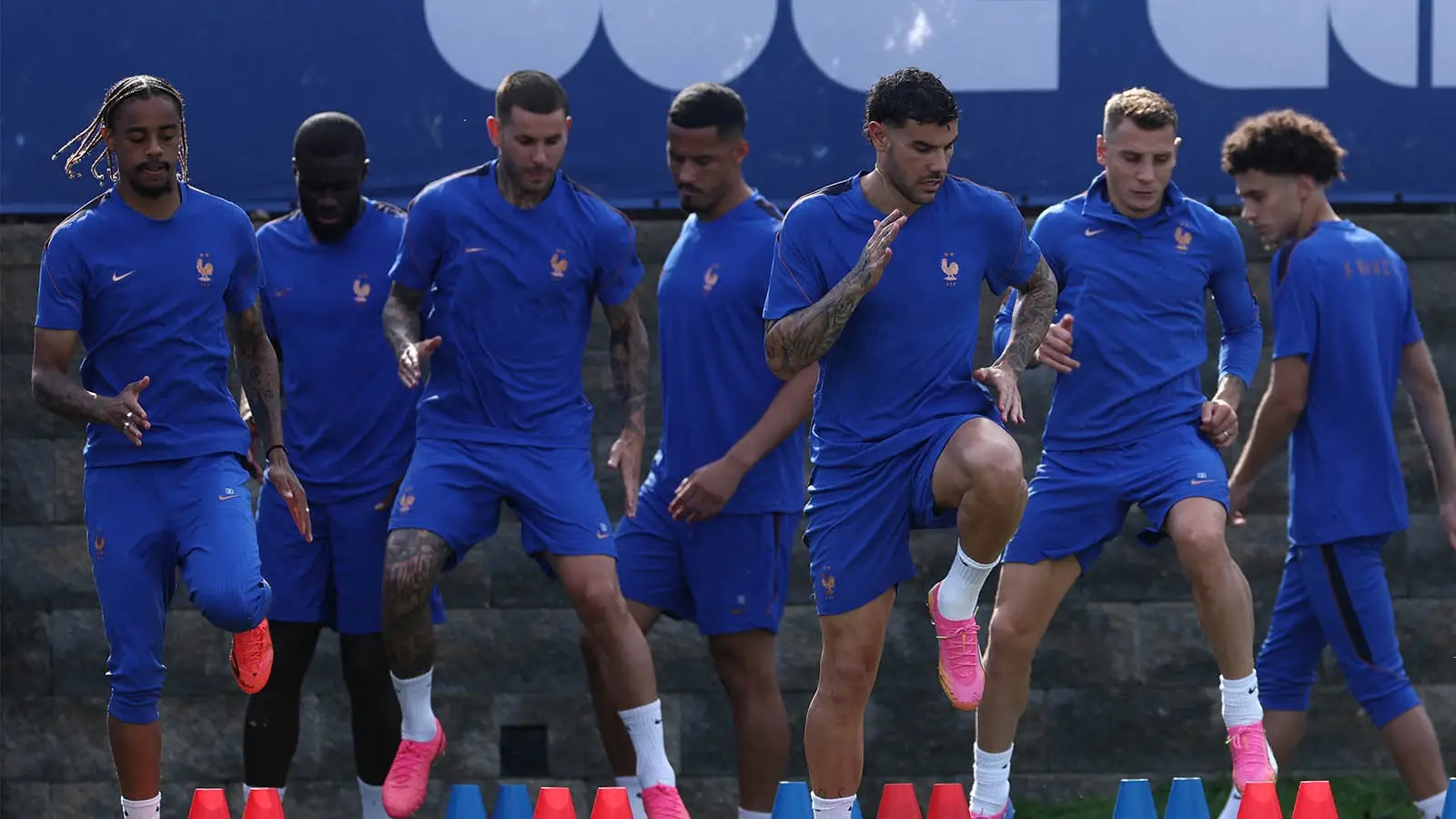
What FIFA guidance says on France vs Iraq postponement as World Cup clash under First Alert

The official guidance in use by FIFA during the World Cup has placed an Active Alert warning on Philadelphia ahead of the Group I clash between France and Iraq.
The two nations are due to kick off their second group stage match of the World Cup at 10pm UK time.
High temperatures have dominated the discussion throughout the tournament so far, particularly when it comes to FIFA's polarising use of hydration breaks during matches.
But flash flooding is a particular risk across the United States - one of three World Cup co-hosts, along with Canada and Mexico - during the months of June and July.
Advert
The National Oceanic and Atmospheric Administration (NOAA)'s Weather Prediction Center found that the peak of weather reports during 'flash flood season' - where floods develop typically within three to six hours of heavy rainfall - occurred during the aforementioned two months between 2007 and 2017.
There are fears that adverse weather will hit the Philadelphia region on Monday afternoon local time during France versus Iraq, with the threat of storms forecast.
UPDATE: FIFA suspended the resumption of France versus Iraq after half-time, with the score at 1-0 to France. A 15-minute delay, on top of the half-time interval, was enforced due to the threat of lightning strikes.
Players returned to warm up around two hours after the initial delay.
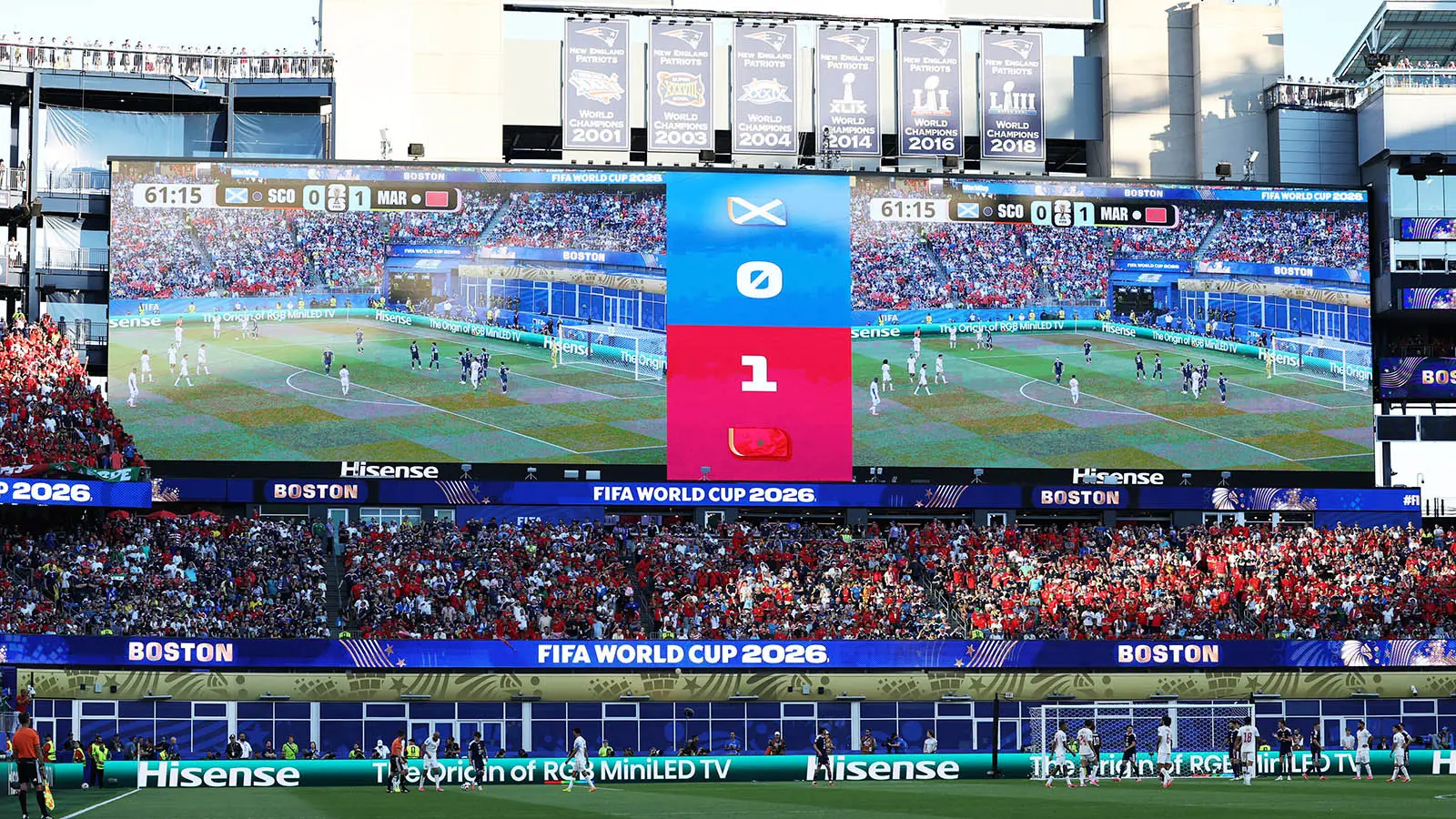
Under FIFA protocol, a game must be halted or delayed if lightning strikes within eight miles of a stadium, with fans removed from their seats.
All players must be removed from the pitch and seek shelter. Once they are permitted to return to the field of play, both teams can take part in a short warm-up, with matches only resuming once there has been no lightning for 30 minutes.
Official guidance issued ahead of France vs Iraq
Parts of the Philadelphia region have been issued with a First Alert warning for Monday afternoon and evening.
NBC10 Philadelphia forecast that there is a possibility of 'torrential downpours, damaging wind, and even an isolated tornado' during the First Alert, which will run between 3pm and 11pm local time.
Philadelphia uses Eastern Daylight Time (EDT), meaning kick-off between France and Iraq is at 5pm.
It is noted that while 'a few severe thunderstorms' could develop during afternoon hours, the greater threat is in the evening hours, through a combination of 'heavy rain, damaging wind and isolated tornado threat'.
CBS report that power outages are also possible alongside the inclement weather, which would impact technology that FIFA uses at the World Cup including goal-line technology and VAR.
The official US government guidance mandates that, in the event of a lightning strike, people should wait at least 30 minutes after the last thunder before continuing outdoor activities due to electrical charges lingering in clouds.
The three main criteria used to determine when to stop activities are if lightning is seen, if thunder is heard, or if skies look 'threatening'.
A significant lightning threat extends outward from the base of a thunderstorm cloud 'about six to 10 miles', the guidance states.
FIFA officials will monitor weather conditions, weather radars and lightning detection technology, and a lightning safety plan will be in place in the event of a severe storm.
What is the precedent for World Cup match postponements?
While suspensions for weather-related reasons are relatively rare in elite football competitions, it has twice occurred at European Championships this century.
In 2012, play was suspended just five minutes into the Euros clash between France and Sweden due to torrential rain and lightning in Donetsk, Ukraine.
UEFA rules stated that, in the event of the match being unable to resume, it would be postponed and rescheduled for the same time on the following day.
Thankfully, after a stoppage of around one hour, the two teams were able to continue the match and it was played to its conclusion.
And at Euro 2024, a severe lightning storm caused the match between Germany and Denmark to be suspended for 25 minutes.
Players initially walked over to the side of the pitch before being led back to the dressing rooms, while fans sought shelter during the stoppage.
Two big-screen viewing parties in Dortmund were cancelled, with police ordering fans to leave the area due to weather.
Meanwhile, in the NFL, officials decided to move a Minnesota Vikings at Philadelphia Eagles match in 2010 due to the threat of a blizzard in the PA region.
A 1ft of snow warning was forecast for the region, and the match was shifted back two days.
Should the weather be severe enough to cause significant delays to France versus Iraq on Monday, there is no official cut-off limit by which the game has to be played - although, clearly, there would be a point at which a decision would be made to postpone if necessary.
If the match cannot be completed, it would be resumed from the minute it was stopped on the date of the rescheduled fixture.
That would most likely be on Tuesday, with NBC10's service forecasting that showers will 'diminish overnight' and that there is no expectation of severe weather from then onwards.
Topics: France, FIFA World Cup, FIFA, US Sports
 Ryan Smart