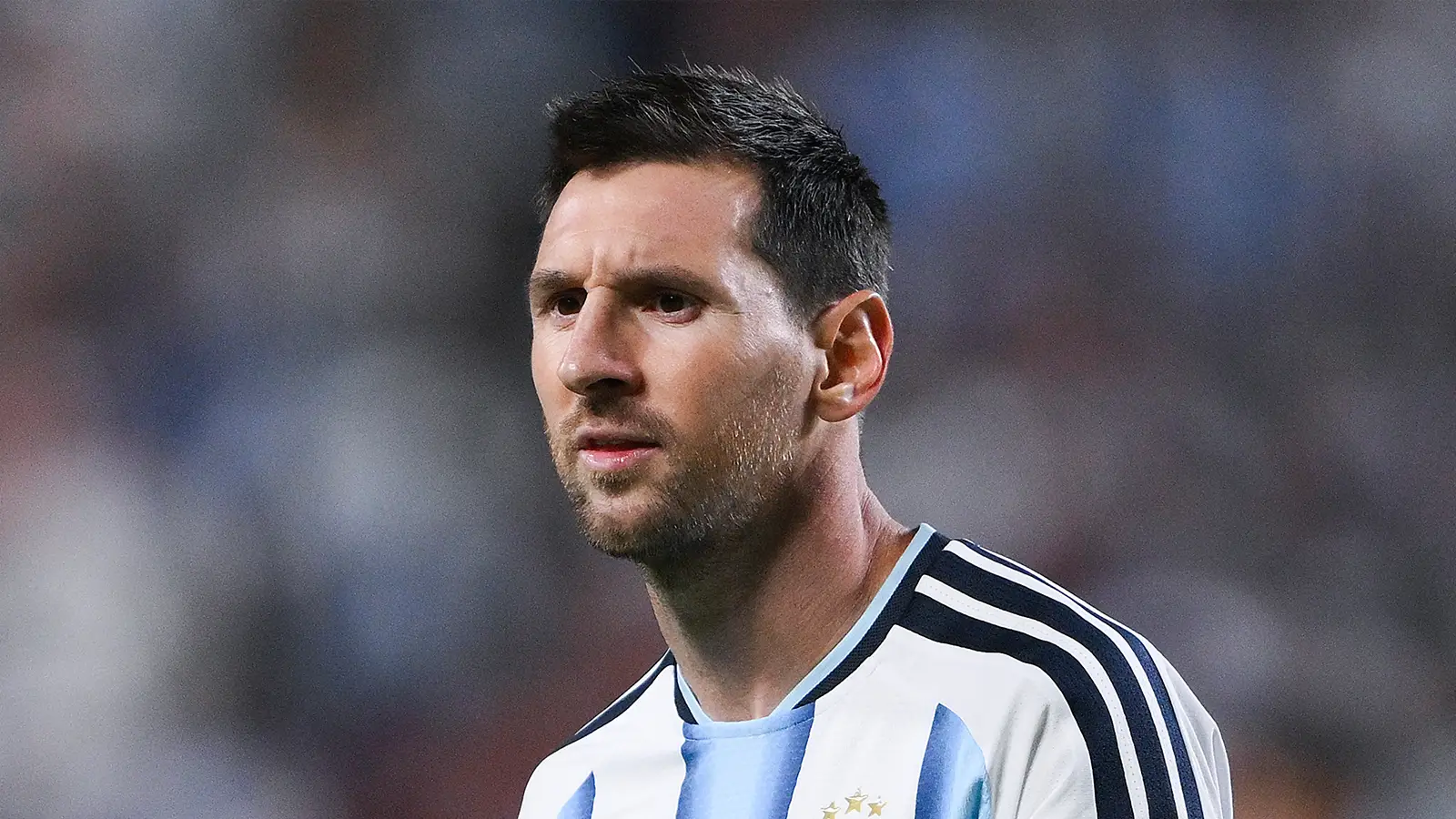
Argentina's strict national team rule which would have seen Lionel Messi banned from playing

Argentina introduced a strict national team rule this year and it would have resulted in Lionel Messi being banned from playing had it happened earlier.
The reigning world champions beat Switzerland 3-1 in extra time to set up a mouthwatering semi-final showdown with England in Atlanta on Wednesday.
La Albiceleste are hungry to win a fourth World Cup, with captain and talisman Messi scoring eight goals in his record-breaking sixth showpiece.
Messi's first World Cup came 20 years ago and he has gone on to score a record 21 goals in the tournament.
Advert
But in bizarre scenario, the eight-time Ballon d'Or winner would not be allowed to play for Argentina if he came through the ranks today.
That's because the Argentine Football Association (AFA) announced a new policy in February which prohibits players from being called up to the national team if they move abroad without penning professional terms in their native Argentina.
The idea is that the decision will protect clubs in Argentina when it comes to seeing their young players move on. The country allows players to sign professional terms aged 16 but the AFA said the move was announced because of “several recent cases (with) the application of ‘patria potestad'” - the country's parental authority laws.
READ MORE: Lionel Messi makes big claim about England as he sends warning to Three Lions players
Parents have all the power for the player's first professional contract and the club which has developed the player will only receive a development fee rather than a transfer fee.
This is what AFA chiefs are keen to discourage, with Javier Méndez Cartier, director of the Argentine Football Association's youth teams, commenting: "By decision of our President and his Executive Committee, this AFA administration always seeks to defend the interests of the clubs that develop players. Anyone who does not understand this and chooses to use parental rights to emigrate will not be called up to any youth national team."
How would the rule impact the current Argentina national team?
The AFA said the move to ban those players from joining up with national team squads was "unanimously decided".
Clubs in Argentina have produced a whole host of top players who moved to Europe at a young age, with Messi the shining example.
Although he was trained by Newell's Old Boys in Rosario, Messi joined Barcelona's famed La Masia academy as a 13-year-old.
If that move happened today, he would not be allowed to represent his country.
The same would apply to Argentina goalkeeper Emiliano Martinez after he left Independiente's youth ranks to sign for Arsenal in 2010.
Similarly, Giuliano Simeone, son of Atletico Madrid boss Diego, joined his father's clubs in 2019 after spending time in the River Plate academy and he too did not sign a professional deal in Argentina.
According to TyC Sports, the move which saw 16-year-old midfielder Lucas Scarlato move from River to Serie A side Parma without a professional deal in Argentina was the final straw which culminated in the new policy being implemented.
Topics: Argentina, FIFA World Cup
 Josh Lawless