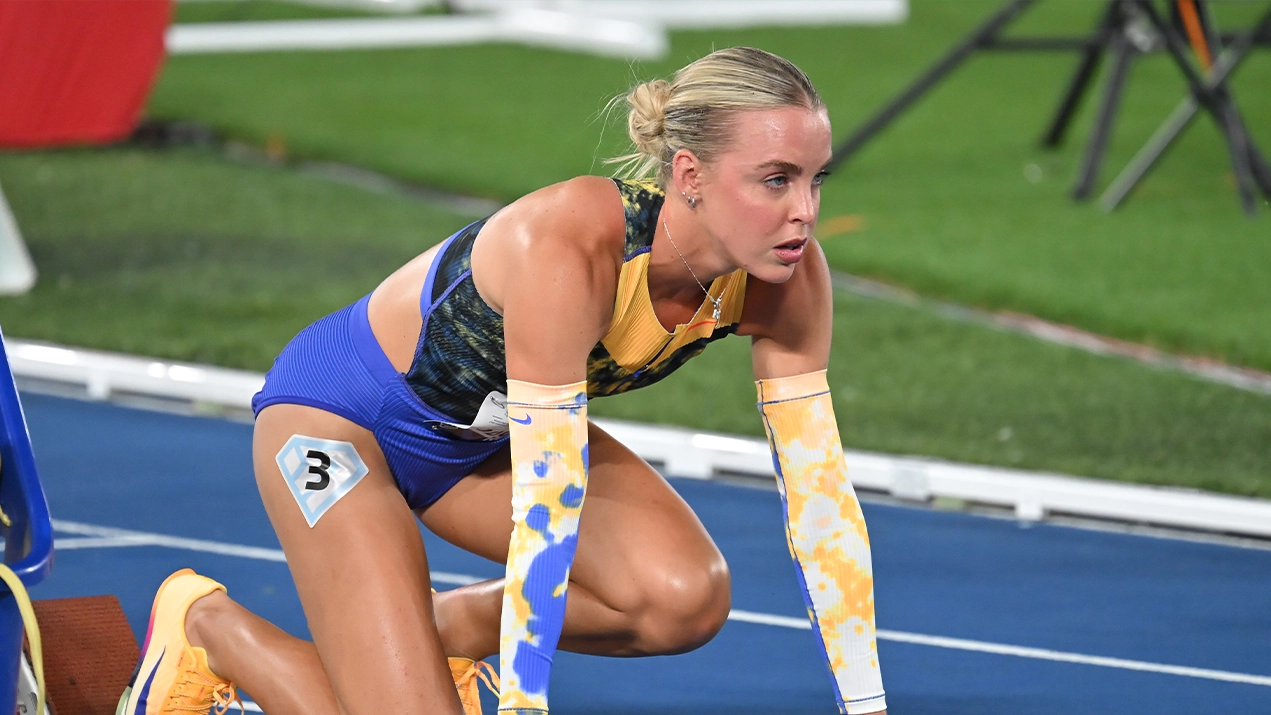
What can (and can't) be shown on TV after European Athletics crackdown on 'sexualized' coverage

Broadcasters in European athletics were advised to clamp down on the use of camera angles that sexualise women athletes earlier this week - and here is a comprehensive guide of what can and can't be shown on TV.
The European Broadcasting Union (EBU) has worked with women athletes to develop guidelines that aim to avoid sexualising the action through unnecessary camera angles.
Holly Bradshaw, an Olympic Bronze medallist pole vaulter, was one of multiple athletes who advised the EBU after previously being sent abuse and inappropriate videos of herself on social media due to the sexualised camera angles.
"How our sport is displayed during live broadcast can be incredibly powerful, yet sometimes harmful to the women competing and the women [and] girls watching," Bradshaw said.
Advert
"I first-hand have received social media abuse and witnessed inappropriate videos online of myself and colleagues when slow-motion content of us competing is captured.
"Many athletes, myself included have been in competitive scenarios where they are more focused on the cameras instead of their own performance.
"On too many occasions, cameras are zoomed in, showing super slow-motion action replays of athletes in undignified positions."
Serbian Olympic long jumper Ivana Spanovic also offered advice to the EBU and said that certain cameras during the events can not only cause discomfort, but have "serious long-term effects on an athlete's mental health".
What camera angles can and can't be shown on TV during the Athletics
Broadcasters have been made aware of what camera angles can and can't be used on TV in a 23-page document entitled 'Raising the Bar'.
It lists the 'positive' and 'negative' camera angles across four different athletic events, including the high jump, pole vault, horizontal jumps and running events.
High jump
Positive angles:
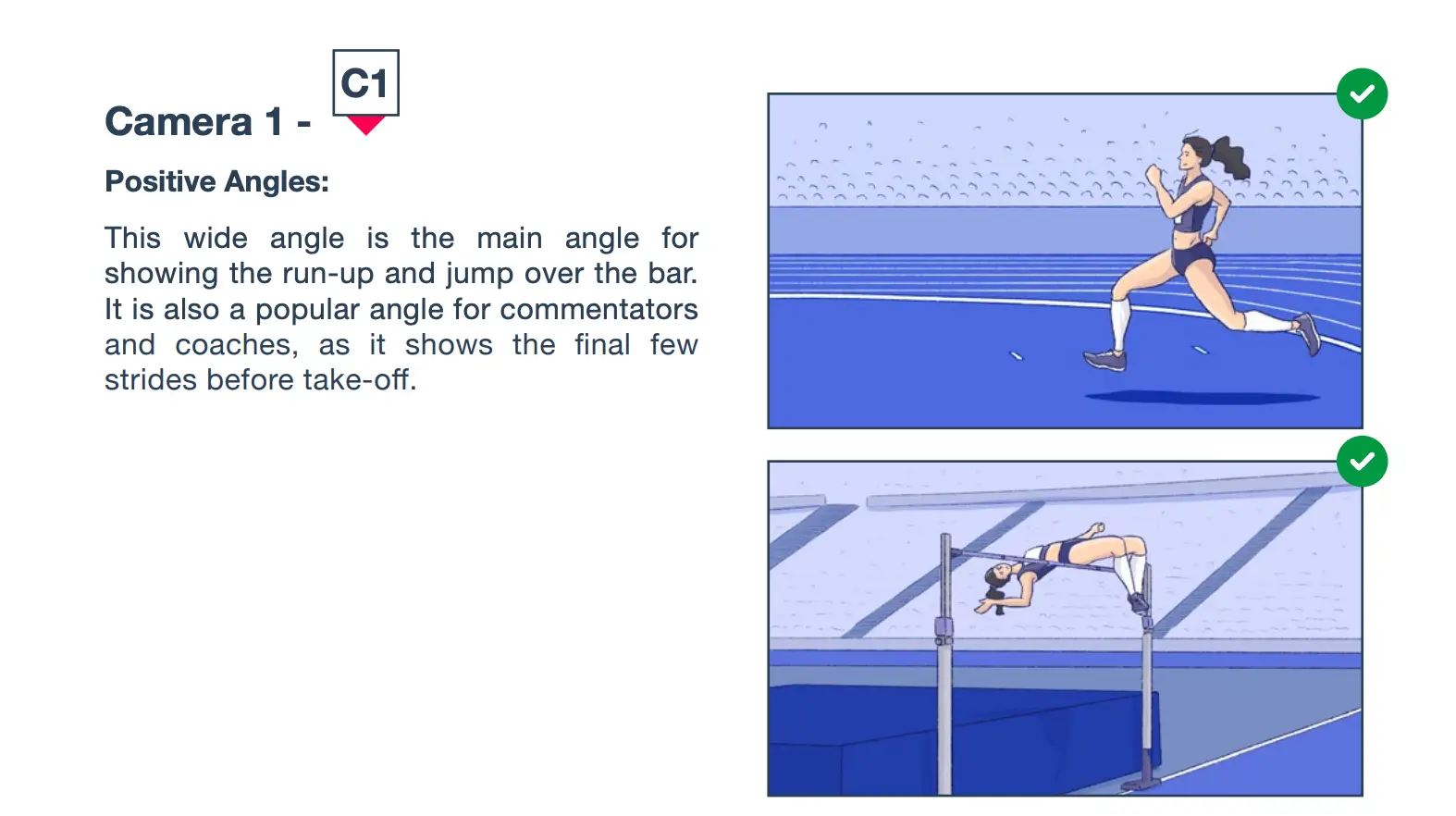
- A wide angle showing the run-up and jump over the bar. It is also a popular angle for commentators and coaches, as it shows the final few strides before take-off (Page 7).
- A wide angle for the replay, as it highlights the technique in the final few strides and provides an excellent angle for the commentator and coaches. (Page 8).
- A close-up of the athlete's face (Page 9).
Negative angles:
- A low camera angle underneath the athlete has a high chance of generating compromising images.
- A zoom isn't encouraged as it not only risks compromising the images, but it does not provide any insightful view for either the audience or the commentator.
- A slow-motion replay of the athlete going over the bar diminishes technical insight while increasing the risk of compromised images.
Pole vault
Positive angles:
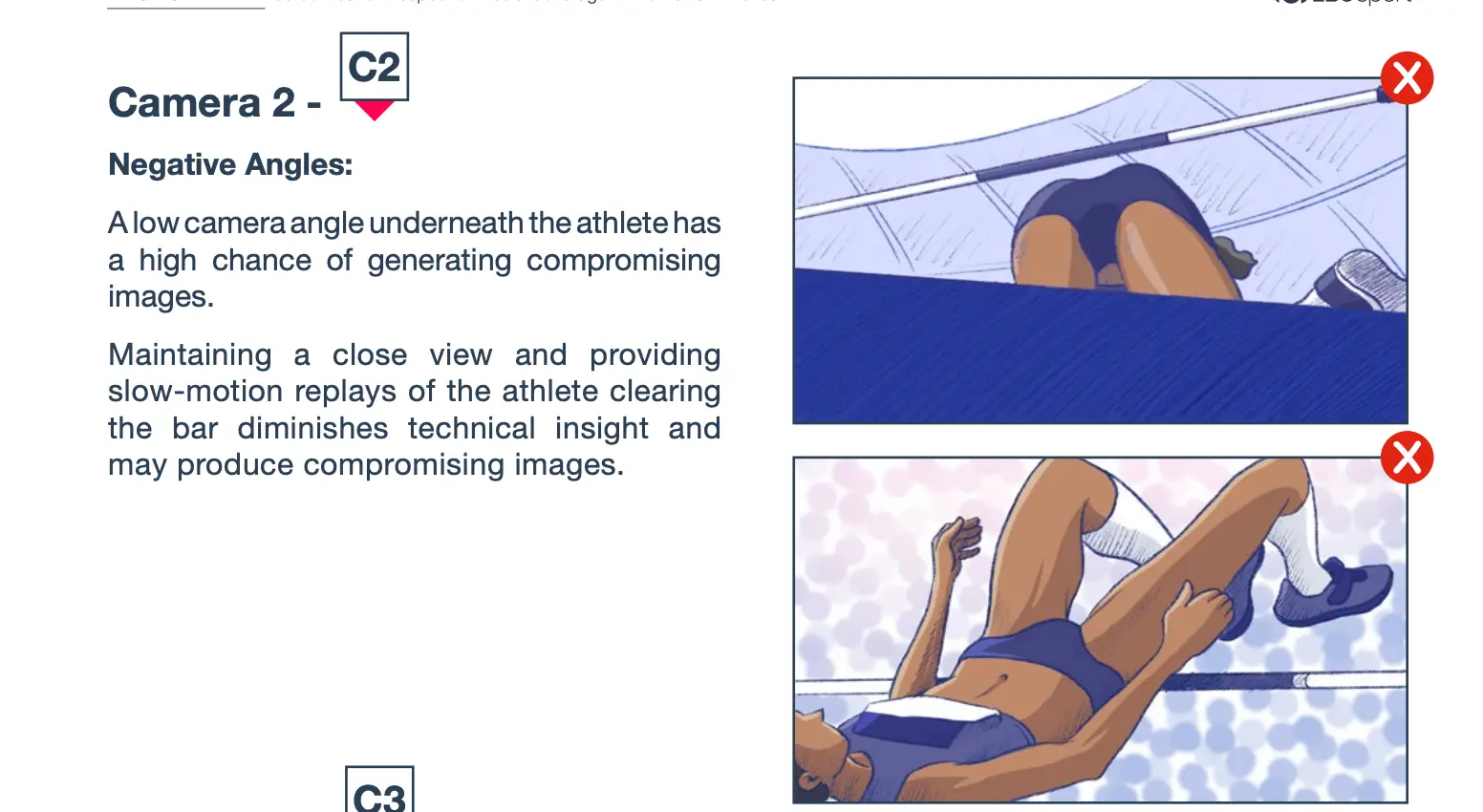
- An angle capturing the run-up and vault over the bar. When slowed down, this can also serve as a crucial replay angle (Page 11).
- Artistic shots that don't compromise the athlete (Page 12).
- An angle that animates the athlete's name before the run-up, while providing a head-to-toe angle (Page 13).
Negative angles:
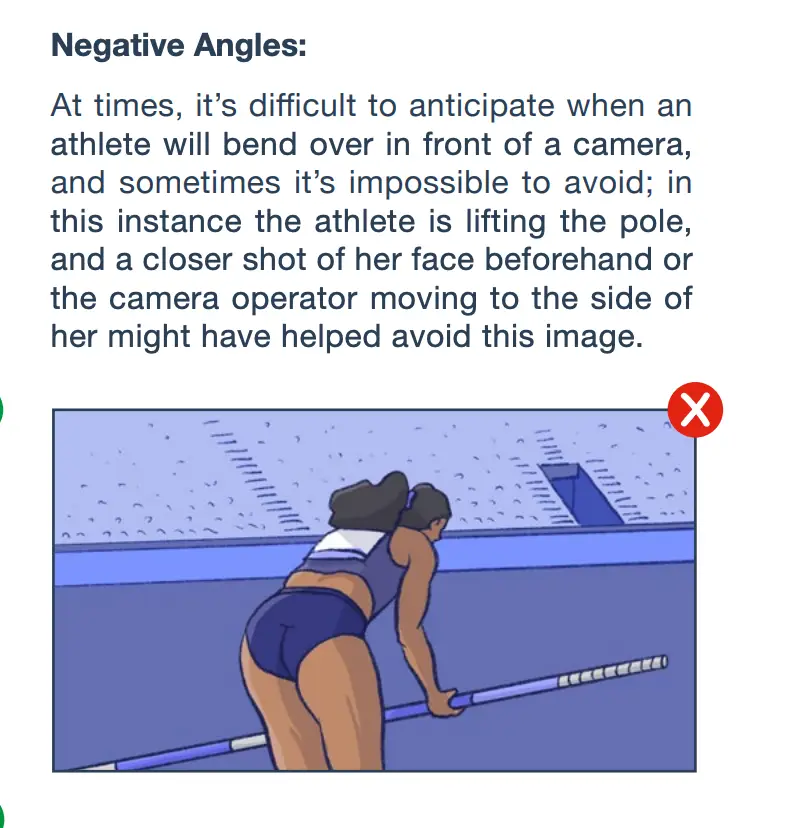
- Although difficult to avoid, an angle where the athlete bends over in front of the camera, and the operator is advised to move to the side when this happens.
- Staying tight on the athlete can result in a compromised image.
- While a roaming camera can provide artistic shots, there are times when these angles can be compromising and uncomfortable for the athlete.
Horizontal jumps
Positive angles:
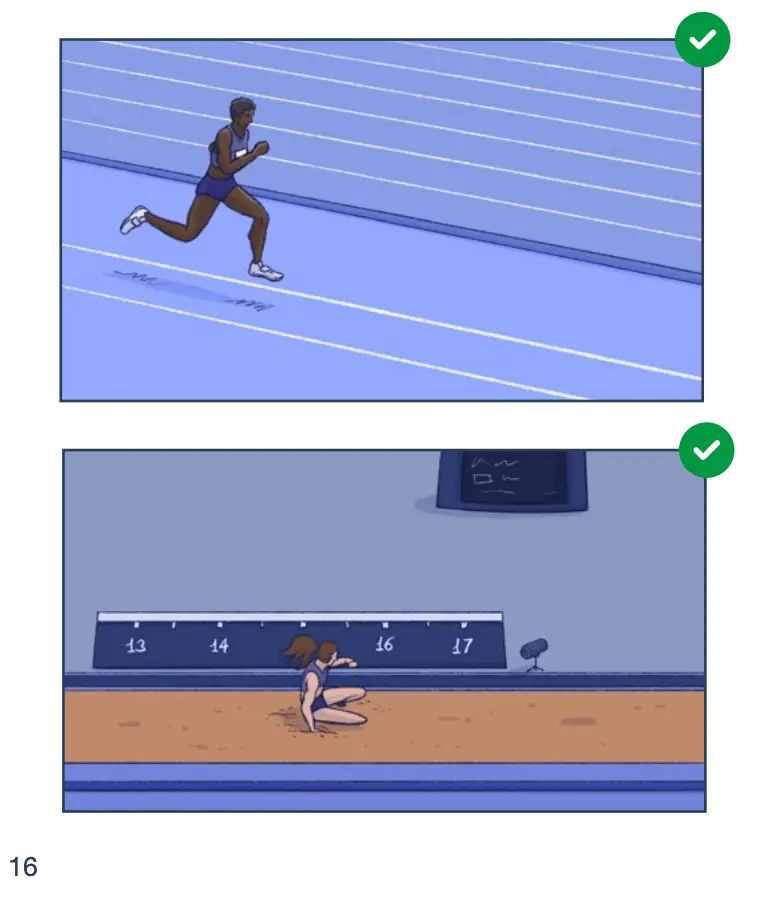
- The main angle for the run-up and jump. The camera is encouraged to stay full-length on the athlete to give the audience and commentators a technical view of the run-up and landing (Page 16).
- An angle that positions the camera at the start of the run-up to animate the athlete's data (Page 17).
- An angle that animates the athletes’ data graphic before the run-up.
Negative angles:
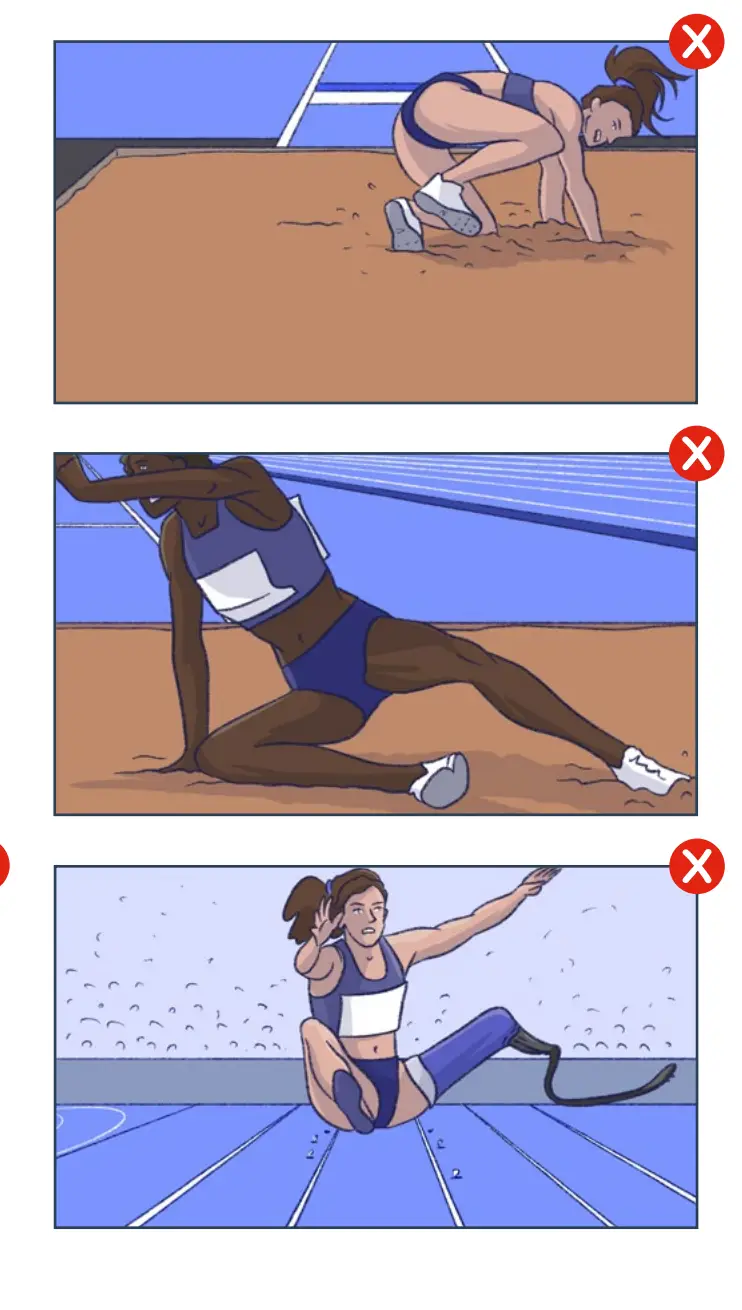
- An angle that captures the landing and exit from the sand pit is likely to produce an unflattering image.
- The roaming cameras in this instance can be uncomfortable for the athletes, particularly when the camera is positioned low or behind them.
- Any camera shooting from below an athlete has a high chance of producing compromising images.
Running events
While various camera angles can provide the audience and commentators with a technical and competitive view of the race, these angles can sometimes compromise the view of the athletes.
This includes capturing the athlete below the pelvis, as it typically produces an unflattering image. Instead, the preference is to stay in front of the athlete whenever possible or avoid very tight shots.
When could the new TV guidelines come into effect?
The new guidelines could be officially introduced as early as August 10 when the European Athletics Championships begin in Birmingham, but other series may adopt the guidelines sooner.
The Diamond League, which continues in London on Saturday, July 18, could be one of those series but, as they are not governed by the EBU, they do not necessarily have to strictly follow the new rules.
Topics: Athletics
 Thomas Griffin