'Sexualised' camera angles banned in European Athletics after complaints made

Broadcasters in European athletics have been advised to crack down on certain camera angles which are deemed to encourage the 'sexualization of women athletes'.
A 23-page document entitled 'Raising the Bar' has been released showing examples of what angles are not seen as acceptable after the European Broadcasting Union partnered with European Athletics to increase efforts for the crackdown.
Going forward, broadcasters have been instructed to avoid low-angle and revealing camera shots for female athletes, as well as slow-motion replays which last for a long time.
Instead, the priority is to focus on performance, technical quality and emotion through wider angle shots which tell the story in a better way.
Advert
Glen Killane, Executive Director of EBU Sports, spoke of how camera angles "risk perpetuating harmful stereotypes".
Athletes Holly Bradshaw, Ivana Spanovic and Blanka Vlasic were all consulted in the decision, sharing their experiences when competing at the highest level.
READ MORE: Marcell Jacobs is the second-fastest man in history over 100m after incredible run
Comment on the guidelines, Killane said: “The sexualization of women athletes through selective camera angles and editing choices continues to be a significant concern across many sports broadcasts.
“Lingering shots on bodies, low-angle cameras that capture revealing views, and excessive slow-motion replays that serve no technical or storytelling purpose are among the issues observed in the media coverage of women’s athletics competitions today.
"These choices carry profound implications. They shape audience perception by diverting attention from the remarkable achievements and technical skills of women athletes, and risk perpetuating harmful stereotypes. Coverage of this kind also has far-reaching consequences for athletes themselves. Many have consistently spoken out against these practices. This publication has been created in consultation with three world-class competitors: Holly Bradshaw, Ivana Spanovic, and Blanka Vlasic. Their personal experiences and insights have enriched our understanding, and we are grateful for their contributions."
He continued: "We recognize the urgent need to strengthen broadcasting standards to ensure coverage that consistently respects and reflects sportswomen’s skill, strength, and dedication. This is a shared responsibility across our EBU Membership. This publication provides practical guidelines for camera work and broadcast direction, establishing clear standards that prioritize athletic performance, editorial integrity, and professional dignity in women’s athletics coverage."
Olympic athlete speaks out about impact of camera angles and slow motion replays
Meanwhile, Dobromir Karamarinov, the president of European athletics said that "the development of filming guidelines is a crucial step toward eliminating harmful portrayals of women in our sports while maintaining the highest level of storytelling and technical excellence".
Olympic medalist Bradshaw, a British pole vaulter, admitted she and other athletes have been impacted by the cameras. She also revealed that she has received social media abuse and came across inappropriate slow motion videos of herself.
"Athletes want to enjoy themselves doing the sport they love without feeling uncomfortable or anxious about the footage being shown live," Bradshaw stated.
"Many athletes, myself included have been in competitive scenarios where they are more focused on the cameras instead of their own performance. There are so many different angles to be shown of our sport that can highlight how technical and impressive these field events and athletes are, however on too many occasions cameras are zoomed in, showing super slow-motion action replays of athletes in undignified positions."
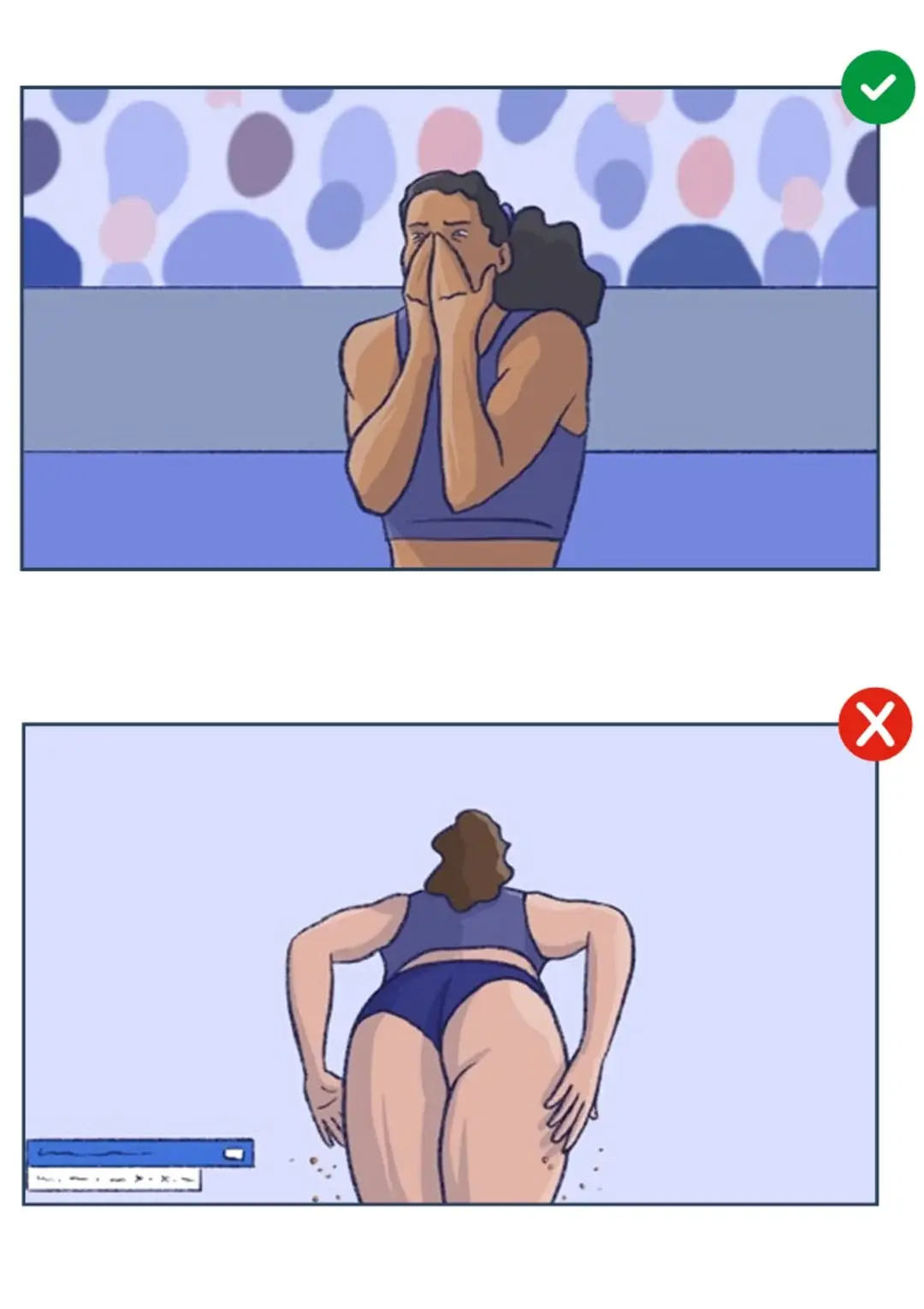
The document included a series of visual examples of which includes negative and positive camera angles in the pole vault, horizontal jumps and running events with it said that low camera angles underneath have "a high chance of generating comprising images".
In addition, the document noted that it is "preferable to stay in front of the athlete whenever possible or avoid very tight shots, especially during their final preparations".
The EBU said that they hoped the guidelines "feel less like a set of restrictions and more like the beginning of a conversation between broadcasters, directors, camera operators and athletes".
Topics: Athletics
 Josh Lawless