'Like a Benny Hill sketch' - Man Utd's disastrous 2013 transfer window

Manchester United are gearing up for a crucial summer transfer window after storming up to third in the Premier League and the brink of a return to Europe in the Champions League.
After last season's worst-ever Premier League finish of 15th, the sacking of Ruben Amorim and appointment of Michael Carrick as head coach until the end of the season has proved the catalyst for United's revival.
Against that backdrop, this summer's transfer window is one of huge significance for United, one in which they must get their incomings and outgoings right to continue their upward trajectory.
The Red Devils certainly cannot afford a repeat of the club's summer window of 2013, arguably the worst in United's history and one which began their stark decline in the post-Sir Alex Ferguson era.
Advert
United were reeling from the seismic shock of Ferguson's decision to step down after 26 and a half years in charge, with chief executive David Gill also having announced his departure a few months earlier.
David Moyes was recruited from Everton to replace Ferguson, and Ed Woodward promoted to take over from Gill, the pair facing impossible tasks in replicating the unprecedented success of their predecessors.
Ferguson had just led United to their 20th league title, having wrung every last drop out of an ageing squad to reclaim the domestic crown from local rivals Manchester City, who had pipped them in agonising and dramatic fashion on goal difference on the final day of the previous season.
The accepted wisdom was that United's squad needed a major overhaul and an injection of fresh talent, with players like Ryan Giggs, Paul Scholes, Rio Ferdinand, Nemanja Vidic, Patrice Evra and 30-goal title-winning hero Robin van Persie all nearing the end of their playing careers.
Moyes and Woodward set their sights high in terms of transfers, targeting high-profile stars including Gareth Bale, Cesc Fabregas, Sami Khedira, Ander Herrera, Thiago Alcantara and Leighton Baines, giving hope to United fans still struggling to cope with the incalculable loss of Ferguson.
Hopes were therefore high that the departure of Ferguson would be soothed by a strong summer transfer window and an influx of elite new signings who would maintain United's position at the summit of English football and keep them competitive on the European stage.
An unmitigated disaster
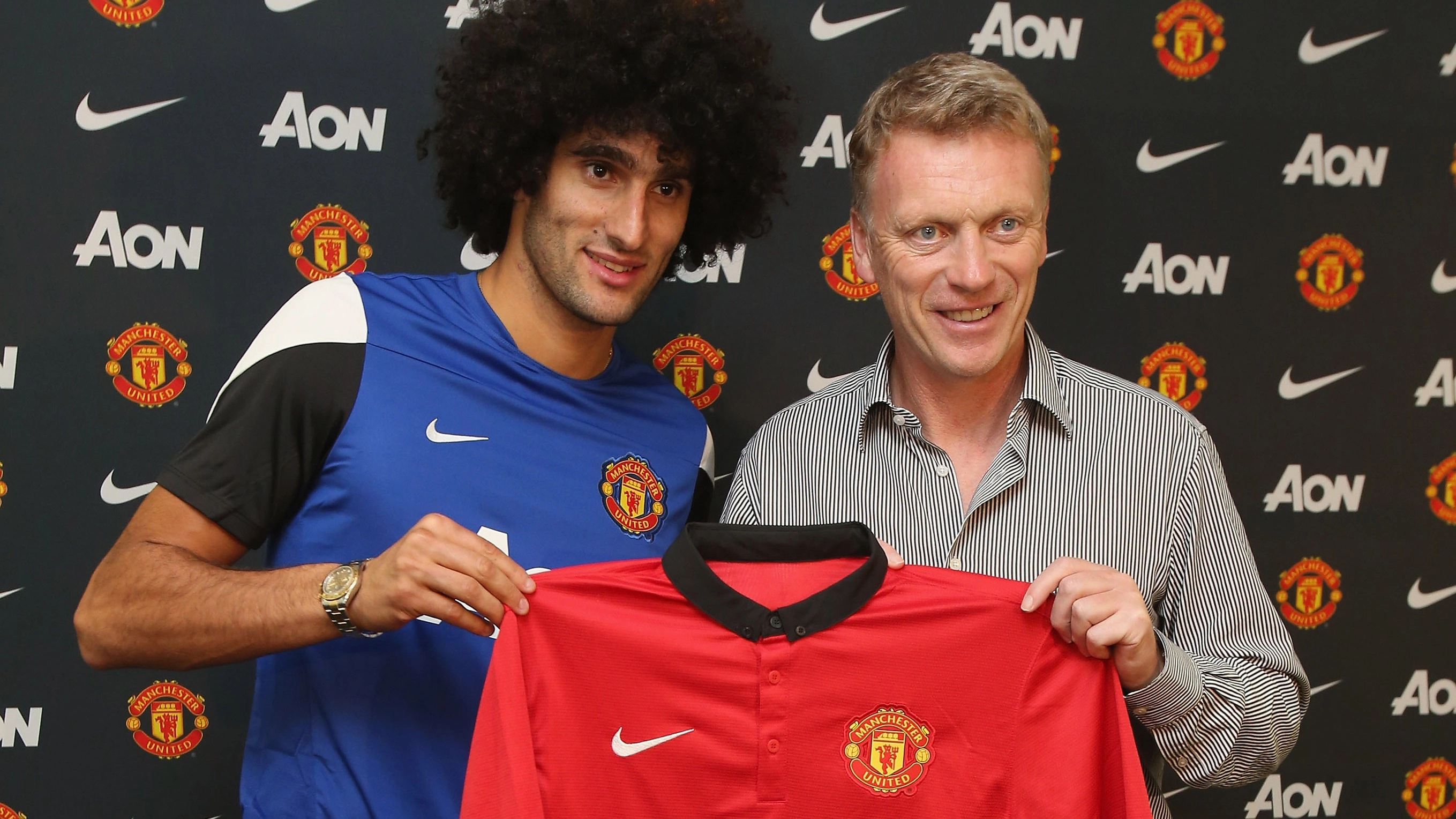
Yet a summer transfer window that promised so much at the outset turned into an unmitigated disaster, with United failing to land any of their top targets and making a solitary signing, Everton midfielder Marouane Fellaini, who came to symbolise the club's shocking demise.
United's signing of Fellaini summed up the cack-handed nature of the club under the new regime, led by Woodward, who had zero experience in conducting transfer negotiations and dealing with agents and chief executives at other clubs, who were all seasoned in the cut-throat business of buying and selling players.
United made a joint bid of £28million for Everton duo Baines and Fellaini, which the Merseyside club rejected, describing it as "derisory". Eventually United signed Fellaini for £27.5m on deadline day, £4m more than his release clause, which had expired on July 31, further damning evidence of Woodward's naivety and haplessness in the transfer market.
Woodward, who resembled a kid in a sweetshop with his greedy and giddy approach to buying, had claimed there was “no cut-off price” in United's pursuit of the best players, which served only to harden the resolve of clubs to inflate their asking prices.
United's attempt to sign Herrera descended into farce when three men in suits – who claimed to be representing the Red Devils – arrived at the HQ of the Spanish league in Madrid, ostensibly to pay the midfielder's £30.4m buyout clause.
Bilbao newspaper El Correo said the episode was 'like a Benny Hill sketch', and Herrera, recalling the impostors, said: “I didn’t even know them. I know my lawyers and I know my agent. It's the same agent as when I was 18. They [the hoaxers] were trying to make easy money – I don’t know how.
“I think they wanted to be there if the negotiation was successful, they wanted everyone to think that they were the ones who did it and, maybe after that, they can have more players or more negotiations.
“But I didn’t even know them, honestly. It was funny because some of my friends said ‘Your lawyers are in La Liga and they're going to pay the money’ and I said ‘No, they're not my lawyers. I don't know them'.”
The deal collapsed soon after, with United attempting to save face by claiming Herrera's buy-out clause was too steep, even though they paid virtually the same amount - £29m - a year later to sign him at the second attempt.
The air of desperation
The pursuit of Bale was another complete waste of time, given the forward, then at Tottenham, never entertained the prospect of joining United, because his heart was set on a move to Real Madrid, whom he joined for £86m that summer.
“I did talk to United,” Bale told The Overlap podcast. “They actually bid more than Real Madrid. I spoke with David Moyes, but my heart was set on Madrid. I think I chose the right one from – what is it? - the last 12 years! I didn't go down the wages route with United. They offered more money to buy me and [include] a player, but it didn't really get any legs, to be honest.”
Like Bale, Woodward's efforts to sign Fabregas from Barcelona were doomed from the start. In a desperate public flex, Woodward flew back early from Sydney on United's pre-season tour, ostensibly to seal the deal for Fabregas, but the former Arsenal midfielder had no intention of leaving the Nou Camp. United failed with two bids for Fabregas and decided not to risk further humiliation by submitting a third and having that rejected as well.
Having missed out on Bale and Fabregas, Woodward's desperation was such he launched a flurry of deadline day bids for Real Madrid's Fabio Coentrao, Athletic Bilbao's Herrera – who would eventually join United a year later – and Real's Khedira, all of which failed to come off.
A move for Thiago, who left Barca for Bayern Munich that summer, failed because Moyes dithered for too long over whether or not the coveted midfielder - a double Champions League winner who also won four La Liga and seven Bundesliga titles - was the right fit for United.
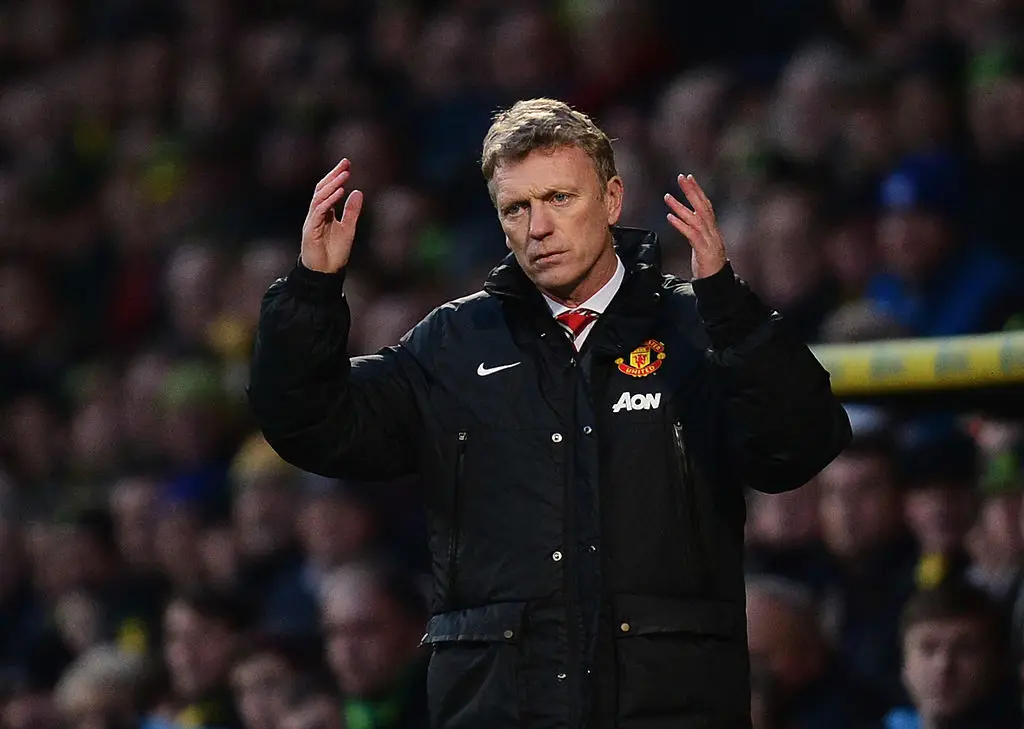
United never recovered from that disastrous 2013 transfer window, which set the tone for more than a decade of under-performance and failure to match the glittering standards set by Ferguson. Moyes was sacked four games from the end of the season, with United ending in eighth spot, their lowest Premier League placing until last season's 15th place finish under Amorim, who suffered the same fate earlier this season when he, too, was given the boot.
What is clear, 13 years on, is that United have learned from that calamitous window, with a more strategic approach now in place, one that is paying off on the pitch with improved results and performances.
But 2013 serves as a sobering warning of how not to conduct transfer business and how one poor window can have damaging ramifications that can take years to put right, as illustrated by United's recent troubled plight.
 David McDonnell