Why Mateta Could Retake Penalty Against Man United as New Rule Introduced

The reason why Jean-Philippe Mateta was allowed to retake his penalty against Man United has been explained.
Following a dramatic day of Premier League action that saw Manchester City narrowly beat Leeds United and Spurs suffer a shock home defat to Fulham, Crystal Palace welcomed Manchester United for Sunday's opening match.
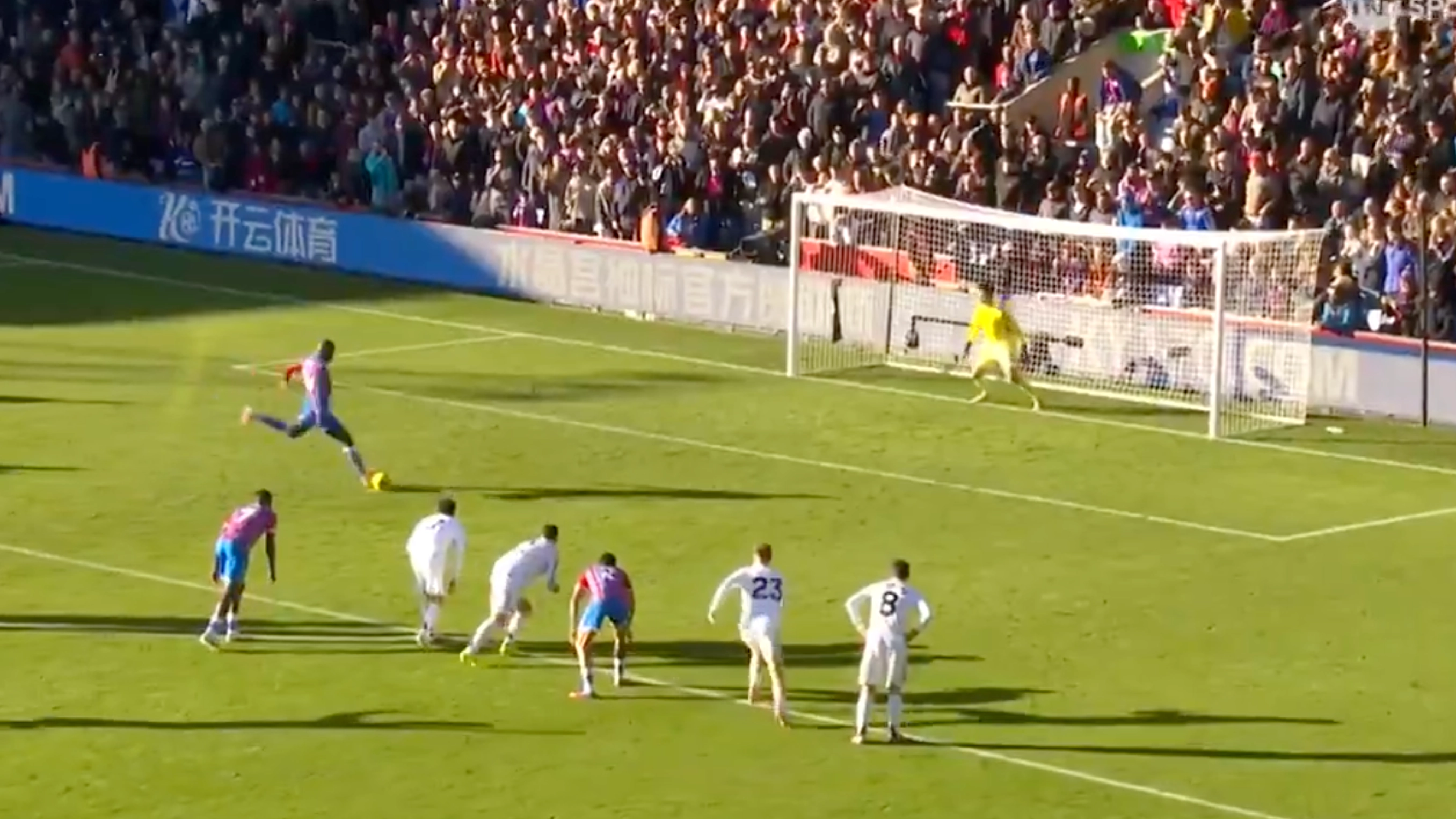
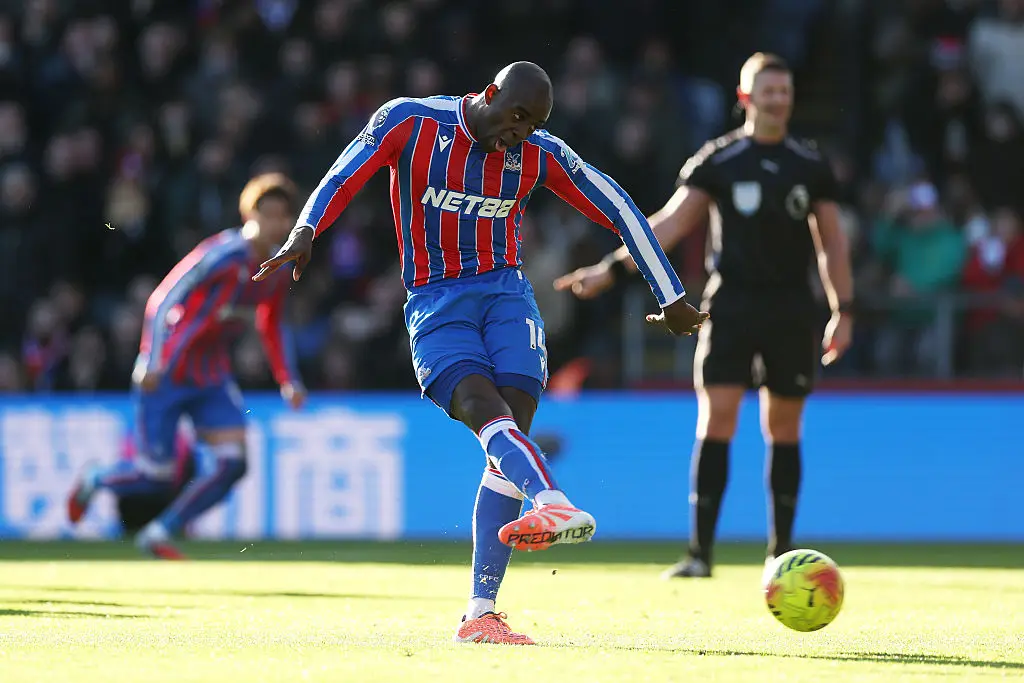
After what has been an end to end first half, it was Palace that opened the scoring in the 36th minute as in-form striker Mateta calmly put the ball in the back of the net after he was fouled in the box by United defender Leny Yoro.
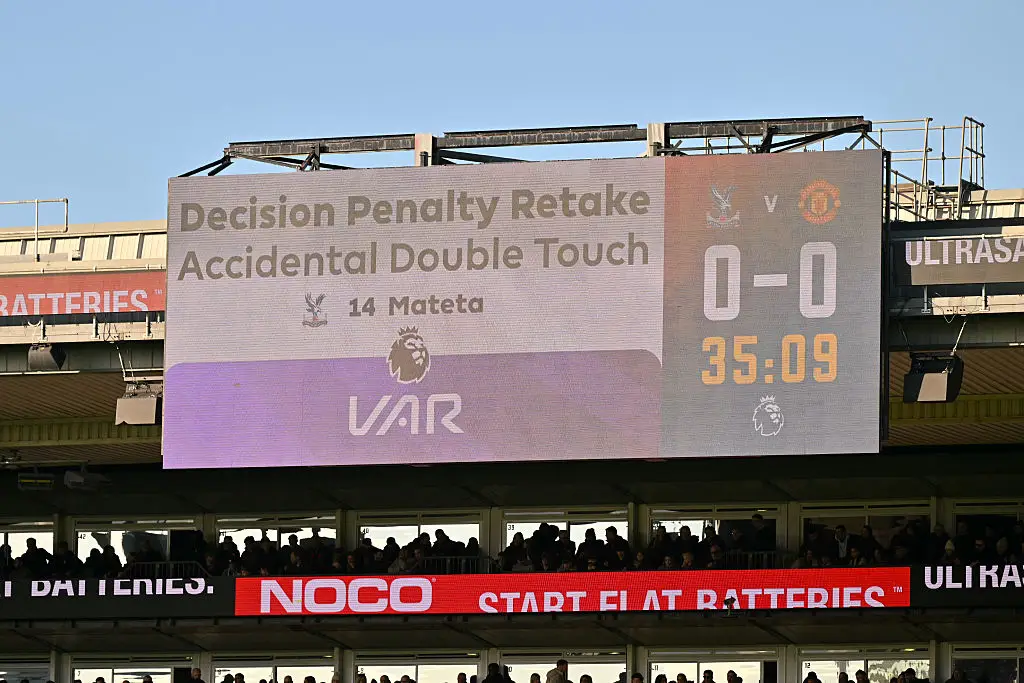
However, second after scoring the goal, it was ruled out as a VAR check revealed that the Frenchman had struck the ball twice.
Advert
Despite this, Mateta was allowed to step up and take the penalty for a second time, and now the reason why he was able to do so has been explained.
Back in June, Atletico Madrid were controversially knocked out of the 2024/25 Champions League in a round of 16 shootout against local rivals Real Madrid.
During the shootout, former Manchester City striker Julian Alvarez got the best of Real Madrid keeper Thibaut Courtois, only to see the goal ruled out by a video review as it was shown that he had touched the ball twice.
Unlike Mateta's penalty against United, the Argentine striker was not allowed to retake the shot and it was deemed to be a miss, potentially costing Atletico the chance of progression as they lost the shootout.
The International Football Association Board (IFAB), confirmed that Law 14 confirmed that a penalty kicker 'must not play the ball again until it has touched another player'.
However, following significant backlash to the moment, the rule was changed to allow the penalty kicker to take the shot again should it be deemed that the double touch was accidental.
Because of this, Mateta was able to retake his shot against United keeper Senne Lammens after VAR confirmed the first touch of the ball was unintended, restoring Palace's 1-0 lead going into half-time.
"This situation is rare, and as it is not directly covered in Law 14, referees have understandably tended to penalise the kicker," IFAB said in a statement confirming the change.
"However, this part of Law 14 is primarily intended for situations where the penalty taker deliberately touches the ball a second time before it has touched another player."
In a letter sent to football stakeholders, it was later confirmed that double-touch penalty that is not scored will not be retaken.
Should a double-touch miss happen in a shootout, it will "recorded as missed," while one happening in regulation time or extra time can lead to a free kick being awarded to the defending team.
Topics: Football, Premier League, Crystal Palace, VAR, Man Utd
 Ben McCrum