UEFA set to scrap World Cup's most controversial new ruling next season

UEFA have confirmed that a controversial World Cup ruling will not be used in European competition next season.
The World Cup has thrown up plenty of drama, largely for ill discipline, with players receiving more red cards during this tournament than the previous two.
Florian Balogun was the 12th and latest player to be sent off after scoring in the USA's 2-0 victory over Bosnia & Herzegovina during the early hours of Thursday morning.
Balogun's red card was controversial, as his tackle on Tarik Muharemović wasn't malicious. Frustratingly for Mauricio Pochettino, they cannot even appeal the decision due to a little-known UEFA ruling.
Advert
The US will now be without their star striker for the round of 16 clash against Belgium on Monday, and they aren't the only team to feel hard done by during this tournament.
Paraguay's Miguel Almiron was the first player to be sent off at the World Cup for covering his mouth while confronting an opponent last month, and then Piero Hincapie became the second during Ecuador's 2-0 defeat to Mexico.
The problem of players covering their mouths became high profile in February when Benfica winger Gianluca Prestianni raised his shirt while speaking to Real Madrid's Vinicius Jr during a Champions League game.
Prestianni was then accused of racist abuse and provisionally banned for one match. A UEFA investigation then followed, and he was found guilty of homophobic conduct and banned for six matches.
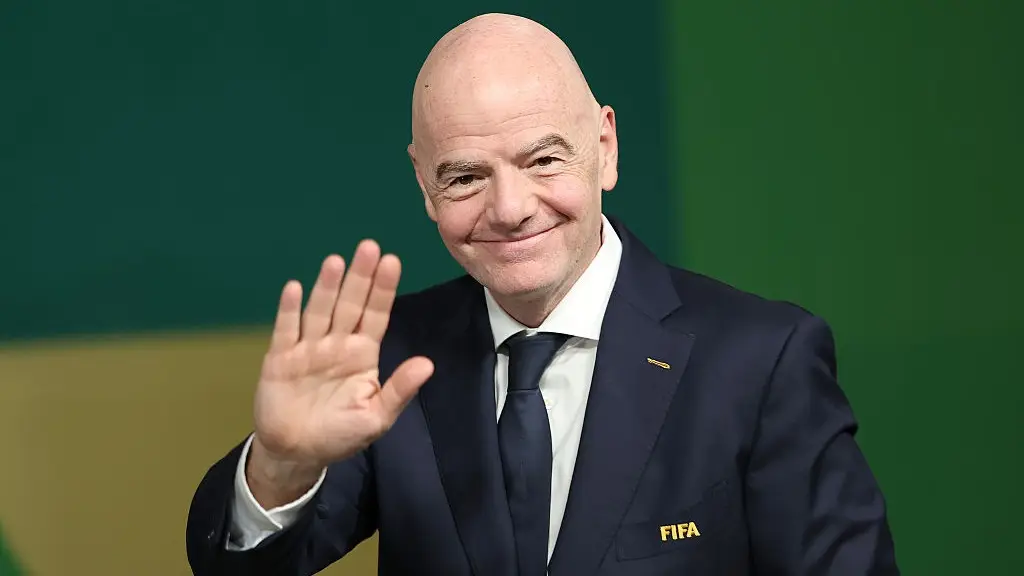
FIFA president Gianni Infantino used that incident as an opportunity to impose a law change at the World Cup, as he wanted something that would have a 'deterrent effect'.
READ MORE: Fan exposes 'Fortress Azteca' theory ahead of England's World Cup clash against Mexico
Unsurprisingly, the ruling has caused huge uproar, with the European football's governing body deciding against using the law in the Champions League, Europa League and Europa Conference League, according to BBC Sport.
UEFA want referees to assess situations individually and consider whether a yellow card should be shown if it is "an attempt to conceal communication as an act of unsporting behaviour".
A statement read: "This is obviously without prejudice to any disciplinary investigation or proceedings that may follow as a consequence of, or in connection with, such behaviour."
Why the rule has caused confusion at the World Cup
The concerns over this rule outweigh the positives, as many feel it could be used to get an opponent sent off when nothing abusive has been said.
There has also been confusion, as some incidents of mouth covering have been overlooked by referees, including in England's goalless draw against Ghana.
Jude Bellingham was not sent off when covering his mouth in conversation with Jordan Ayew in their group game, and that shows why it is flawed.
Many argue that if a rule is being implemented, it should be used consistently, not just for select incidents.
So, fans across Europe will be delighted to know that the rule won't be implemented in UEFA competitions next season.
 Thomas Griffin