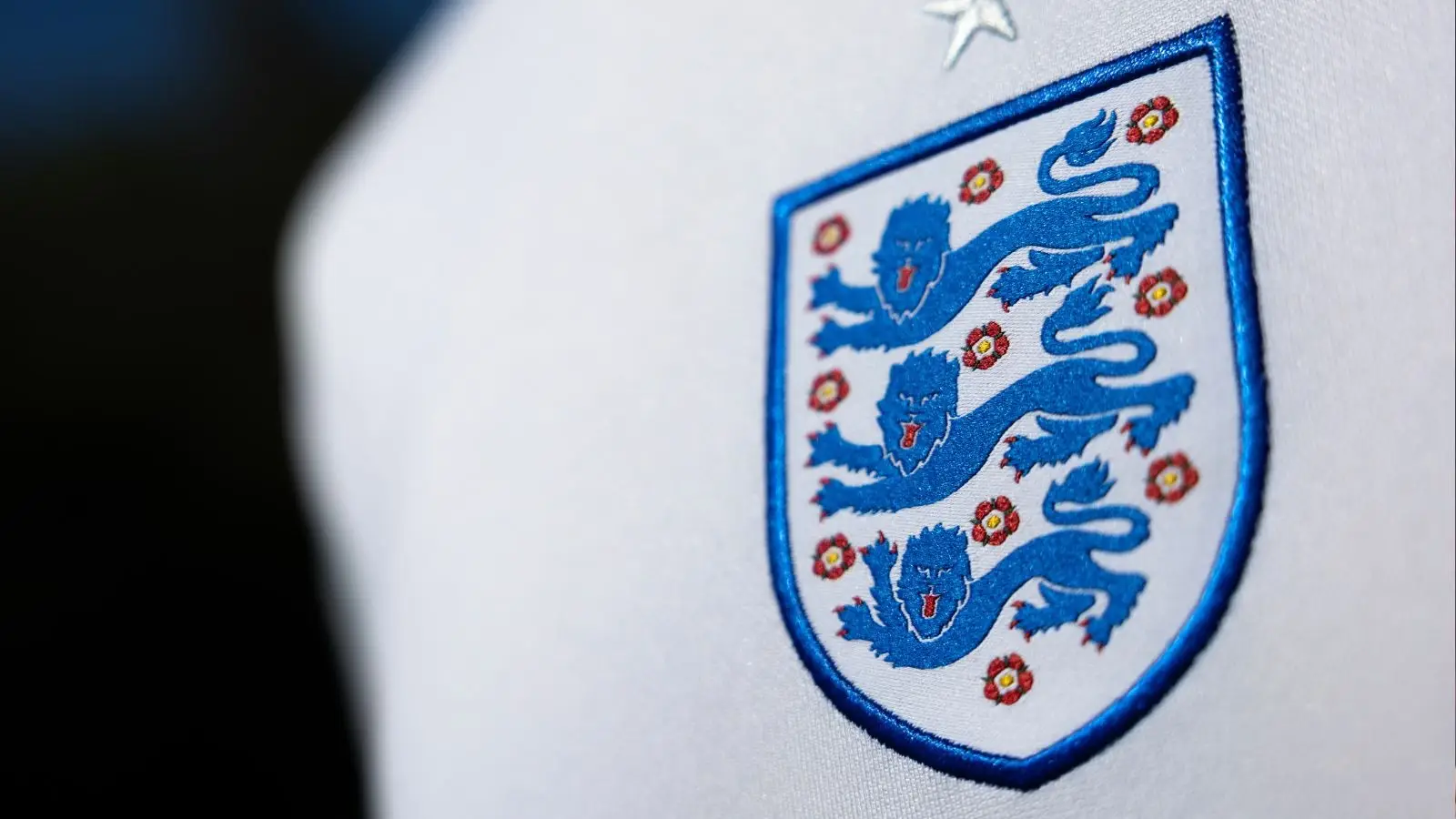
Hidden details and symbols in the England badge revealed including reason why there are three lions

'Three lions on a shirt, Jules Rimet still gleaming,' are lyrics we've heard countless times when England's major tournament ambitions begin to ramp up. But there's more to the Three Lions badge than we know.
It's that time in the international football cycle when patriotism ramps up to its peak as we rally in pubs, houses, and group chats to support England.
The opening fixture is upon us for the 2026 World Cup, with Thomas Tuchel's men taking on Croatia in a high-stakes group stage grudge match.
Despite debates over which player slots into the number ten position on the field, the numbers on the jersey become obsolete, and the only thing that matters is the badge on the front.
Advert
Ahead of the World Cup run, the hidden details of the badge have been revealed, with each of the three lions having a separate meaning, alongside the roses.
The Three Lions' secret meanings revealed
Since sporting the badge way back in 1872 in a match against Scotland, the three lions have become a staple of every kit since.
According to The Sun, each lion has a different meaning behind it.
The 'first lion' honours King Henry I, who was nicknamed the 'Lion of England'. Whilst ruling the country from 1100 to 1135, the King added a lion to the Royal Arms of England, and hence the first Lion was made.
King Henry I is the meaning behind the second lion, too. He demanded a second lion be added to the Royal Arms to honour his father-in-law, Godfrey I, Count of Louvain, after marrying Adeliza of Louvain in 1121.
READ NEXT: England will play at 'cursed' World Cup stadium that two players have already complained about
It took another 30 years for the third lion to be added, when King Henry II - grandson of Henry I - married Eleanor of Aquitaine and honoured her family in the same vein in 1154.
The coat of arms has never seen any lions added, despite a rich history and monarchs often sporting the symbol in nicknames (such as Richard the Lionheart).
The only addition since is the 10 roses included on the badge.
These Tudor roses honour the House of Tudor and the War of the Roses (1455-1487), but were only added after World War II, when the 10 divisions of FA members were united in 1948.
Although we often represent England with the St. George's cross, the three lions and ten roses will be the symbol donned on the chest of the 26-man squad in the 2026 World Cup, where they will look to start tournament life under Thomas Tuchel with a win.
Topics: FIFA World Cup, England, Football
 Jack Marsh