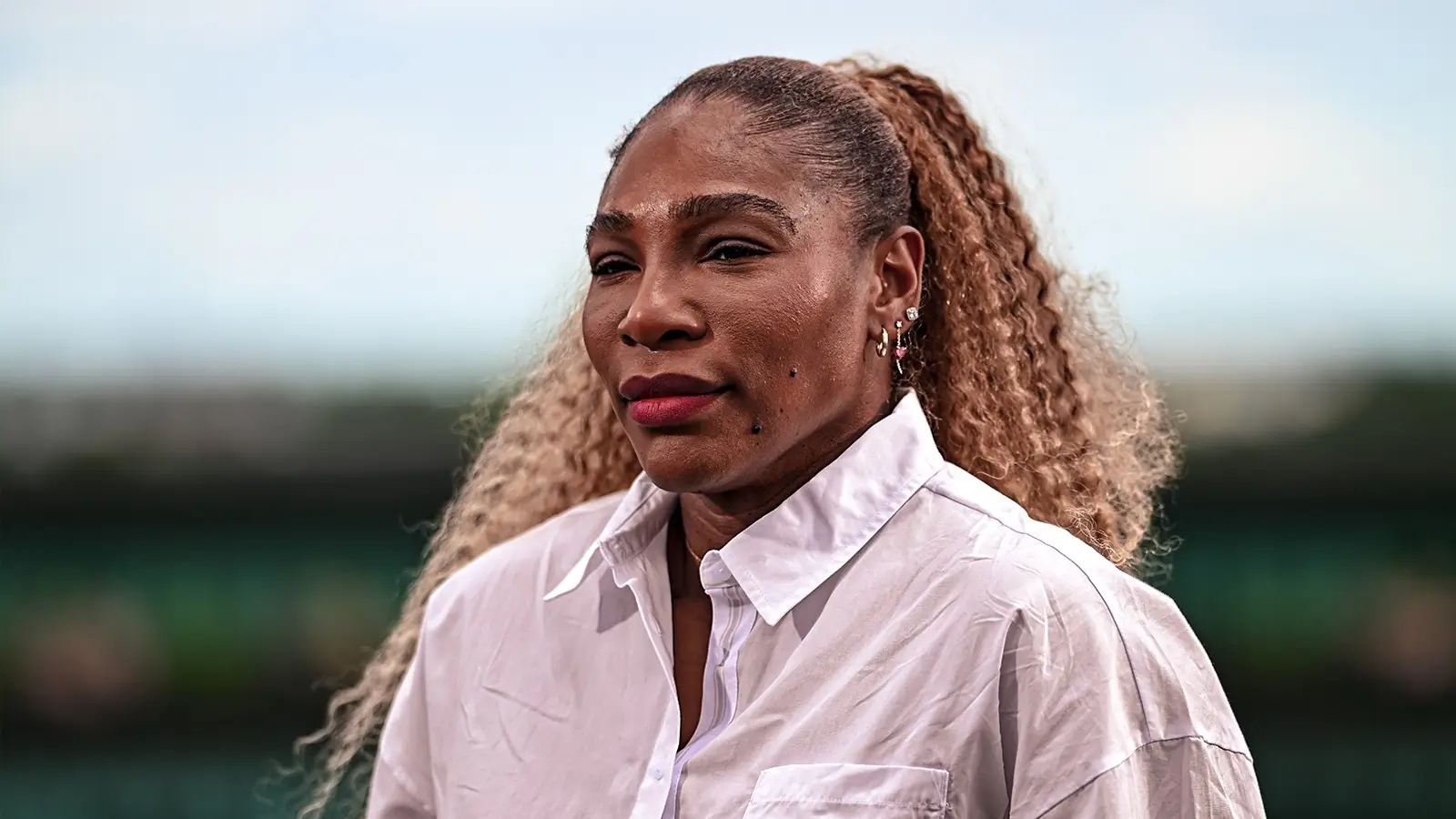
Serena Williams slams new Wimbledon rule ahead of tennis comeback

Serena Williams made her feelings on Wimbledon's new doping rules very clear ahead of her return.
After winning 23 Grand Slam titles across more than a thousand matches, tennis legend Williams announced her retirement at the U.S. Open in September 2022.
Since then, the American has taken some time out of the spotlight, raising her children Alexis Olympia Ohanian Jr. (born in 2017) and Adira River Ohanian, who was born in 2023.
However, nearly four years after confirming her retirement, Williams made the decision to return to the tennis court London's Queen's Club in June.
Advert
Williams played one doubles match alongside Canada's Victoria Mboko before playing with Czechia's Karolína Muchová in Berlin a week later.
Of course, the most exciting part of Williams' comeback will be that we will once again get to see her in action at Wimbledon as the annual English tennis competition takes place over 14 days from Monday June 29 to Sunday July 12.
She will get her Wimbledon campaign underway against Australia's Maya Joint on Tuesday afternoon on Centre Court, but before that she admitted that the competition's new doping rules almost stopped her from returning to the sport.
Before coming back, Williams had to return to the anti-doping testing pool, something she's made clear she isn't a fan of.
"It's gruelling. They changed the rules now. I didn't know some of the rules. So apparently if you miss a test outside of your window, it still counts as missed. I'm like, I guess I can't go pick up my kids," she said ahead of her opening match.
"It's unprofessional. I hate it. I think it's necessary, but I think a lot of the stuff, if I want to go places outside of my window, I should be able to go without having it count as a missed test."
In rules outline by the International Tennis Integrity Agency, players are required to provide their daily 'whereabouts' for no-notice testing.
The rules add that athletes can be penalised even without a positive test should they have three 'whereabouts failures' within 12 months.
READ MORE: How much British players earned from Wimbledon first-round exits after 'worst day this century'
"That was a big reason why I didn't want to come back either,' Williams added.
"Because it's just so hard. I mean, my life is busy, I run a company, I run a VC company, I travel the world. I have children. It's like I could be in so many different cities so many different times."
However, Williams added that she was willing to work within the rules in order to ensure she could return to tennis.
"Just getting in that routine of, all right, first of all, learning the new rules, then just getting back and reporting every day," she said.
"I guess now for 24 hours where I'm going to be is just different - at least for me. I don"t know if that works for everyone else."
ITIA release statement responding to Serena Williams' criticism of doping rules
Responding to William's comments, the ITIA released a statement to The Associated Press affirming that the rules have remained in place exactly as they are for several years.
"If a tester is unable to reach a player during their allocated hour, then it may well be a 'strike,' and three failures could lead to a charge. If a tester is unable to reach a player outside of their allocated hour, it is not considered a strike," the organisation said.
"There have been no changes to the whereabouts rules in the last few years.
"We understand the system can seem challenging, but it is there to protect players, not to trip them up. If players are unsure or have questions, we would welcome a conversation with them directly or through their agents."
Topics: Serena Williams, Wimbledon, Tennis
 Ben McCrum