Andy Roddick reveals tennis problem that causes 'fear and psychosis' after bizarre Lorenzo Musetti phone incident

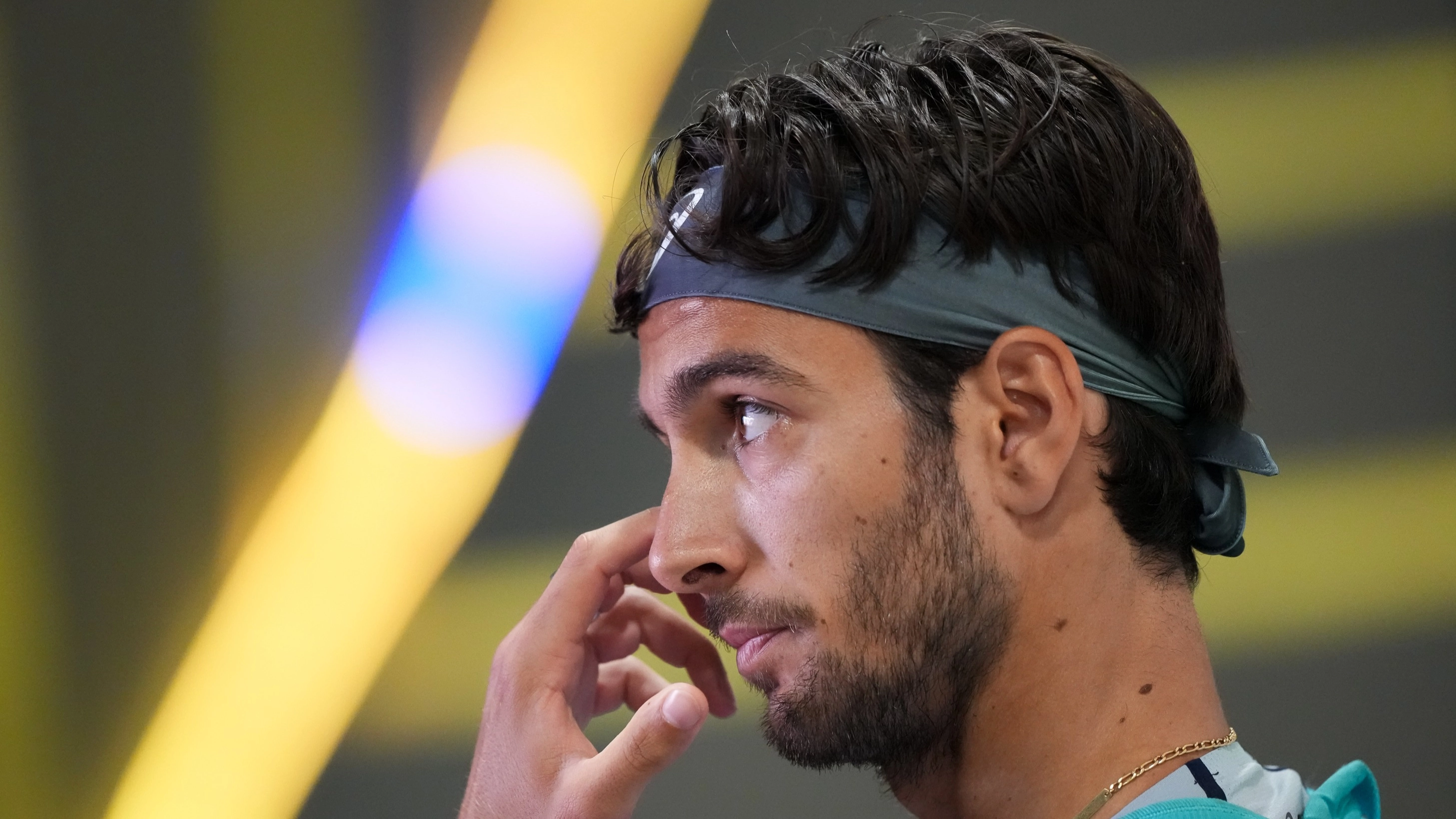
Andy Roddick has opened up about the toll anti-doping testing takes on players, claiming it causes “fear and psychosis,” after Lorenzo Musetti used his phone while playing at 1am in Lyon.
As his match in France descended into the early hours of the morning, Musetti requested to use his phone while playing, to update an anti-doping tester as to his whereabouts.
Former US Open champion Roddick has now commented on the matter, describing the “fear and psychosis” that players go through as a result of such testing, leaving them “always scared.”
READ MORE: Tennis icon's brother on the run from police as disturbing videos surfaces
Andy Roddick describes ‘fear and psychosis’ caused by anti-doping testing after Lorenzo Musetti incident
Speaking on his Served Podcast, the 44-year-old revealed that tennis players have been left in states of “fear and psychosis” after receiving false positives on the ATP and WTA Tours.
Advert
“There’s like this - I’ve talked to players who have, there have been massive false positives at, like, a Challenger [event] because of something they’ve eaten,” claimed Roddick.
“But it’s not just one person, it’s like everyone in the field. So, obviously, not everyone in the field is doing it,” he continued.
“I’ve talked to people about the fear of getting that email - Iga [Swiatek] talked about it on our show - the fear of getting that email, and the psychosis involved with being, basically, always scared.
“Irrespective of what you’ve done - it’s real. Now, I have no idea what Musetti was talking about, that doesn’t make sense to me. I know that rules have changed.
“I’ve been corrected before on what my reality was, versus - and rightfully so - versus what it is now,” concluded Roddick, who then opened a discussion about phone usage with his co-hosts.
The American questioned why using phones while playing is still prohibited, with his co-hosts agreeing gambling-related concerns are possible.
Previously, phone usage was banned to prevent players from receiving text message coaching; now, off-court coaching is allowed on both the ATP and WTA Tours.
READ MORE: Gael Monfils makes heartbreaking admission after splitting up from Elina Svitolina
Why did Lorenzo Musetti use his phone, and will anti-doping testing change in 2027?
Prior to his match, Musetti had set his 60-minute slot for anti-doping testing to commence at 1am, assuming that his contest in Lyon would have ended.
Instead, the Italian’s match stretched longer than anticipated, causing Musetti to have to update his whereabouts in the event an anti-doping tester arrived at his hotel in France.
If the tester had arrived, the 24-year-old could have received a penalty for missing his scheduled window. Such an event occurring three times carries a ban, and Musetti wasn’t willing to risk it.
After updating his status in time, the Italian won his match in over three hours of play. Musetti went on to win the tournament, lifting his first Tour-level trophy since 2022.
In 2027, the International Tennis Integrity Agency - whose list of retired players a ‘struggling to eat’ Gael Monfils appeared on in October - announced that whereabouts rules will change.
The agency, which oversees anti-doping testing in tennis, has revealed that a group of players, mostly high-ranked athletes on the two Tours, will have to specify their whereabouts more often.
This is because an exemption about in-competition, that tennis previously received from the World Anti-Doping Agency (WADA) is no longer applicable.
According to Reuters, tennis players on the ATP and WTA Tours in 2027 can expect to see the following:
- Changes to the World Anti-Doping Code require players in a sport's Registered Testing Pool (RTP) to provide a daily 60-minute testing window during competition from 2027, ending an exemption previously granted to tennis because of the unpredictability of players' schedules.
- The ITIA, an independent body that protects fairness in the game, said that it would reduce the size of its RTP, moving around 80% of players currently in the group to an expanded testing pool where the daily 60-minute requirement will not apply.
- "Players who remain in the reduced RTP will be required to provide a daily 60-minute time slot like athletes in every WADA-compliant sport, both in and out of competition," the ITIA added.
- The number of players selected across both testing pools will be broadly consistent with the current testing pools, and testing frequency and volume are unlikely to change.
- The new rules will also provide greater protection for players who can establish that a positive test was caused by contamination, including through medication, food or drink, environmental exposure or another person.
- They will also provide greater flexibility in sanctions in certain circumstances, with rehabilitation-focused options for some recreational drug cases unrelated to sporting performance.
- Players will be informed in November which pool they have been assigned to, though individual classifications will not be made public.
- All players, regardless of their testing pool status, must provide a sample when requested by a doping control officer, with refusal carrying a potential ban of up to four years.
READ NEXT: Journalist reveals heartbreaking Gael Monfils story that shines new light on Elina Svitolina divorce
Topics: Tennis
 Kedar Bayley