Mercedes reveal why they can't match McLaren and Ferrari's F1 upgrade strategy

Mercedes are currently top of the Constructors' Championship, with their driver Kimi Antonelli leading the pack for the title in the Drivers’.
The team got off to a fantastic start, building an incredible lead in the championship as a Mercedes driver won each of the opening six Grand Prix.
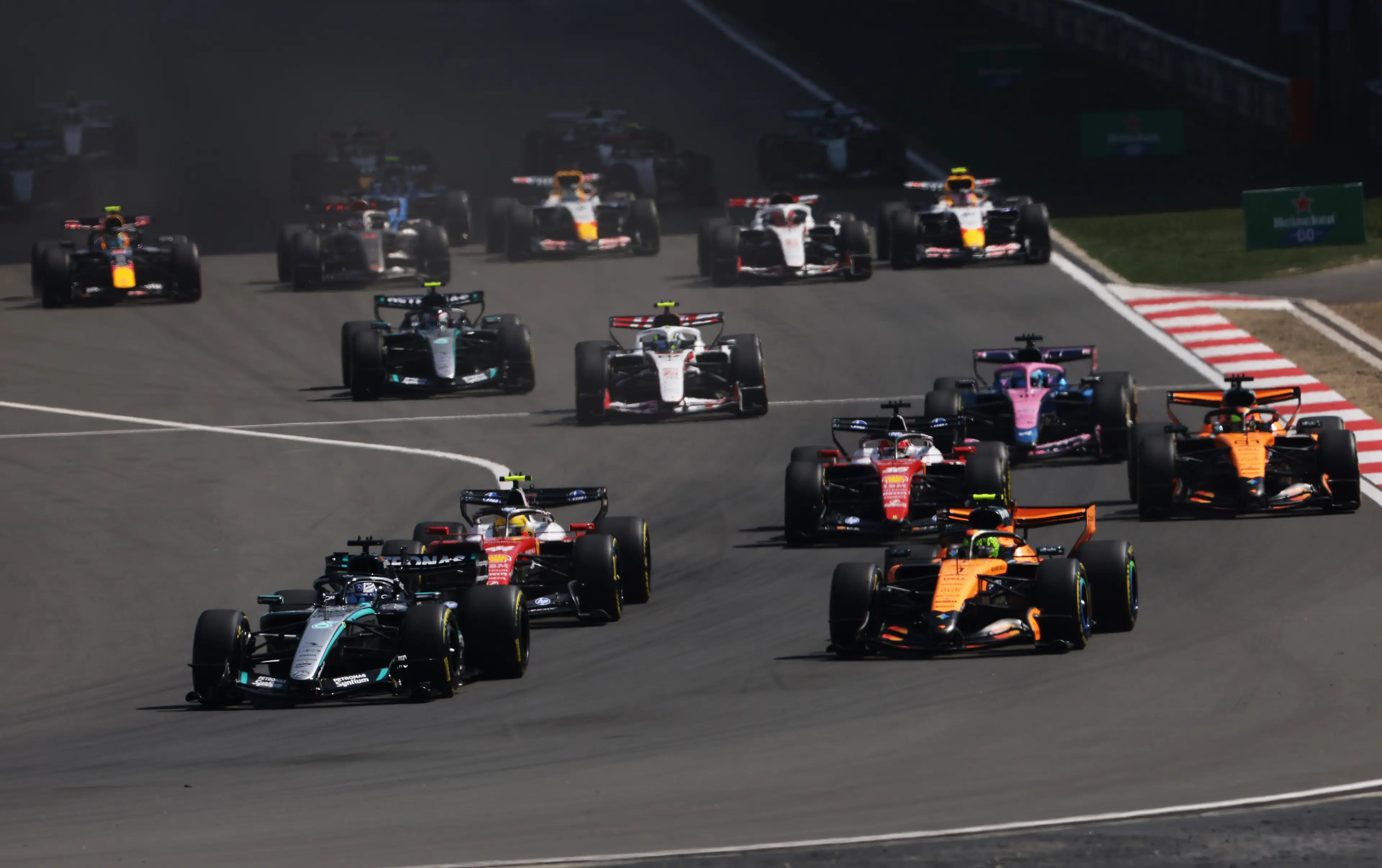
However, in the last six races, the victories have been shared evenly between Mercedes, Ferrari and McLaren, as the latter two have improved thanks to their upgrades throughout the campaign.
These latest results may give Ferrari, McLaren and neutral fans hope that a championship battle is beginning to emerge for the 2026 season, with all eyes set on how the Italian Grand Prix plays out next weekend.
Advert
Especially after Mercedes have admitted they cannot introduce major upgrades as frequently as McLaren and Ferrari because of cost-cap constraints; however, they have given encouragement to their fans.
Mercedes believes they have deliberately phased their development differently and have a bigger package coming later, as Deputy Team Principal Bradley Lord and Trackside Engineering Director Andrew Shovlin explained on the Nu Silver Arrows Radio Show.
The pair were asked: “When will the next significant upgrade arrive? The advantage seen in Melbourne is no longer there.”
Andrew Shovlin said: “Over the season, we will probably produce one fewer floor and one fewer bodywork package than those teams. You could introduce new parts at every race if you had the money to manufacture them, perhaps using outsourced capacity. The principal constraint is cost.
“We are reasonably confident that much of the current picture comes from the phasing of updates. Our larger package is targeted for the block of flyaway races later in the year. That does not necessarily mean they will have added more total performance by the end of the season; they may simply have staged the investment differently and at greater cost.”
Bradley Lord added: “It is the reality every team faces under the cost cap. Formula One organisations must balance headcount and salary costs against the money available for hardware. We continue to find performance in the wind tunnel, but the challenge is deciding when to convert that virtual gain into real parts.”
Shovlin continued: “If we believed these championships depended on having an update at Zandvoort, we would probably have found a way to achieve it. Being in front allows a little more long-term thinking. We have made calculated decisions about the most cost-efficient route to the end of the year.”
 Brendan McGilligan