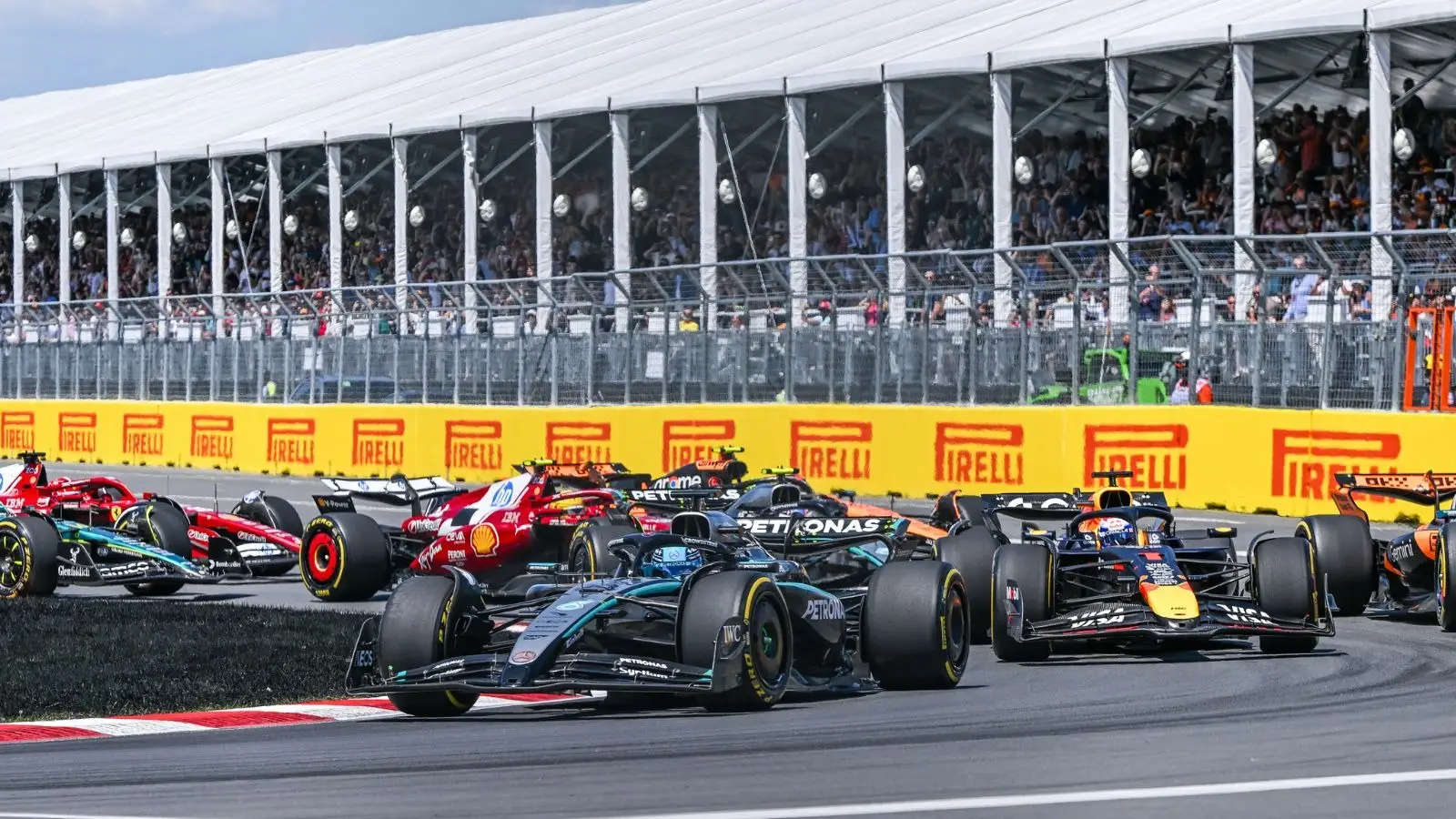
F1 schedule crunch talks for Canadian GP with major rule change in doubt

Ahead of the Canadian Grand Prix this weekend, the proposed changes to the F1 regulations for 2027 have hit a wall, with multiple manufacturers siding against the plan outlined after Miami.
With the end of the DRS era, Formula 1 changed lanes completely, switching to a new engine and battery hybrid model that saw a massive increase in electrical output.
But the new regulations haven't been the resounding success that the FIA expected, especially on the overtaking front, with many races seeing endless cat-and-mouse contests often settled by whose battery goes flat the quickest.
Critised for taking 'real racing' out of the equation and placing more reliance on the team with the best car, the FIA, F1, and manufacturers all agreed to change them. In principle.
Advert
However, the proposed combustion-to-battery power ratio change (from 50/50 to 60/40 in favour of the engines) now appears to be under pressure as a range of manufacturers reportedly want to keep the 2026 model.
F1 teams reportedly blocking 60/40 engine power change
Slated as 'playing Mario Kart' and 'anti-racing' by Max Verstappen - arguably the best 'racer' of all time - and openly criticised by Lando Norris, Charles Leclerc, and more, the engine change is high on the priority list for the drivers.
The FIA has already made changes to the regulations amid the backlash and gathered the elite personnel at the Miami Grand Prix to continue their revision of the rules.
Soon after, it was revealed that the driver complaints were validated, and more tweaks to the system were needed amid safety concerns.
Although Vertsappen claimed that the 60/40 isn't enough and an 80/20 split would 'help a lot' some manufacturers allegedly disagree and will be holding crisis talks at the Canadian GP to keep it as it is.
According to The Race, teams would need to spend around $10million to change the engines again, and that is straining manufacturers.

Particularly, the new addition to the grid, Audi, is apparently against the idea of changing the engines already, having already spent a huge sum on their current car, and is continuing to learn F1.
Ferrari is also concerned that a bigger reliance on combustion engines would limit the impact of the catch-up mechanism, known as the Additional Development and Upgrade Opportunities (AUDO), which they believe is the only way that they can catch Mercedes.
The report suggests that the only manufacturers who are fully sold on an immediate regulation shift are Red Bull and Mercedes, even though this could negatively impact the table-topping team.
There is already major engine changes coming to F1 in the future, with FIA president Mohammed Ben Sulayem confirming that the sport will be moving back to V8s by 2031.
Topics: Formula 1, Mercedes, Ferrari, Red Bull Racing
 Jack Marsh