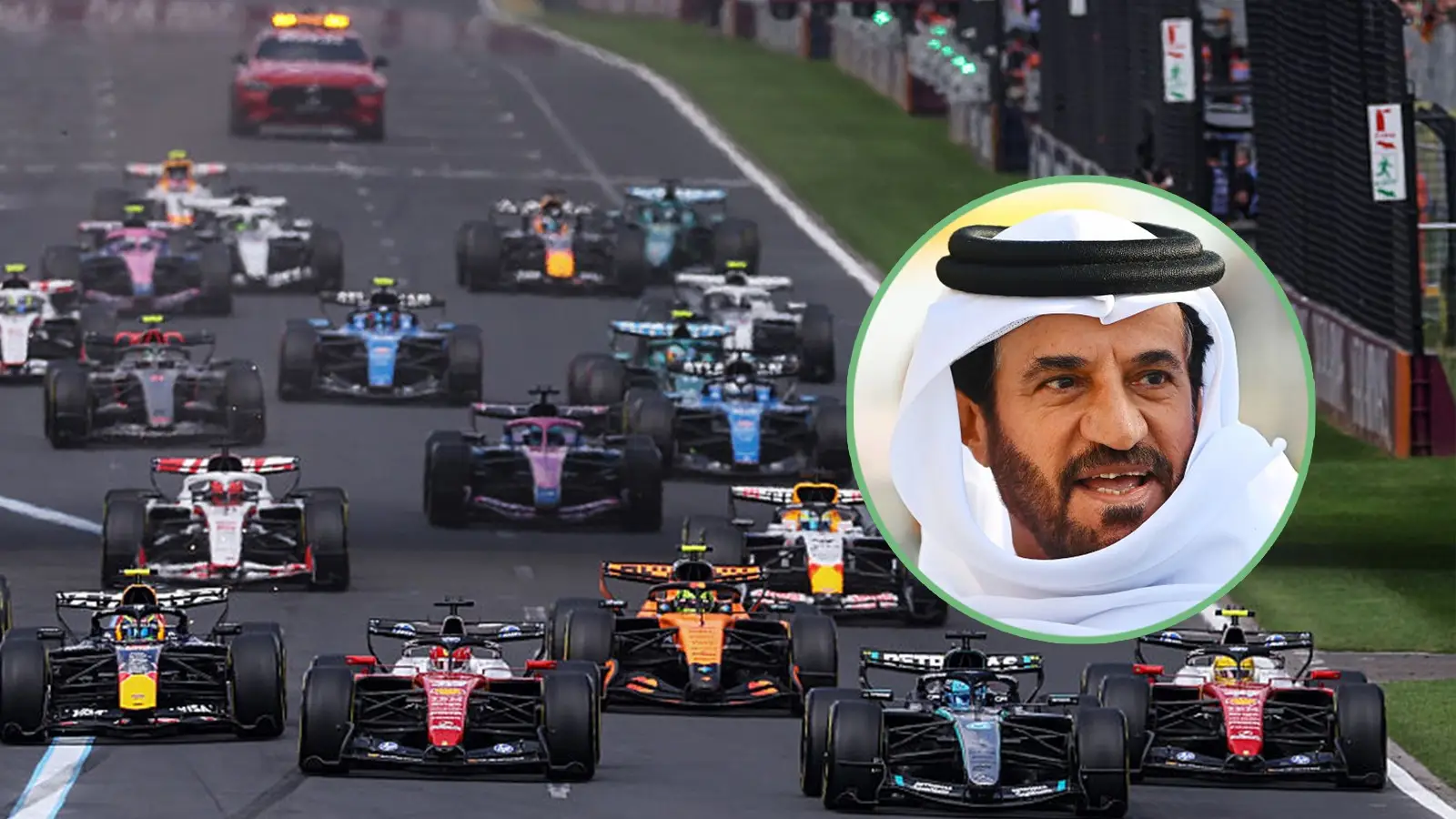
FIA confirm change to F1 regulations after driver complaints as statement issued

The FIA has announced major engine changes that will come into effect during the 2027 F1 season.
Changes to the power units were already made ahead of the 2026 F1 campaign, with the engine units currently made up of a 50/50 split between internal combustion and electrical power.
The alteration has led several drivers – including four-time world champion Max Verstappen – to complain, with the Red Bull man comparing the sport under the new regulations to Formula E, while also saying it is less “fun”, “anti-racing” and like “playing Mario Kart”.
Meanwhile, reigning world champion and McLaren driver Lando Norris has also claimed the impact of the power units is “not how it should be”.
Advert
“When you’re just at the mercy of whatever the power unit delivers, the driver should be in control of it at least, and we’re not,” Norris said after the Japanese Grand Prix.
Seven-time world champion Lewis Hamilton has been less forthcoming in his complaints, although he believes drivers should have been more involved during discussions.
Before last week’s Miami Grand Prix, refinements were made to the 2026 regulations after an agreement between the FIA, teams, OEMs, power unit manufacturers and FOM.
The main changes were linked to driver safety.
And it appears that further changes to the current power units will be made in 2027.
Following an online meeting attended by representatives from 11 teams, Formula One Management and several other stakeholders, including power unit manufacturers – Mercedes, Ferrari, Red Bull Powertrains, Audi and Honda – an agreement in principle has been reached.
FIA release statement on F1 regulation changes
The FIA released the following statement on Friday afternoon: “Today’s meeting began with a review of the amendments introduced for the Miami Grand Prix before discussion moved to longer-term regulatory considerations.
"The conclusion from the deployment of modifications in Miami, designed to improve safety and reduce excessive harvesting, was that they resulted in improved competition and were a step in the right direction. Following analysis and consultation, the FIA reported that no material issues or safety concerns had been identified from Miami.
"Evaluation of the Miami package is ongoing with a view to the introduction of further adjustments at future events. These include improved start-safety revisions and measures to improve safety under wet conditions. These will be communicated to teams once defined. Improvements to the visual-signalling measures are being evaluated for the Canadian Grand Prix."
The second part of the statement suggested there has been a “unanimous commitment to introduce changes which further enhanced fair and safe competition".
"The measures agreed in principle today for 2027 would see a nominal increase in Internal Combustion Engine (ICE) power by ~50kW with a fuel-flow increase and a nominal reduction of the Energy Recovery System (ERS) deployment power by ~50kW,” the statement continued.
"It was agreed that further detailed discussion in technical groups comprising teams and Power Unit Manufacturers was required before the final package was decided.
"The final proposals presented during today’s meeting are the result of a series of consultations over the past few weeks between the FIA and multi-stakeholders, with invaluable input from F1 drivers.
"The next step is to formally present these regulatory changes, once refined, for a World Motor Sport Council e-vote, once the power unit manufacturers have voted on this package.
"The 2026 regulations were developed and agreed in close partnership between the FIA, FOM, teams, OEMs and power unit manufacturers. Today’s proposals were discussed against the backdrop of this spirit of collaboration."
F1 returns later this month, with the Canadian Grand Prix scheduled to take place on May 24.
Topics: Formula 1, FIA, Max Verstappen, Lando Norris
 Luke Davies