Football’s most confusing laws explained: From new goalkeeper rules to handball and offside

Football's Laws of the Game have never stood still. For as long as the game has been codified, the bodies that govern its rules have sought to iterate and improve.
Fans, players and referees always have a new rule or implementation to get their heads around. As recently as last season, the idea of a corner being awarded in response to a goalkeeper's time-wasting would have seemed strange.
The Laws of the Game 2026/27 deployed that update and many others. But what are the latest rules covering offside, handball and red cards, and how do they work in practice?
Handball rules: What counts as handball in the Premier League?
Handball implementation has become irrevocably complicated under the auspices of video assistant refereeing (VAR), but the law at its root is straightforward.
A handball offence is committed if an outfield player deliberately touches the ball with their hand or forearm, or does so as a result of making their body 'unnaturally bigger'.
Advert
There are exceptions and complications in the Laws of the Game, including accidental handball being an offence when it leads immediately to a goal, while the Premier League's interpretation as of 2024/25 is clear that handball is not applied when the ball strikes an arm that a player is using to support their body on the ground.
Handball is not committed when a player plays the ball onto their own arm or that of a teammate, and proximity and ball trajectory are both taken into consideration by the referee.
Most memorable decision: In Leeds United's loss at Bournemouth on October 31, 2026, striker Dominic Calvert-Lewin scored from close range. The goal was awarded on the field, but the decision was overturned by VAR. Calvert-Lewin had scored accidentally with his hand, an offence under Law 12 because the ball directly crossed the line.
Offside rule: Does a defender touching the ball make an attacker onside?
Being in an offside position is not automatically an offside offence under Law 11, a fact that introduces the possibility that an intervention from an opponent can effectively play them onside.
If a defending player 'deliberately' attempts to pass the ball to a team-mate, gain possession with a touch or clear the ball, the attacker is deemed not to have gained an advantage if they subsequently receive the ball having been in an offside position.
That's still true if the defender's action is unsuccessful, and there are various criteria used to determine whether the defender's play was deliberate.
However, a deflection would be ruled accidental and a 'save' – a stop or attempted stop by any player to prevent the ball going into the goal – would not wave off the offside despite being a deliberate action.
Most memorable decision: In January 2021, Manchester City midfielder Rodri was in a clear offside position when Bernardo Silva headed the ball towards him in a match against Aston Villa. Aware of Rodri's presence, Villa defender Tyrone Mings attempted to control and clear the ball rather than allowing it to run through to the goalkeeper. Rodri, played onside by Mings' deliberate action, stole the ball and teed Silva up to score.
READ MORE: What is the centre circle actually used for in football?
Red card rules: What is DOGSO, and why is it a sending-off?
DOGSO – denial of an obvious goalscoring opportunity – is one of the most misunderstood sections of the Laws of the Game.
The popular interpretation for decades has tended towards language around so-called professional fouls or 'last man' defenders, neither of which adequately define the rule.
There are three familiar versions of DOGSO that result in a red card: Denying 'a goal or an obviously goalscoring opportunity' by committing a deliberate handball, a non-deliberate handball outside the penalty area, or by committing a foul punishable by a free kick outside the box.
The fourth way in which a DOGSO incident results in a red card is an exception to the now-established rule that denial of an obvious goalscoring opportunity in the penalty area should be punishable by a penalty and yellow card only. When there is no genuine attempt to win or play the ball, a red card still applies.
Serious foul play remains punishable by a red card regardless.
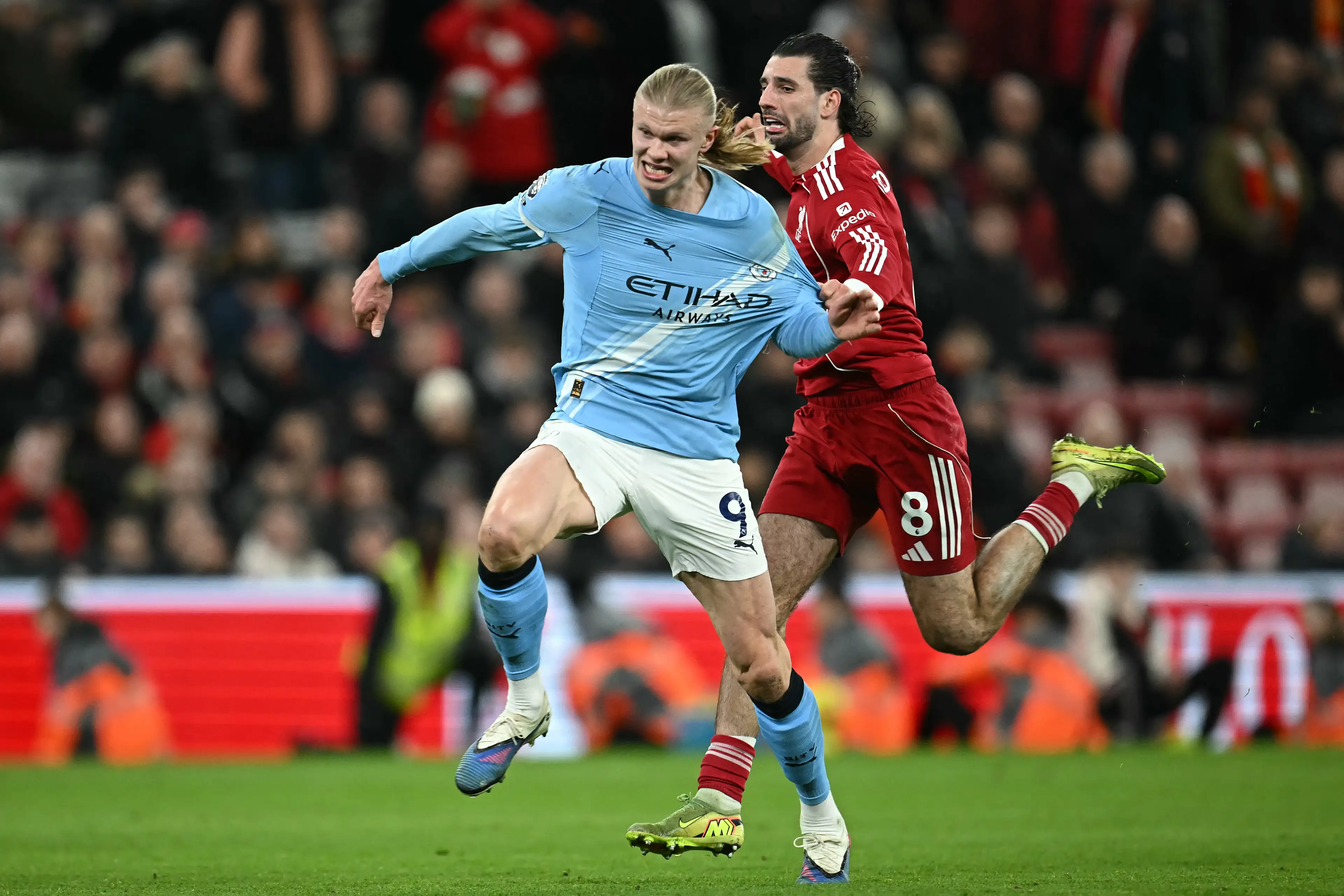
Most memorable decision: In February 2026, the Premier League match between Liverpool and Manchester City served up the most bizarre DOGSO incident there's ever been.
Man City had the lead late in the game and Reds goalkeeper Alisson went up for a set piece, which was cleared. As Rayan Cherki's shot crawled towards Liverpool's empty net, Dominik Szoboszlai and Erling Haaland chased it down. Szoboszlai pulled Haaland's shirt, Haaland did the same in return, and the ball rolled into the net.
The goal was awarded, but VAR disallowed it on the basis that Haaland had fouled his opponent and prevented him from clearing the ball. But, because of Szoboszlai's initial pull, City were awarded a free kick and the Hungarian was sent off for denying an obvious goalscoring opportunity.
Goalkeeper eight-second rule: Why is a corner awarded for holding the ball?
Where once an indirect free kick would have been awarded against a goalkeeper taking longer than six seconds to release the ball from their hands, there is now an eight-second limit and the concession of a corner is the sanction.
This change was implemented via the Laws of the Game 2025/26, when it was introduced into Law 12.
The referee first determines when the goalkeeper has control of the ball, which includes bouncing the ball or throwing it in the air, and then begins an eight-second countdown. The last five seconds are counted down visually and audibly, and a corner is awarded if the goalkeeper runs out of time.
The subsequent corner kick is taken from the side closest to the goalkeeper's position when penalised.
Most memorable decision: The first Premier League goalkeeper to fall foul of the new rule was Burnley's Martin Dubravka, who caught a cross against Tottenham Hotspur in August 2025 and overran the eight-second limit. Referee Michael Oliver, who had followed the process by signalling the last five seconds with hand gestures, gave Spurs a corner.
Goal kicks and throw-ins: What happens if a team takes too long?
The Premier League has also adopted the five-second countdown for goal kicks and throw-ins to be taken. Like the goalkeeper possession time limit, the five seconds are counted down visually and audibly by the match referee.
If the player taking the goal kick or throw-in exceeds the count, the decision is reversed and a corner or throw-in is awarded to the opposing team instead.
The exact implementation of this countdown has led to confusion at all levels of the game. The starting point for the countdown is not absolute, nor is it based on the ball being in the hands of a throw-in taker at any given moment. Rather, it is a tool to be deployed by the referee when their interpretation is that the team with possession is 'clearly delaying' the restart.
It is, therefore, entirely at the referee's discretion when the count should start.
Most memorable decision: Perhaps because of the highly visible nature of the countdown and the obvious incentive to dispose of the ball in a timely manner once it begins, the Premier League has yet to produce a noteworthy example of a goal kick or throw-in being reversed due to time-wasting.
It is a relatively frequent occurrence at lower levels, but having a live warning tends to prevent overturns from actually being required.
READ MORE: The real reason why footballers don't take corners from 'inside the arc'
Substitution rules: How long do teams have to make subs?
You might remember there was a fairly recent attempt to tackle time-wasting by having substituted players leave the pitch at the nearest point. The scattergun implementation of that rendered it all but pointless, leaving the problem unresolved for long enough that football had another crack at it.
The new 2026/27 substitution protocol, adopted by the Premier League, is more steadfast. Players have 10 seconds to leave the pitch. If that time limit is exceeded in the eyes of the referee, the player coming on must wait for one minute before coming on at the next stoppage in play. The referee's permission is also required at this point.
There are necessary exceptions outlined in the Laws of the Game, namely "where leaving the field of play within ten seconds is not possible due to safety/security or injury."
Most memorable decision: This update has yet to catch out a Premier League team in a significant way, but Will Lankshear admitted he had no idea about it when becoming the first victim in August.
Penalty rules: Why can an accidental double-touch penalty be retaken?
In the summer of 2025, the rules around penalties were clarified. The change was later incorporated into the Laws of the Game 2026/27, enshrining the decision that an accidental simultaneous or near-simultaneous contact with both feet by a penalty taker who scores should result in a retake.
Previously, an accidental double-touch by way of a slip or for any other reason, would result in an indirect free kick to the opposition regardless of the outcome.
The change in the Laws of the Game now means that the kick will be retaken if successful, while a miss will result in an indirect free kick to the opposition.
In the unlikely event of a deliberate double-touch and a successful penalty, the outcome would be an indirect free kick.
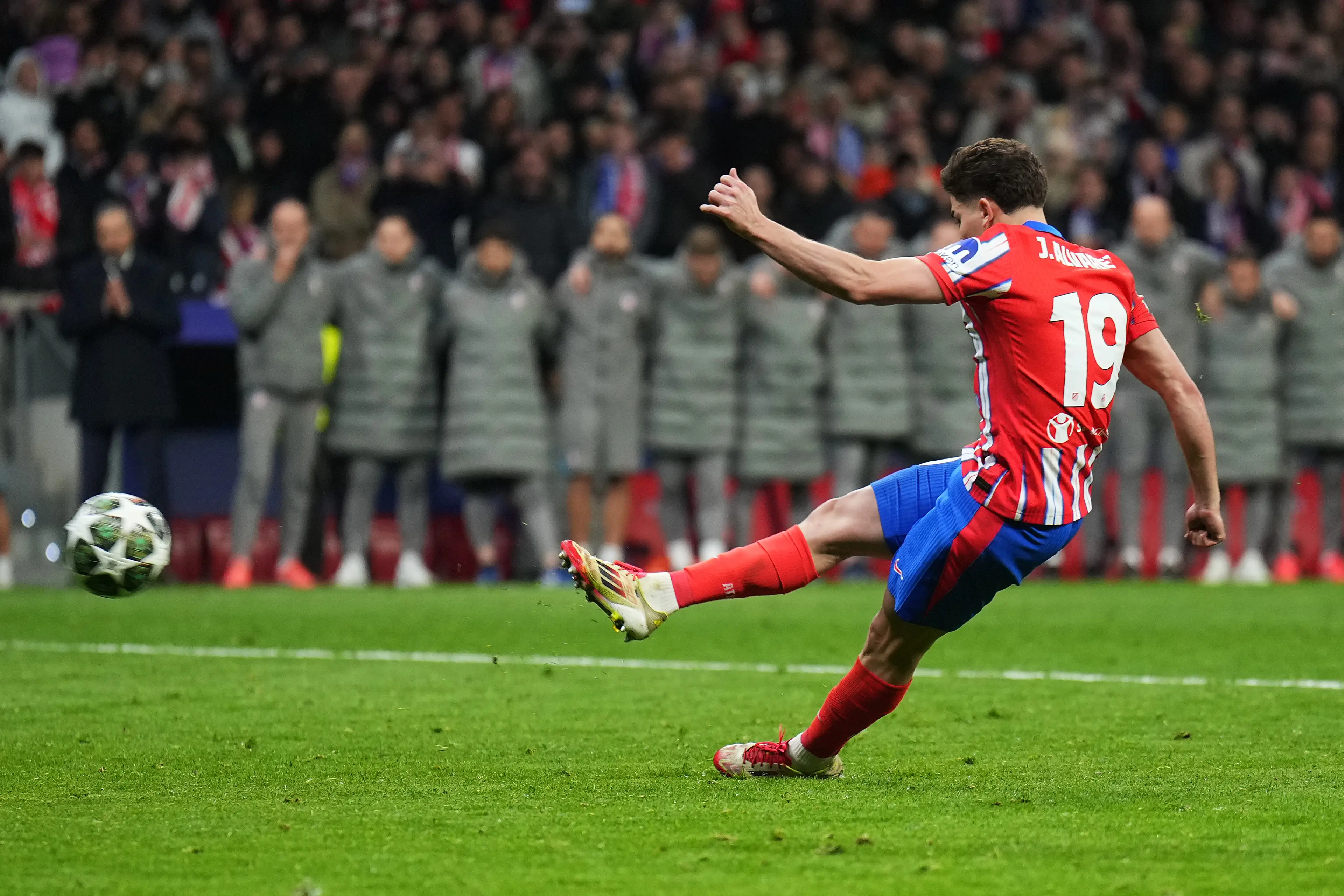
Most memorable decision: The clarification and subsequent law change occurred as a direct result of Julian Alvarez's penalty in a shoot-out between Atletico Madrid and Real Madrid in the Champions League in March 2025.
Alvarez slipped, made a slight and accidental double touch, and scored his penalty. His successful spot kick was disallowed and recorded as a miss, and Real Madrid went on to win the shoot-out. UEFA appealed to FIFA for a review of the law in cases where the illegal second touch is 'clearly unintentional', as it was in this case.
VAR and yellow cards: Can a second yellow now be overturned?
World Cup 2026 was the first competition to bring yellow cards into the remit of VAR in any way, shape or form. The Premier League followed suit in its rule changes for 2026/27.
The review scope of VAR now includes second yellow cards but only one way round. An incorrectly awarded second yellow card can be reviewed and overturned to reprieve players who are given 'clearly wrong' second yellow cards and dismissed.
VAR cannot review or recommend potential second yellow cards that are not awarded by the referee on the pitch.
Most memorable decision: The extended scope of the VAR for second yellow cards has not yet been used in the Premier League, where clear and factual evidence is required to allow an overturned decision. Re-refereeing on a subjective basis is not permitted.
READ NEXT: Premier League VAR table 2026/27: Every decision for each club this season and who benefits most
Goalkeeper injury trial: Why might an outfield player have to leave?
The Premier League and the rest of English football are currently engaged in a trial designed to stamp out the scourge of goalkeepers coincidentally sustaining knocks that don't require them to be substituted at opportune moments that allow their teams to waste time or disrupt the flow of a match.
Goalkeepers are the only players not required to leave the field after treatment, which has led to a trend of so-called tactical timeouts. The trial aims to close that loophole by requiring managers to nominate an outfield player to spend one minute off the pitch when a goalkeeper injury stops play. If no player has been nominated within 10 seconds, the captain leaves the pitch.
Exceptions are in place for treatment immediately after a foul on the goalkeeper or a collision between the goalkeeper and an outfield player, and for when the goalkeeper is bleeding.
Most memorable decision: While the trial is underway in the Premier League, EFL, WSL and National League, there has not yet been an example of significant controversy, indicating that the trial might be working exactly as intended.
Corner-kick rules: When is blocking the goalkeeper a foul?
Set pieces have never been more important or more nefariously prepared in the Premier League than they are today. Routines are designed to block the goalkeeper and defenders to free up chances on goal or create chaos in the six-yard box, but there has not yet been a direct change to the Laws of the Game in the name of further outlawing the blocking of the goalkeeper.
However, the Premier League has directed officials to place an emphasis on holding and contact on the goalkeeper that doesn't result from any attempt to play the ball.
According to the Premier League Refereeing Points of Emphasis for 2026/27: "Challenges on goalkeepers will be penalised where an attacking player makes a clear action with no intent to play or challenge for the ball which results in contact that impacts the ability of the goalkeeper to play or challenge for the ball."
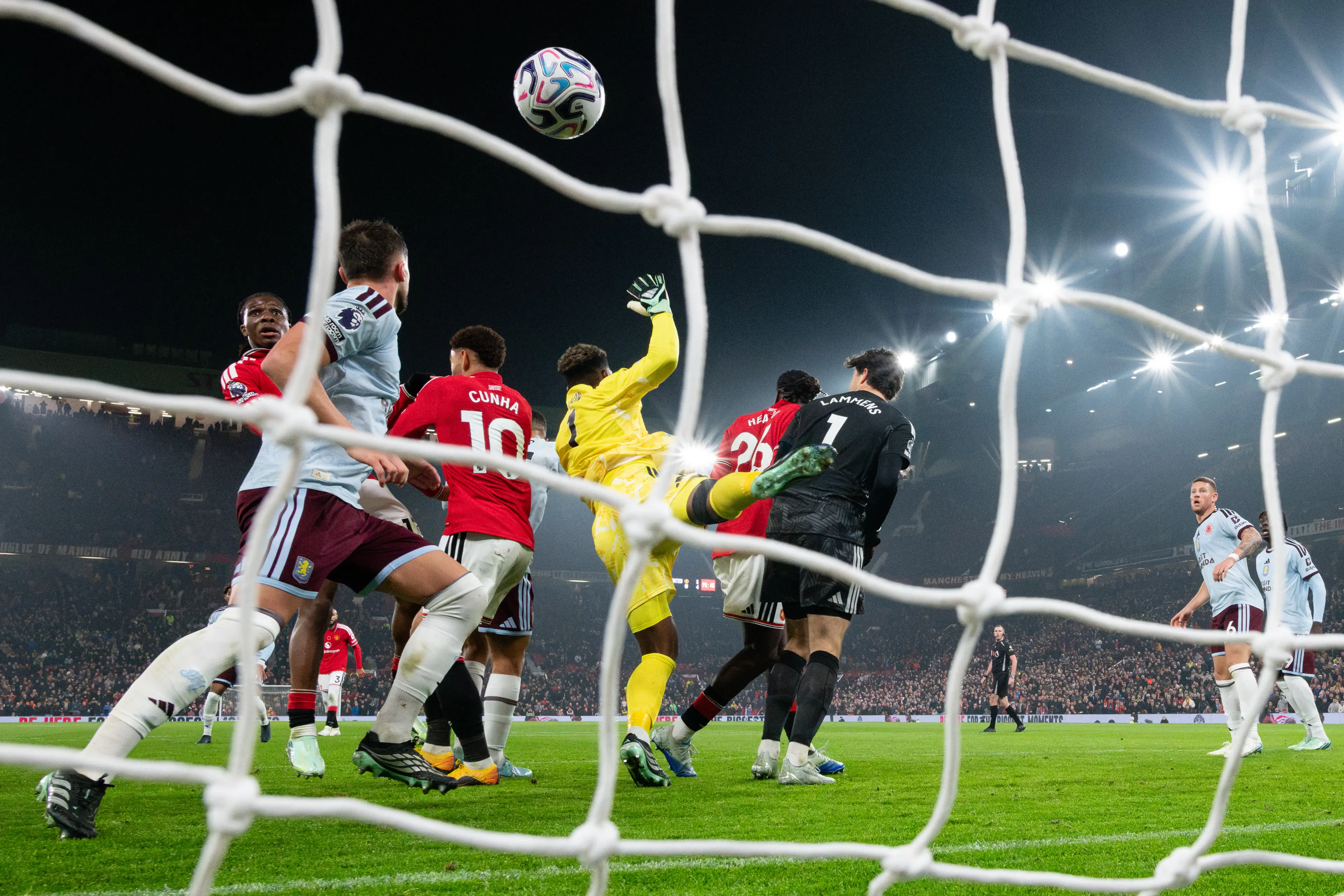
Most memorable decision: Manchester United and Aston Villa drew 4-4 in November 2026 and United's dramatic late equalising goal was a matter of some controversy. Senne Lammens, the Red Devils goalkeeper, was up for a corner and impeded Zion Suzuki, his opposite number, as United scored. Although the contact was minuscule, Lammens was facing away from the ball and actively seeking to block Suzuki throughout the play.
Does football have rules or laws?
Football is governed by the Laws of the Game, the official document that guides referees. The details within are commonly referred to by fans as football's 'rules', which tends to be used as an umbrella term that covers the Laws of the Game as well as the interpretations, protocols and guidelines that aid their implementation.
How many laws are there in football?
The Laws of the Game consists of 17 numbered laws. Law 11 governs offside. Law 12 details fouls and misconduct. Law 14 outlines everything to do with penalty kicks.
Who makes football's laws?
The Laws of the Game are defined by the International Football Association Board (IFAB). The board comprises eight votes, four of which belong to FIFA. The other four votes sit with the four football associations of the United Kingdom: the Football Association, the Scottish Football Association, the Irish Football Association and the Football Association of Wales.
Individual competitions have responsibility for specific implementations and guidance for match officials, and in some cases are permitted to not adopt some provisions of the Laws of the Game.
Topics: Football, Premier League
 Chris Nee