The World Cup table you didn't know about that will decide England's knockout games

England already have a rough idea of which teams they could face in the World Cup round of 32 after securing qualification - but FIFA are using a brand-new method to do the maths which is completely different to anything seen before.
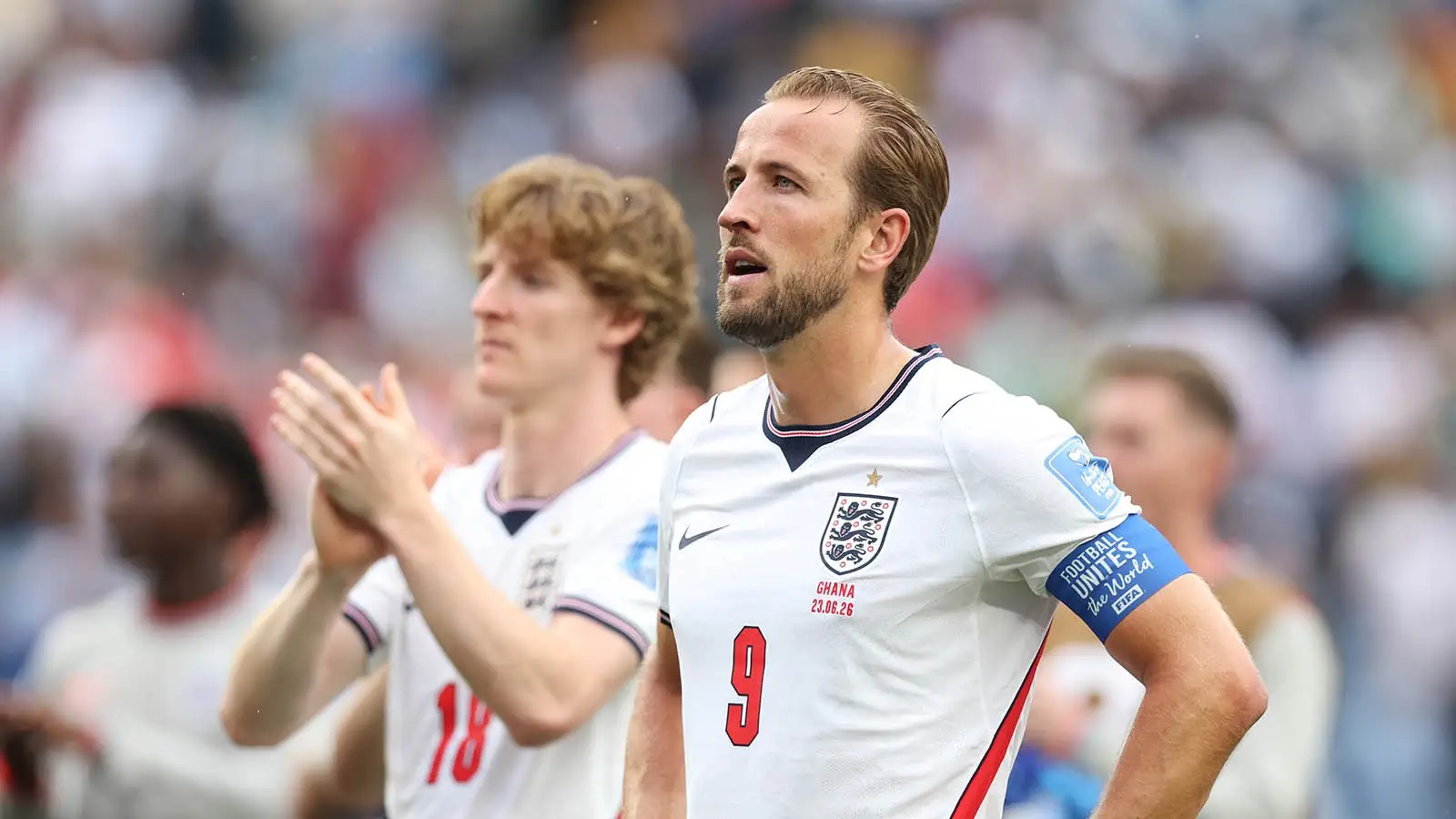
The Three Lions guaranteed their place in the knockout stages of the World Cup with their 0-0 draw against Ghana in Boston on Tuesday.
The stalemate does mean that they may need to defeat Panama in their final group match - unless Ghana and Croatia draw in their match - to top the group.
But should they end up topping the group, as is largely expected, they will face one of five third-placed teams in the round of 32.
Advert
The simple part of the equation is that the Three Lions will face a team from either Group E, H, I, J or K.
As things stand before the final round of fixtures, that would mean facing one of Ecuador, Cape Verde, Senegal, Algeria or DR Congo.
But depending on how the final matches are played out, they could yet face the likes of Ivory Coast or Portugal, or even Spain in an absolute worst-case scenario.
READ MORE: England's potential World Cup knockout opponents and road to the final revealed
To decide England's exact round of 32 opponent is where FIFA's new calculation system comes in.
At the beginning of the tournament, a total of 495 pairings were potentially possible for round of 32 matches involving the third-placed teams - though that figure has naturally been whittled down as teams confirm their spots in the top two of each group, or are eliminated from the World Cup entirely.
How are third-placed teams worked out?
The first ranking system for third-placed teams is, naturally, points. Any team who scores four points and finishes third is effectively guaranteed a spot in the round of 32 at this stage.
According to Opta Analyst, in fact, there is a 99.81 per cent chance of a team qualifying for the round of 32 if they finish in third with exactly four points.
FIFA then uses a number of tiebreakers in the case that teams cannot be separated - goal difference, goals scored, fair-play status and FIFA ranking.
While most of those tiebreakers are fairly self-explanatory, FIFA's fair-play system works by deducting one point from a nation's tally for a single yellow card, three points for a sending off via two yellow cards and four points for a direct red card.
South Africa, for instance, would be at an immediate disadvantage if they finish third and rely on fair-play, as they had two players sent off in their opening group stage match against Mexico.
What happens next?
Each of the eight third-placed teams that have qualified for the round of 32 are each given a slot in the knockout bracket by FIFA, like in other tournaments in which the same rule applies.
A series of calculations, based on various factors, must be completed in order to work out exactly which third-placed team gets which opponent.
FIFA produced a full list of all 495 possible combinations at the beginning of the tournament, which are dependent on which groups the third-placed teams qualify from.
Ahead of the final set of fixtures, as per BBC Sport's projection, England are set to take on Cape Verde in the round of 32 in what would be a first-time competitive fixture - but that could all yet change.
Topics: FIFA World Cup, England, FIFA
 Ryan Smart