FIFA respond to 'insensitive' Argentina banner in statement after UK government urge action

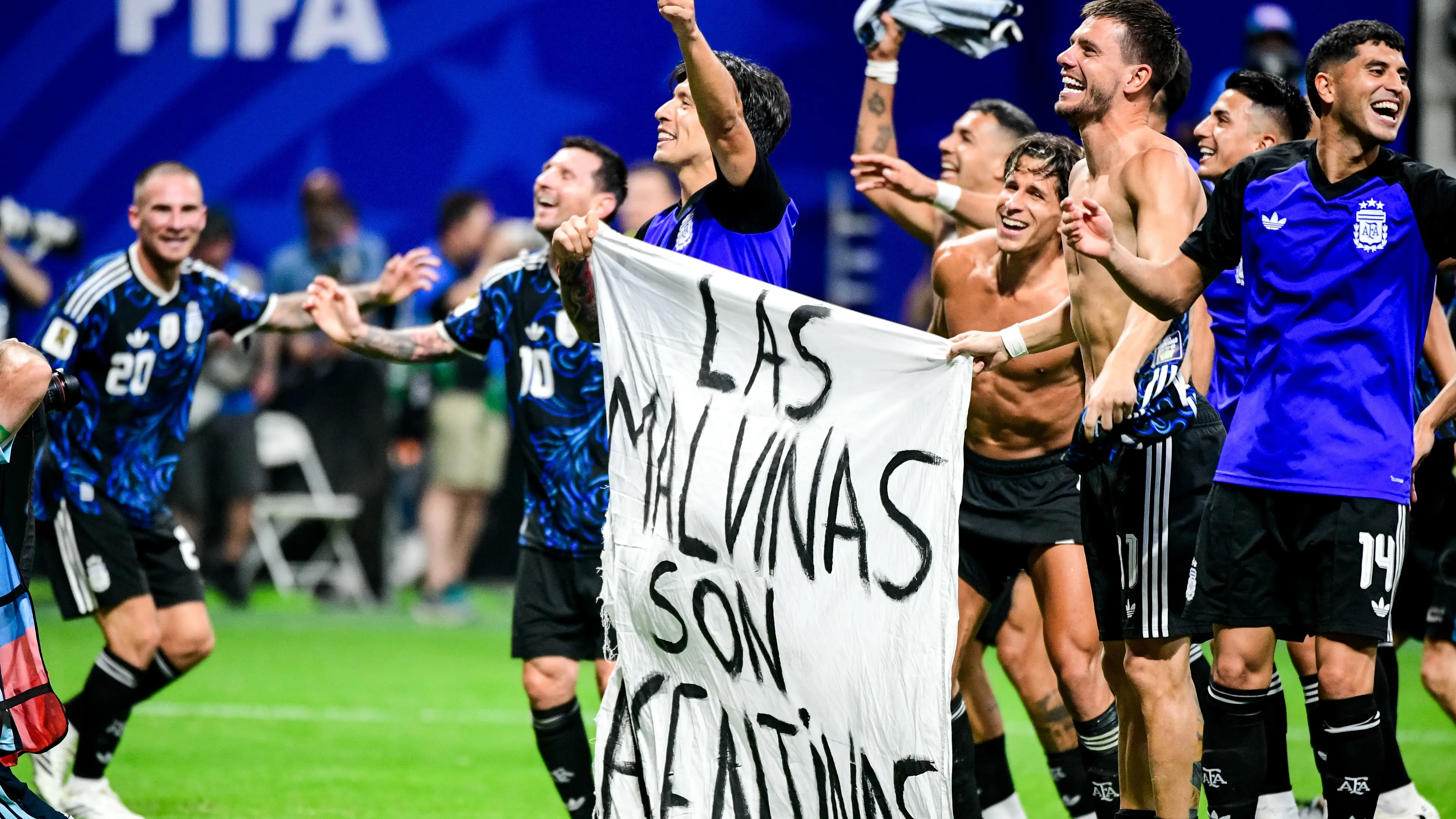
FIFA is exploring disciplinary action after a group of Argentina players displayed a banner touting their country’s claim to the Falklands Islands following their 2-1 win over England at the World Cup.
After the full-time whistle of Wednesday's semi-final, some members of the Argentina squad could be seen holding a banner that read "Las Malvinas son Argentinas", which translates as "The Falklands are Argentine".
Lisandro Martinez, Cristian Romero and Giovani Lo Celso were among those to hold the banner referencing the 1982 conflict, which led to 649 Argentinians and 255 Britons losing their lives.
The Falkland Islands are a British Overseas Territory in the South Atlantic, although they remain the subject of a long-running sovereignty dispute between Britain and Argentina.
Advert
FIFA, meanwhile, prohibits political messages and in 2014, Argentina's football association were fined £20,000 by FIFA in 2014 for holding a banner with the same message before a friendly against Slovenia.
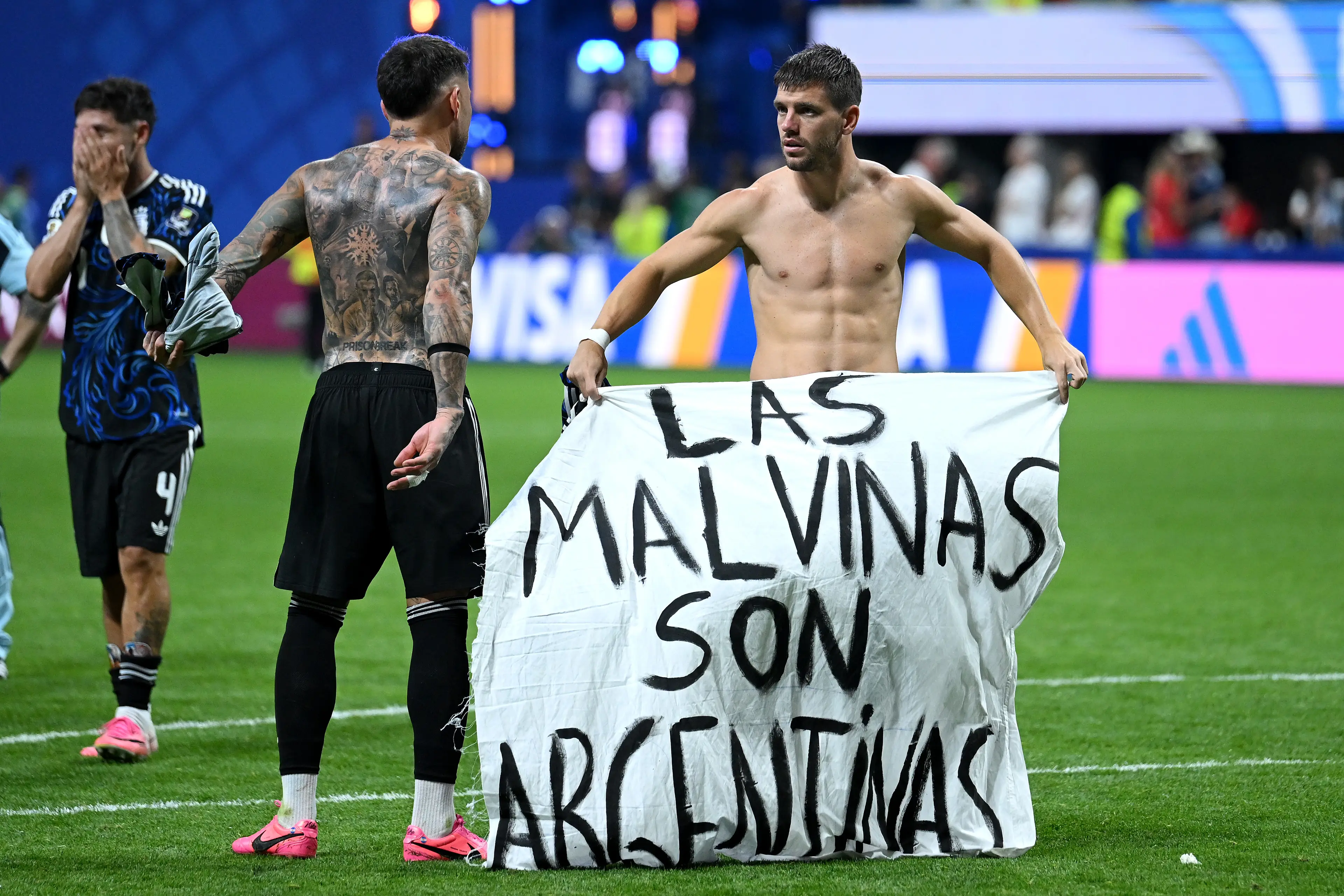
Following the incident in Atlanta, the UK government urged FIFA to investigate following a huge amount of backlash.
Peter Kyle, the business secretary, said the banner was “an egregious violation of the rules of not having political activity as part of the football”.
He added: “The World Cup has one of its central tenets that politics is separate from football. That is now a matter for Fifa. I expect Fifa to do its investigation thoroughly.”
According to The Guardian, Starmer's spokesperson said the UK prime minister endorsed Kyle’s comments urging FIFA to investigate.
The spokesperson said: “The World Cup might not be ours, but the Falkland Islands definitely are. Our position is unchanged. Self-determination rests with the islanders and our commitment to the Falklands will never waver."
They added: “More broadly, potential action is a matter for FIFA, but it’s been a fantastic World Cup and we’ve said throughout that politics should stay out of football.”
The Liberal Democrats have also written to FIFA demanding that Argentinian players involved in the incident are banned from Sunday’s final against Spain.
Party leader Ed Davey said: “In August 2024 Rodri and Alvaro Morata were rightly banned for one match for singing ‘Gibraltar is Spain’. Now the Argentine players who celebrated with the ‘Falklands are Argentine’ banner must be barred from the final.”
FIFA issue statement on Argentina's references to the Falkland Islands
On Thursday, a spokesperson for FIFA said the governing body were "assessing match reports" before deciding whether to punish Argentina for the incident.
A statement read: "As is standard procedure, FIFA’s independent Disciplinary Committee is currently assessing the match reports and considering the relevant circumstances before deciding on potential further steps based on the FIFA Disciplinary Code."
The update from FIFA comes after The Falklands Islands Government called for sanctions from FIFA.
"The Falkland Islands Government is disappointed - though regrettably not surprised - that the Argentine football team decided to tarnish the result of last night’s World Cup football semi-final - a game that did not in any case involve the Falkland Islands," a statement read.
"That said, it is hardly news to anyone that the people of the Islands were victims of an aggressive invasion in 1982 which left many traumatised. The banner displayed by Argentina last night, therefore, was particularly insensitive for many people in the Falklands.
"It is the avowed policy of the Falkland Islands Government that we do not wish to see politics being brought into sport. Nor do we wish the Islands and their people to be used as a political football in every conversation about England and Argentina.
"We welcome the UK Government's supportive statement this morning. As Business Secretary Peter Kyle highlighted, the World Cup has as one of its central tenets that politics is separate from football.
"We hope FIFA will make good on their promise to keep politics out of sport, and sanction all behaviour of this nature in line with its own rules."
Topics: England, Argentina, FIFA, FIFA World Cup
 Jack Kenmare