
Mercedes and Red Bull face extreme punishment if they continue using controversial engine trick

Both Mercedes and Red Bull have been warned they face the worst possible punishment if they continue to exploit an engine loophole now banned by the FIA.
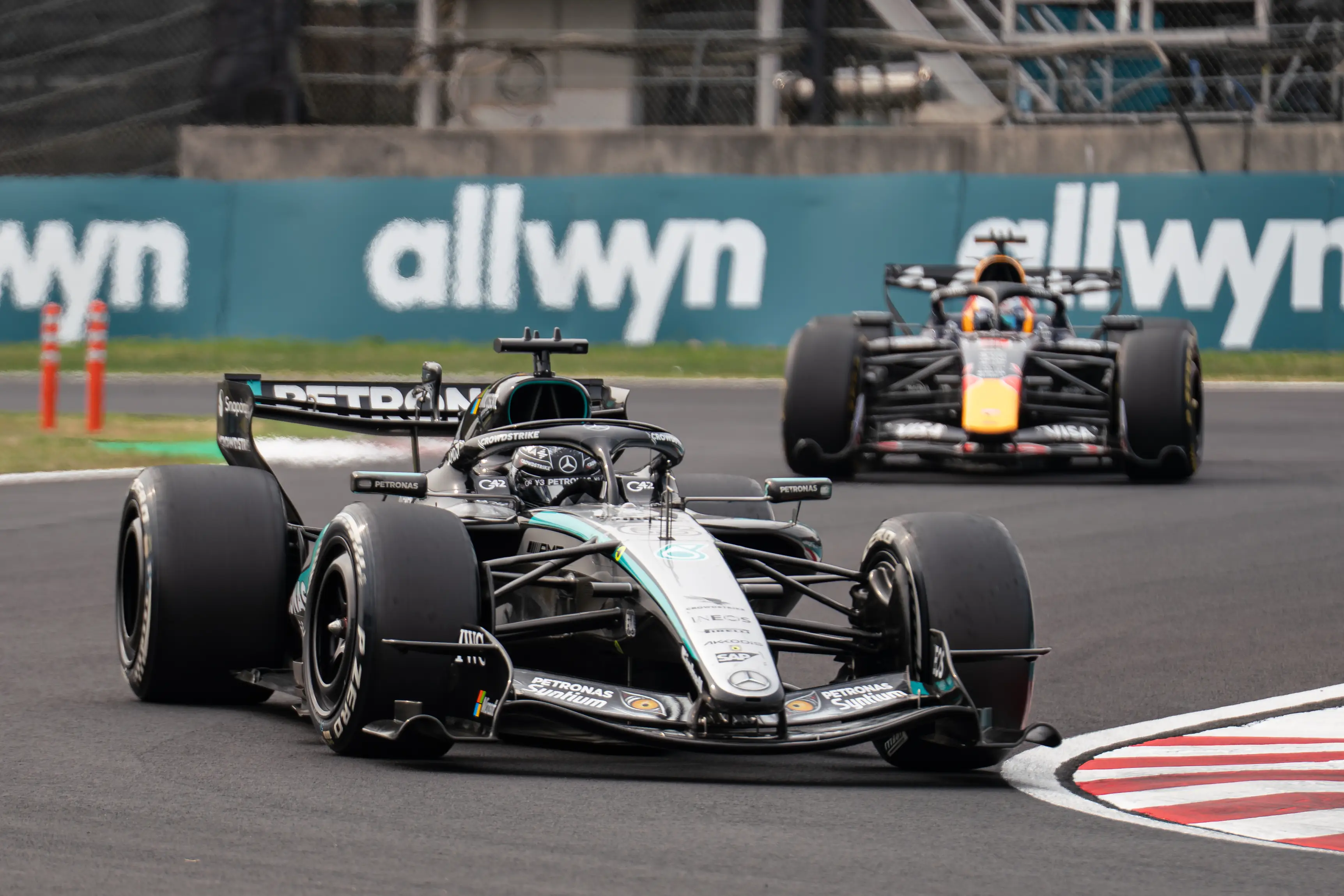
Despite leading the power-unit arms race, the two teams are having very different fortunes this season, with Mercedes winning all three races to date, with Red Bull yet to finish in the top five.
Four-time world champion Max Verstappen currently sits in ninth in the driver standings, with significant speculation over his future in the sport after he claimed he was considering retirement.
Red Bull's troubles have only got worse in the enforced April break, after it was confirmed that the FIA have now banned a trick used by themselves and Mercedes in qualifying to gain extra speed towards the end of the lap.
Advert
The loophole reportedly gave the teams a 50kW-100kW advantage during the final sector of their qualifying laps, which could be worth over a tenth of a second and multiple positions depending on the circuit.
Despite the loophole being banned, the team's will still have the power to use it, meaning the FIA have taken no chances it when it comes to a potential punishment.
According to Crash.net, if either team fails to comply, it will go down as a 'technical breach', with other technical breaches including cars being underweight and ride height issues.
For all these breaches the penalty is instant disqualification, and it has been confirmed by the FIA that using the loophole will also be dealt with in such a manner.
How did Red Bull and Mercedes exploit the engine loophole?
Mercedes and Red Bull were able to exploit this rule due to the F1 regulations not be requiring teams to follow the ramp down requirement if the MGU-K is shut for technical reasons.
This loophole was designed to allow teams to shut down their MGU-K to avoid potentially damaging the engine if issues were detected; however, the FIA were aware this could create an advantage if exploited.
To combat this, the FIA introduced "continuous offset", which meant that if a driver's MGU-K was disabled, it could not be activated again for the following 60 seconds.
While this acts as a deterrent during the race, both Mercedes and Red Bull quickly realised that drivers didn't need the MGU-K on their cooldown laps, making the final stages of qualifying laps the perfect time to exploit the loophole.
It is unknown how big an impact this will have on the pecking order, with the true impact only going to be revealed as the cars hit the track for Miami sprint qualifying.
Topics: Formula 1
 Tom Jenkins