F1 insider reveals 'significant' regulation change plan for 2027 after complaints

Ex-Formula 1 driver Ralf Schumacher has claimed that a 'significant' regulation change in relation to engines is in the works ahead of the 2027 season.
The 2026 season has seen the biggest raft of regulation changes in Formula 1 for nearly two decades, with power unit, battery and aerodynamic overhauls all put in place.
There has a mixed response to certain regulation changes, such as the reliance on battery harvesting and deployment, from drivers such as Max Verstappen over the first two races.
The Dutchman compared the standard of racing to Mario Kart, while reigning champion Lando Norris described the cars as the 'worst' ever made.
Advert
But the regulations have promoted more overtaking, and Charles Leclerc - whose Ferrari team have adapted well to the changes - has stated that overtakes feel far less 'artificial' since the removal of DRS.
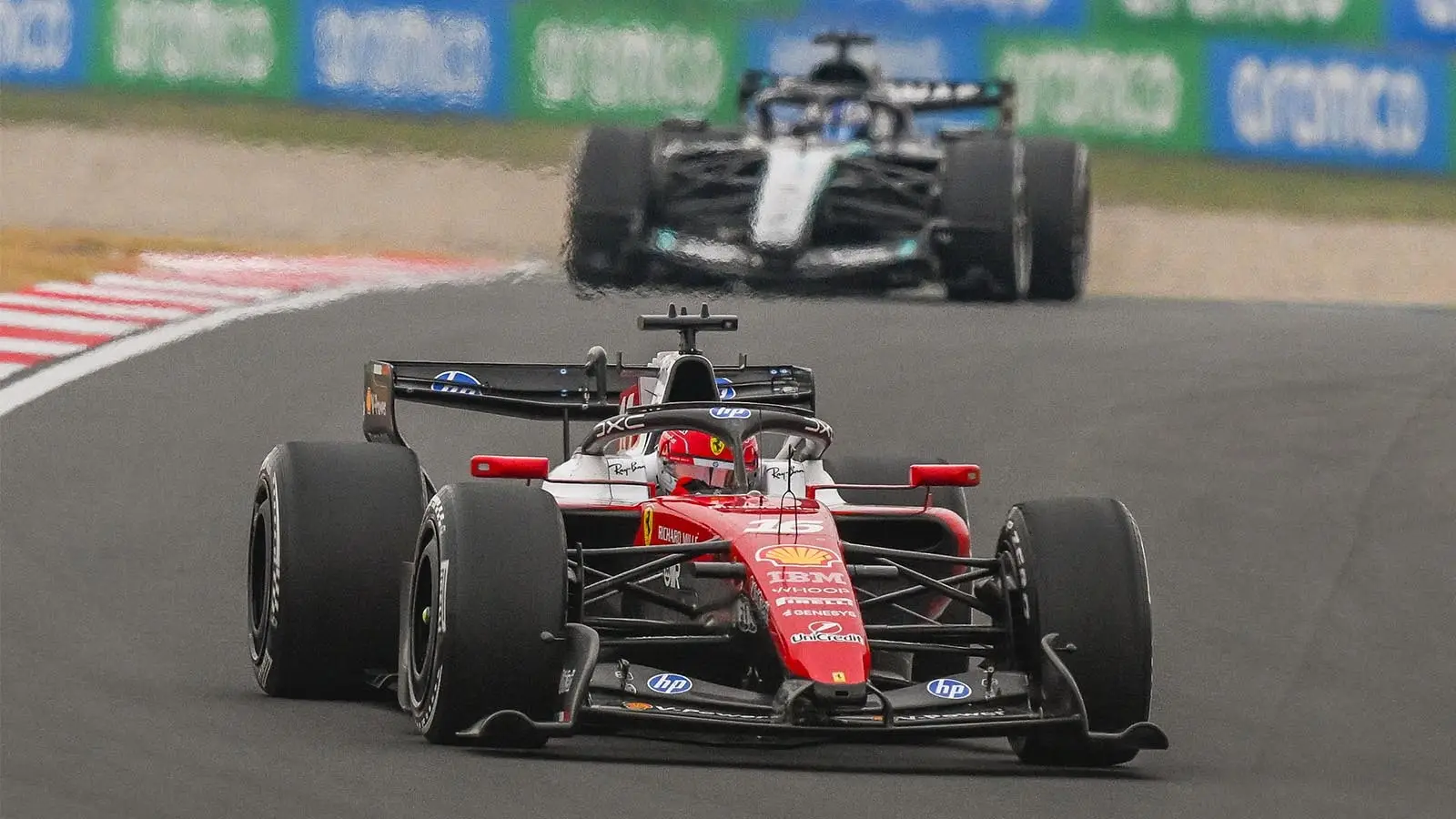
On the power unit side, it is clear that certain manufacturers have developed an advantage over others, with the Mercedes works team up to nine tenths a lap faster on straights than the Ferrari cars in China.
There has been a row over the engine compression ratio in use on the Mercedes, with the FIA subsequently closing that particular regulatory loophole following a vote by the teams.
One of the other rows in relation to the power unit has been concerns over 'super clipping' - where the car effectively runs out of battery before the end of the straight and begins decelerating as a result.
Speaking to F1-Insider, former Toyota and Williams driver Schumacher claims the new phenomenon isn't a significant issue given the amount of overtaking that is still taking place.
But he suggests that there have been discussions to move the power split closer to the internal combustion engine (ICE) and remove the reliance on battery power. The split stands at 50/50 currently.
"You can see that Formula 1 recognises it has a problem," Schumacher said.
"Reducing the electric component would of course solve the problem, but that only works if you have more conventional power from the combustion engine.
"I've heard, at least in the background, that there are plans in the works to make a significant change next year, to change the ratio back to ideally 70 per cent, something along those lines."
What is super clipping?
Super clipping is where the hybrid engine system takes power away from the internal combustion engine (ICE) to charge the battery while a car is on a straight.
Cars can use 250kW out of a total 350kW power allocation to charge the battery, as a result of the new hybrid system and an increase in electrical energy in use in 2026.
That results in a power loss to the rear wheels, thus causing the top speed reduction on the straights.
A ratio adjustment back towards the internal combustion engine would mean less of a 'super clipping' effect, enabling cars and drivers to maintain higher straight-line speeds than they are doing at present.
Topics: Formula 1, FIA, Mercedes, Ferrari, Max Verstappen
 Ryan Smart