Kevin Pietersen Says Bowler Could've Been All-Time Great But 'Gave Up Best Years'

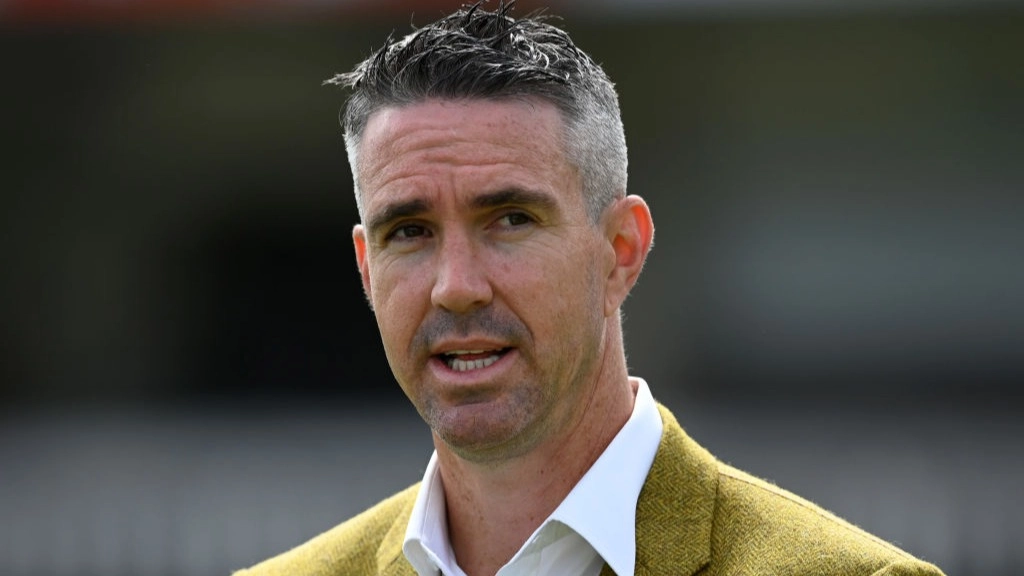
Kevin Pietersen believes that the toughest bowler he ever faced could have been an all-time great - but 'gave away his best years'.
Pietersen is ranked sixth in the list of England's all-time leading run scorers with 8,181 runs from 181 innings.
He is one of the flamboyant batters in English cricket history, and represented England across all formats between 2004 and 2014.
Advert
He was unceremoniously sacked by England at the conclusion of the 2013/14 Ashes series and would never play international cricket again.
In the later years of his career, Pietersen focused on T20 franchise cricket before retiring from all forms of the game in 2018.
Pietersen struck fear into bowlers with his aggressive strokeplay and ability to produce the unexpected, though even he had to encounter spells of poor form.
In 2010, he developed an issue facing left-arm spin during England's tour of Bangladesh, twice getting out lbw in three ODIs.
He received an email of advice from legendary India batter Rahul Dravid to solve the problem, which was partially due to the new Decision Review System (DRS) that gave umpires more confidence to give lbws if the impact of the ball was further down the wicket.
Later that summer, Pakistan travelled to England for a four-match Test series, with Pietersen only managing to average 23 across six innings.
Slow left-arm spinner Saeed Ajmal caused the entire England team problems during that series, along with fearsome fast-bowling duo Mohammad Amir and Mohammad Asif.
Asif was, at the time, arguably the best pace bowler in world cricket and was able to beat either side of the bat with ease through late swing.
He was one of the first bowlers to master the art of wobble-seam bowling, with James Anderson once admitting that he picked up the skill after watching Asif bowl during the 2010 series.
In his 2015 book, 'Kevin Pietersen On Cricket', Pietersen described Asif as 'the best pace bowler I've faced', explaining: "The only man quicker off the ground than through the air.
"Somehow the ball always seemed to accelerate after it pitched, probably because he almost always hit the rope to make it shoot off the track. It was his wobble-seam delivery that Jimmy Anderson copied after seeing it in 2010.
"You just can't play that kind of movement, that natural variation of the wicket, because it happens so late - and that's why it's a bowler's best friend.
"Asif's length was so full that you had even less time to defend than usual.
"Even though he only got me out a couple of times, because he pinned me down and worked me over I would give my wicket away to whoever was at the other end. And I never dominated him, or felt in control against him; I don't think there's anyone else I can say that about."
But when naming his all-time best XI, he wrote: "I might have gone for Mohammad Asif, who could have been one of the best ever.
"But he gave up his best years, and even though he was brilliant, given what he did, I just can't select him."
The fourth and final Test match against England at Lord's would be the last international that Asif, then 27, would ever play.
On the fourth morning of the Test, Asif, fellow fast bowler Amir, who was just 18, and Pakistan captain Salman Butt were all implicated in a spot-fixing scandal.
The News of the World newspaper published allegations that Asif and Amir had bowled deliberate no-balls during Pakistan's bowling innings at Lord's.
They published a video which showed sports agent Mazher Majeed correctly predicting the exact deliveries that the no-balls would be bowled.
In November 2011, Asif, Amir and Butt were found guilty at Southwark Crown Court of conspiracy to cheat at gambling and conspiracy to accept corrupt payments.
All three, along with Majeed, were given varying jail terms, having already been banned from all forms of cricket by the ICC.
Asif was given a one-year prison sentence, and served six months at HM Prison Canterbury before being released.
Butt and Asif did return to domestic cricket in 2016 after their five-year bans expired, but neither played for Pakistan again.
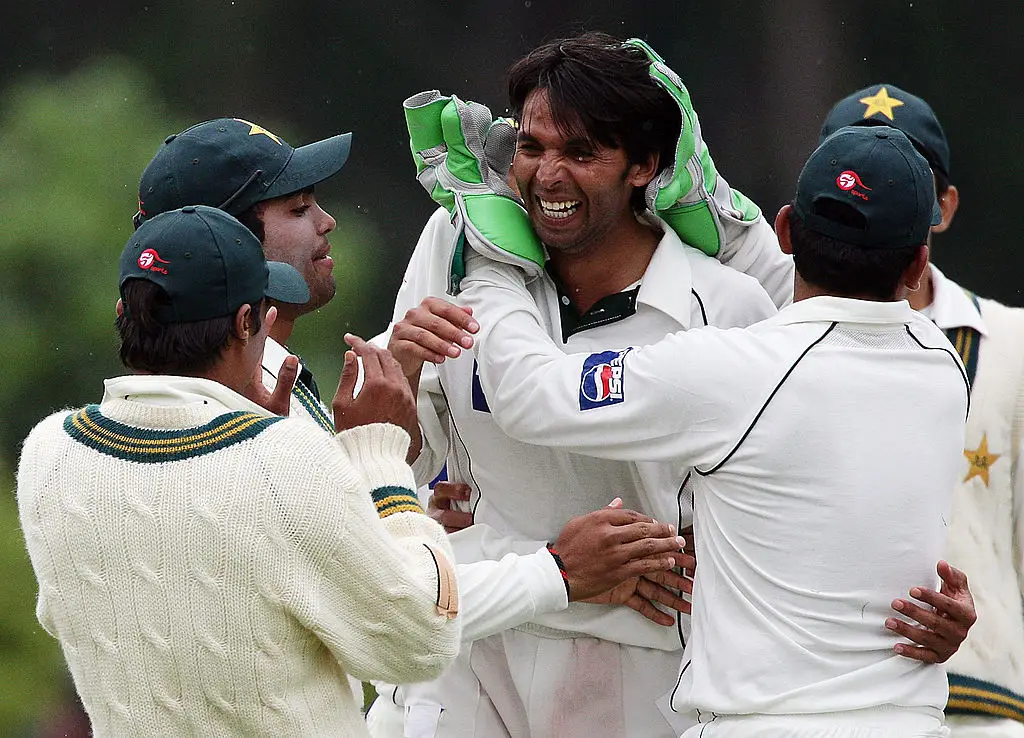
Amir, meanwhile, also received a five-year ban but was allowed to return to cricket several months earlier, and would go on to play cricket for Pakistan in all three formats.
He was said to have 'admitted his guilt and remorse' and 'co-operated with the unit's ongoing investigations', as well as 'recording messages for education sessions'.
In 2017, he took five wickets in four matches during the Champions Trophy win, which culminated in Pakistan defeating India at Edgbaston in the final, and was their top performer with the ball at the 2019 World Cup.
Now 33 years old, the left-arm fast bowler now exclusively plays T20 franchise cricket, having retired from internationals in 2024.
Speaking to ESPNcricinfo in 2020, Asif recalled: "My ambition was to finish my career on a better note and I do have regrets. But that's a different story.
"I think whatever happened it had to happen and that's okay. Everyone makes mistakes and I did too.
"I enjoyed playing cricket to the core. I really loved it and that means that I loved every spell I bowled, because each spell had a story, a context and purpose to it.
"If for instance in some spell I wasn't getting a wicket, I was still learning something important about the batsman and how to get his wicket next time."
 Ryan Smart