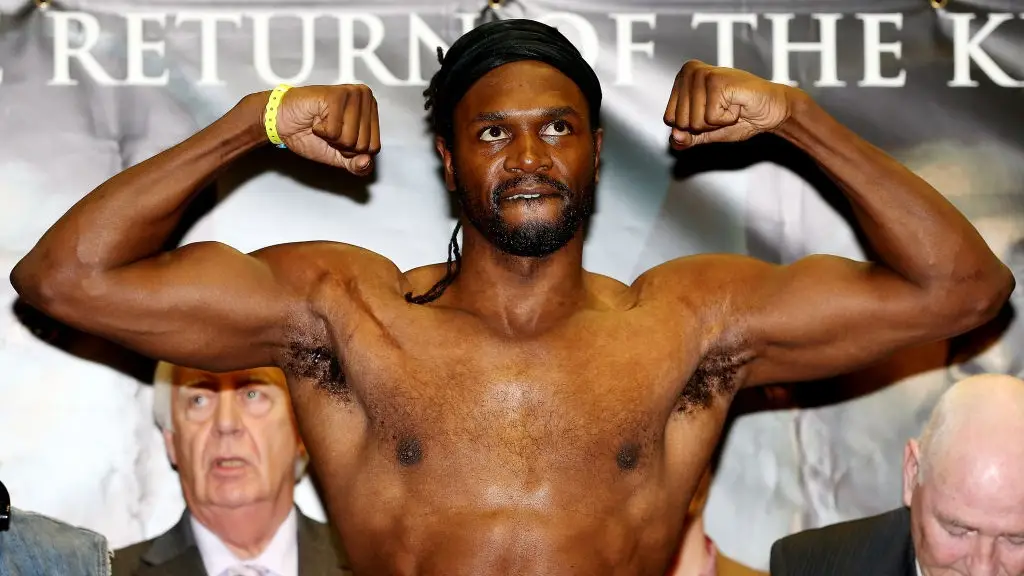
What happened to British Olympic trailblazer tipped to ‘stun the world’ by Lennox Lewis

Over the past three decades or so, Great Britain has produced several world heavyweight champions, including household names Anthony Joshua and Tyson Fury – but what happened to Olympic gold medallist Audley Harrison after his triumph at the 2000 Games in Sydney?
Since 1995, several Brits have achieved the coveted feat of becoming heavyweight world champion by holding one of the four recognised belts – WBO, WBA, IBF and WBC.
Those men are Frank Bruno, Lennox Lewis, Herbie Hide, David Haye, Fury, Joshua, Daniel Dubois and current WBO champion Fabio Wardley.
Meanwhile, several others, such as David Price, Derek Chisora and Dillian Whyte, have also set their sights on world honours in the paid ranks, with the latter two trying and failing in world title fights.
Advert
However, one man who majorly underachieved after a stellar amateur career was Audley Harrison.
Harrison became hot property when he defeated Mukhtarkhan Dildabekov to win Olympic gold in the super-heavyweight division at the Sydney Games.
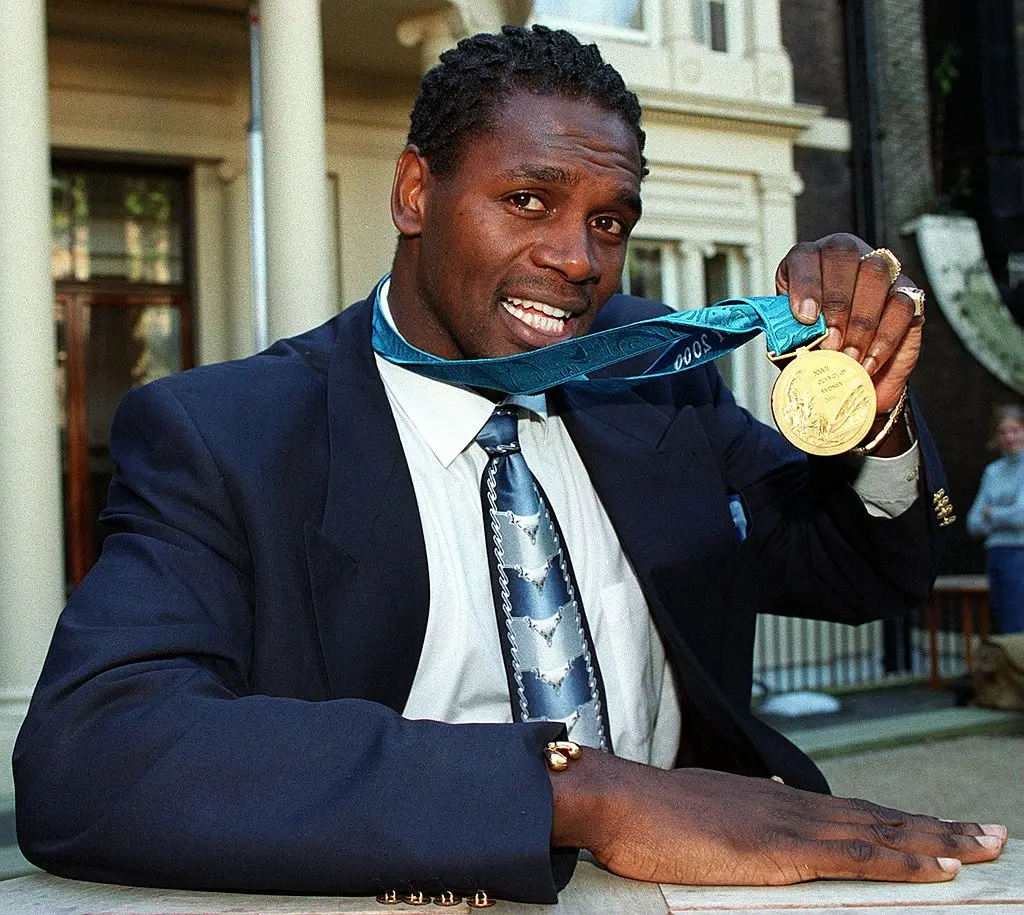
A year later, he penned an exclusive two-year deal, worth £1 million, with the BBC to broadcast his professional fights, before quickly building a record of 19 wins from as many bouts.
But in December 2005, he ran into fellow Brit Danny Williams, who had beaten Mike Tyson just over a year earlier, with the pair battling it out for the Commonwealth title.
Williams registered a split-decision victory and, in doing so, handed Harrison his first professional defeat.
That setback became something much deeper when the Londoner also lost to Dominick Guinn on his return in April 2006, again losing on points, this time by unanimous decision.
However, Harrison continued, beating Andrew Greeley in June 2006 before avenging his loss to Williams by knocking him out in the third round of their rematch in December of the same year.
Harrison was back in title contention after a tumultuous year, but once again suffered a setback, losing by third-round TKO to Michael Sprott at Wembley Arena in 2007.
In 2009, the heavyweight, now 54, was on a winning streak when he entered Prizefighter 8.
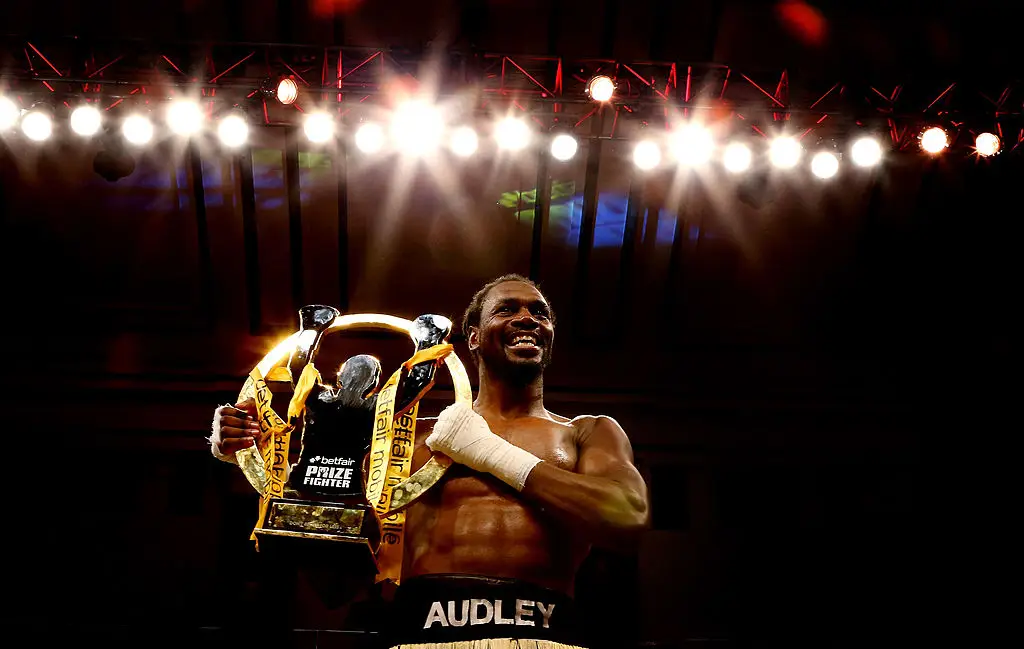
He went on to win the tournament, beating Scott Belshaw, Danny Hughes and Coleman Barrett, while also claiming the £32,000 prize.
At 37, the Brit was at a career crossroads when his rematch with Sprott came around, with the European title on the line.
And, as he had done several years earlier against Williams, Harrison defeated Sprott by a 12th-round KO to breathe new life into his career and ultimately earn a WBA world title shot against Haye.
Ahead of the match-up, former undisputed heavyweight champion Lewis said: “Audley’s definitely got the power to stun the world.”
However, Harrison fell short against his fellow Brit, suffering a third-round knockout.
He returned with a win over Ali Adams almost two years later, before losing by first-round knockout to 2008 Olympic bronze medallist Price.
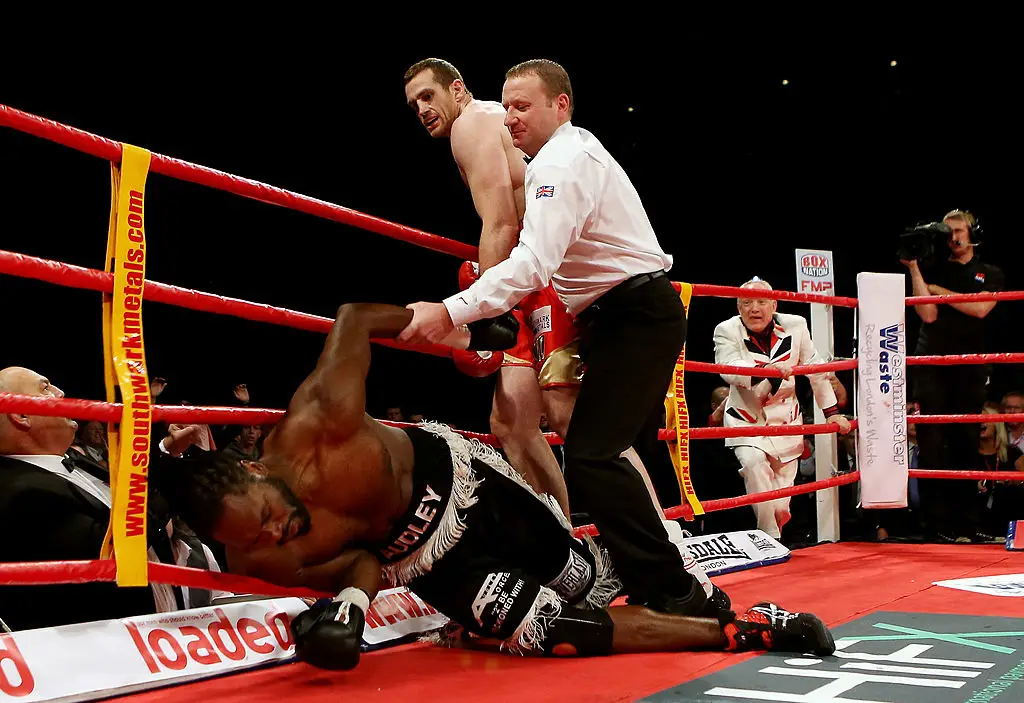
In 2013, he won Prizefighter 29, but his resurgence was quickly curtailed by Deontay Wilder, with the American knocking Harrison out in Sheffield on 27 April 2013, which proved to be his final professional fight.
He finished his career with a record of 31 wins and seven losses, but ultimately failed to fulfil his potential.
After retiring, Harrison appeared on several reality TV programmes, including Strictly Come Dancing, Celebrity Big Brother and Celebrity MasterChef.
In 2020, the Englishman spoke about his professional career during an honest interview with BBC Sport and advised young fighters to make sure they have a “good team” around them.
“The average boxer doesn't have the business acumen as a youngster or the support to do it on their own,” he said.
“Secondly, you have to get a great trainer. If you bring a trainer from the amateurs, you also need another trainer who understands the professional game – as it's a different game and you have to make that transition.
“The other thing I would say is: take personal responsibility. You have to live the life and make the sacrifices. The socialising, the partying – there's a time and a place. You have to pay the price, as fighters who may not be as talented as you are prepared to do that.”
When speaking about the fact he chose to promote himself, Harrison added: “I didn't win a world title when I should have. If I had just been focusing on boxing, I would have won a world title, no doubt. But I didn't want to play the game because I wanted to be my own boss.”
The former heavyweight has also been open about his struggles with mental health and admitted that he wishes he had been more honest about the topic during his own career.
Topics: Boxing, Olympics, Anthony Joshua, Tyson Fury
 Luke Davies