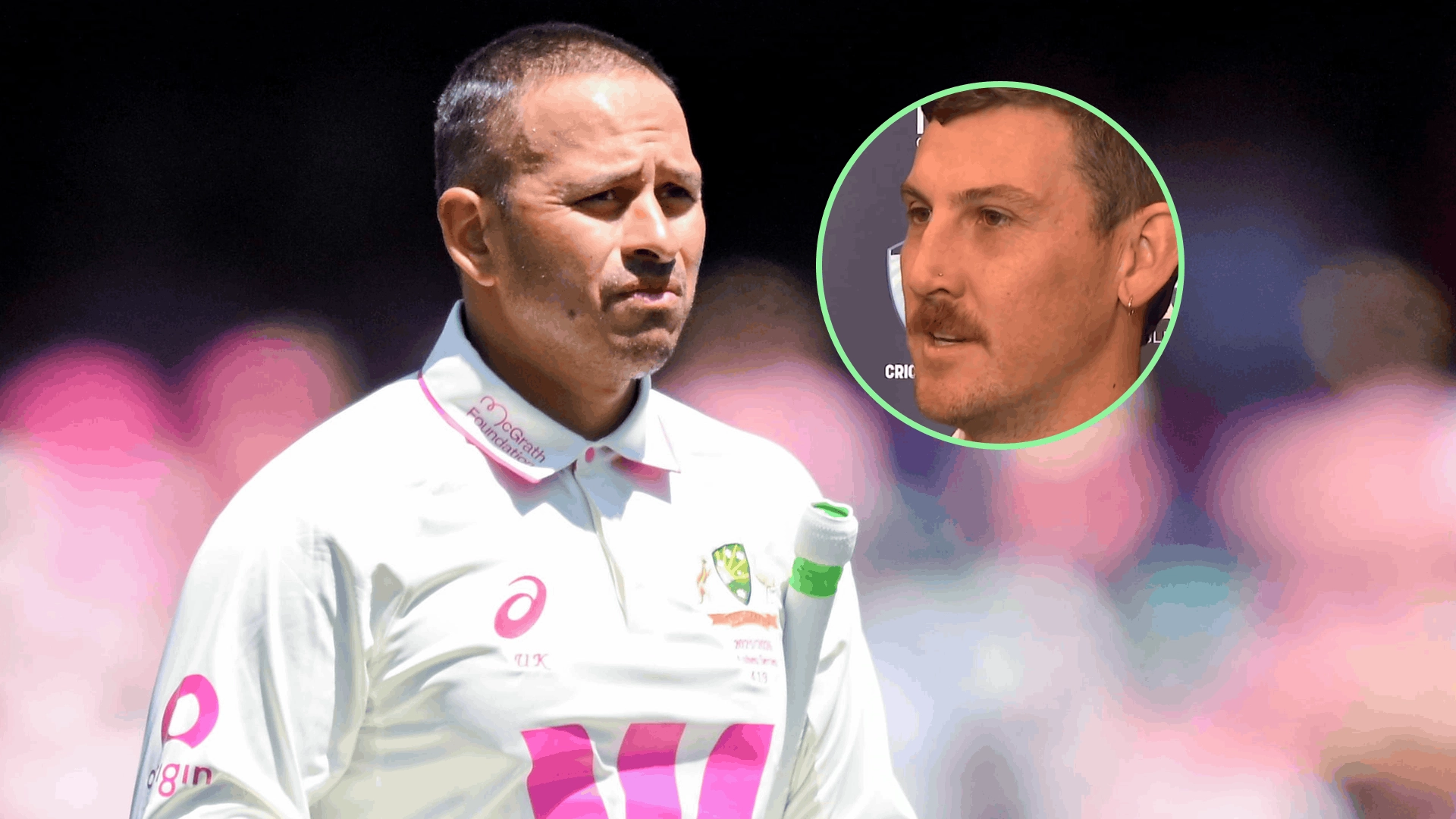
Nic Maddinson's damning response to Usman Khawaja over Sandpapergate as more Australia players speaks out

Nic Maddinson has become the latest Australia player to speak out about Usman Khawaja's explosive Sandpapergate claims in his new autobiography - and his verdict on the matter speaks volumes.
Khawaja, who retired from Test cricket at the end of the 2025/26 Ashes series, wrote in his autobiography 'Sabr' that the entire Australia team should have taken collective responsibility over the ball-tampering scandal that occurred during the 2018 Cape Town Test against South Africa.
The scandal resulted in captain Steve Smith, vice-captain David Warner and Cameron Bancroft being punished with bans from cricket over the plan. Warner was found to have developed the plot and told Bancroft how to rub sandpaper on the ball, while Smith was found to have known about the plan but failed to take steps to prevent it from taking place.
Nic Maddinson responds to Usman Khawaja claims
One of the biggest talking points resulting from Khawaja's claims is that, in the years since Sandpapergate took place, the bowling contingent who played in that particular Test match - Pat Cummins, Mitchell Starc, Josh Hazlewood, Nathan Lyon and Mitchell Marsh - have stated that they had no knowledge of the plan.
Advert
Khawaja's claims, therefore, act as a contradiction. Fast bowler Chadd Sayers, who was part of the touring squad to South Africa in 2018 and made his Test debut in the following match after Cape Town, told CODE Sports that Khawaja's comments were 'accurate'.
He did question why the former Australia opener has chosen this particular time to make fresh claims surrounding the incident, though - and he is not the only one.
Maddinson, who opened the batting for Australia in the opening two Tests of the series against South Africa last month before being dropped for Cape Town, said it was 'disappointing' that the matter had to be addressed again, eight years on.
"It's obviously disappointing that it keeps coming up," he told Channel 10. "But it's time of year, isn't it? Where Christmas comes along and people have books to sell, so things come out.
"It's just disappointing. I think the three guys that have been affected the most, it doesn't really help them at all to relive it. Especially over the past month, having a great series in South Africa, obviously the crowd wasn't as hostile, maybe, as what people expected. But that stuff's still there every day at airports, and the general public making comments here and there. So I guess over time it would wear them down.
"For it to pop up again, the start of the summer, going into a pretty big six months for the [Australia] team, it's obviously probably disappointing for those guys."
READ NEXT: Australia's Usman Khawaja reveals secret health condition he hid for the entirety of his Test career
How David Warner and Cameron Bancroft have responded to Usman Khawaja
Bancroft, who was banned from cricket for nine months after he applied sandpaper to the ball, was playing for Western Australia in a 50-over match against England the day after Khawaja's claims emerged.
He was approached for comment by an Australian TV reporter but said he would not add any further comment 'at this stage'.
Warner, though, posted a two-minute video to Instagram in which he backed Khawaja, stating that he was '100 per cent accurate'.
"It's been eight years since I've spoken on this topic," Warner said. "Uzzie, I throw my full support behind you. I thank you for what you've done. It's 100 per cent accurate what you've said.
"Now everyone knows the truth. It's out there. People wanted to know it. You've come out and said it, and now people are saying, 'Why eight years on?' Talking about selling a book. This is Usman's story. This is what Usman believes. Uzzie wrote every single thing from that day on. Uzzie, thank you."
He went on to accuse the formal interview process at the time of the incident as being 'rushed' and 'botched': "Uzzie was sitting next to Cameron Bancroft. Uzzie was not interviewed. How is that a thorough investigation? It baffles me. We're not here to point fingers, and we're not opening old wounds. It's about accountability, transparency and showing that the truth is properly examined. Perhaps it's time people stopped scrutinising the person, asking for accountability, and started asking the people responsible for the investigation to provide it."
 Ryan Smart