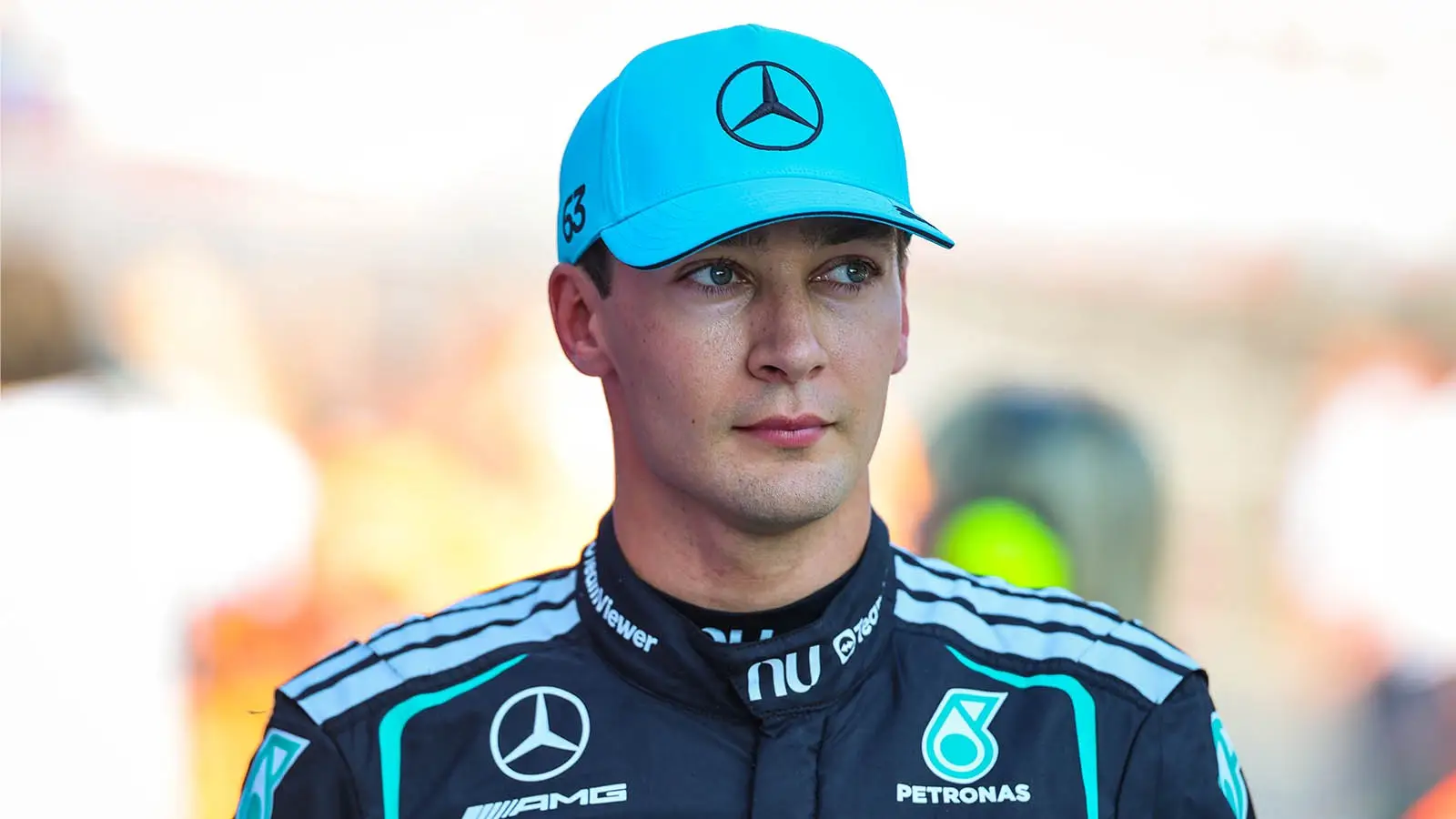
Why George Russell escaped yellow flag penalty and kept Austrian GP pole position

George Russell has qualified on pole position for Sunday's Austrian Grand Prix after no further action was taken over a potential yellow flag infringement in Q3.
The Mercedes driver set a time that was 0.236 seconds faster than Ferrari's Charles Leclerc in the final stage of qualifying to earn pole.
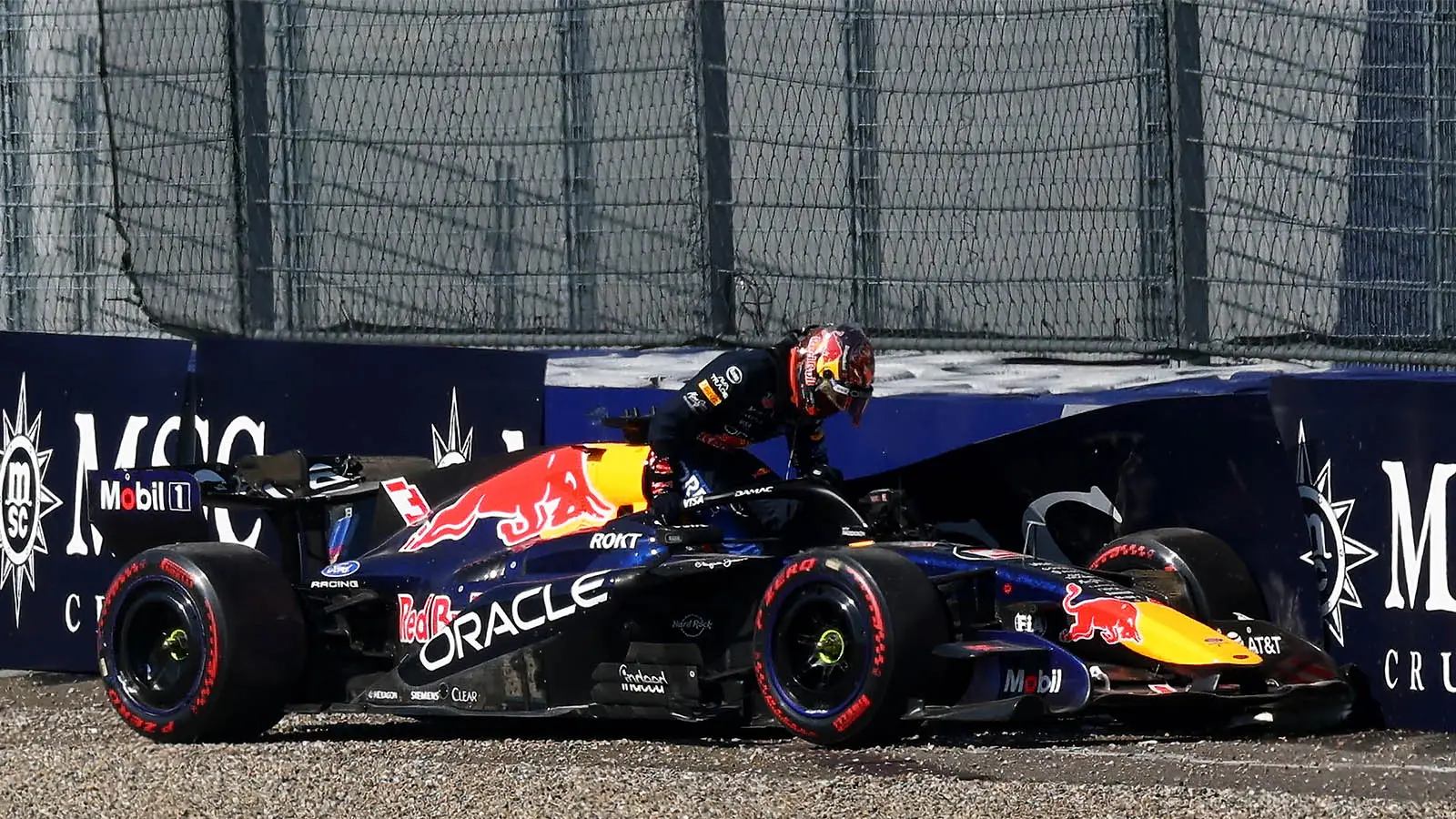
But he was immediately placed under investigation for a possible yellow flag infringement, having passed the area in which Red Bull's Max Verstappen had crashed and hit the wall seconds earlier.
Russell's Mercedes team-mate Kimi Antonelli - who was ahead on track - backed off and aborted his lap, but Russell instead only lifted and went on to cross the line with the fastest time.
Advert
Championship leader Antonelli questioned how Russell had been able to set a time quick enough for pole given the yellow flag, with his race engineer Peter Bonnington simply telling him that the Englishman had lifted in the penultimate corner.
Video replays showed that Russell had indeed lifted after a yellow flag signal flashed up on a marker board heading into that penultimate corner, and the FIA declared that no action would be taken.
Russell, therefore, keeps his pole position and will start Sunday's race ahead of the Ferrari duo of Leclerc and Lewis Hamilton. Antonelli will start in fourth.
According to the FIA's live race control messages screen, Verstappen lost control of his car at 16:00:18, with the stewards waving a single yellow flag seconds later.
The signal on the screen then switches to a double waved yellow flag, but is then downgraded to a single yellow flag again - though this all happens after all the cars have passed the area.
Approaching the scene of Verstappen's crash, Russell was only told by his race engineer Marcus Dudley that a yellow was in place at the time, rather than specifically stating that there was a double waved yellow.
How the FIA define single and double waved yellow flags
The difference between what drivers must do in the event of a single and double waved yellow flag is why Russell only had to lift heading into the crash site.
In the case of a double waved yellow flag, Article 26.2 of the FIA's sporting regulations state that drivers 'must reduce speed significantly and be prepared to change direction or stop' throughout the relevant marshalling sector.
However, in the case of a single waved yellow flag, drivers must only 'reduce their speed and be prepared to change direction'.
To fulfil that requirement, they are ordered to have 'braked earlier and/or discernibly reduced speed in the relevant marshalling sector'.
Strategy expert Ruth Buscombe noted that Russell decelerated by 25km/h, from 240km/h on his clean lap down to 215km/h, during the relevant area.
Speaking to Sky Sports F1, Mercedes team principal Toto Wolff stated that the area was under a single waved yellow flag, not a double, when Antonelli arrived, and that the Italian mistook the signal.
"I think he was under the impression it was a double yellow," Wolff said.
"It's a single yellow and a 100-metre lift-off. George loses a tenth and a half ... you see it on the data. It's a massive lift compared to all the laps before."
Russell said: "It's a corner where you can see quite a lot, a huge lift, and I was going to assess the situation as soon as I got to the corner, if the car was there. As it was a single yellow, I was pretty confident there was no danger.
"As soon as I turned in to the corner, I already saw the green up ahead."
The FIA's race control screen does show that all nine drivers in Q3 had lap times deleted because of double yellow flags, though that simply lines up with the laps back to the pit lane at the end of the session.
Topics: George Russell, Formula 1, Mercedes, Max Verstappen
 Ryan Smart