Paul Scholes Opens Up On Son Having Autism As He Quits Football Punditry

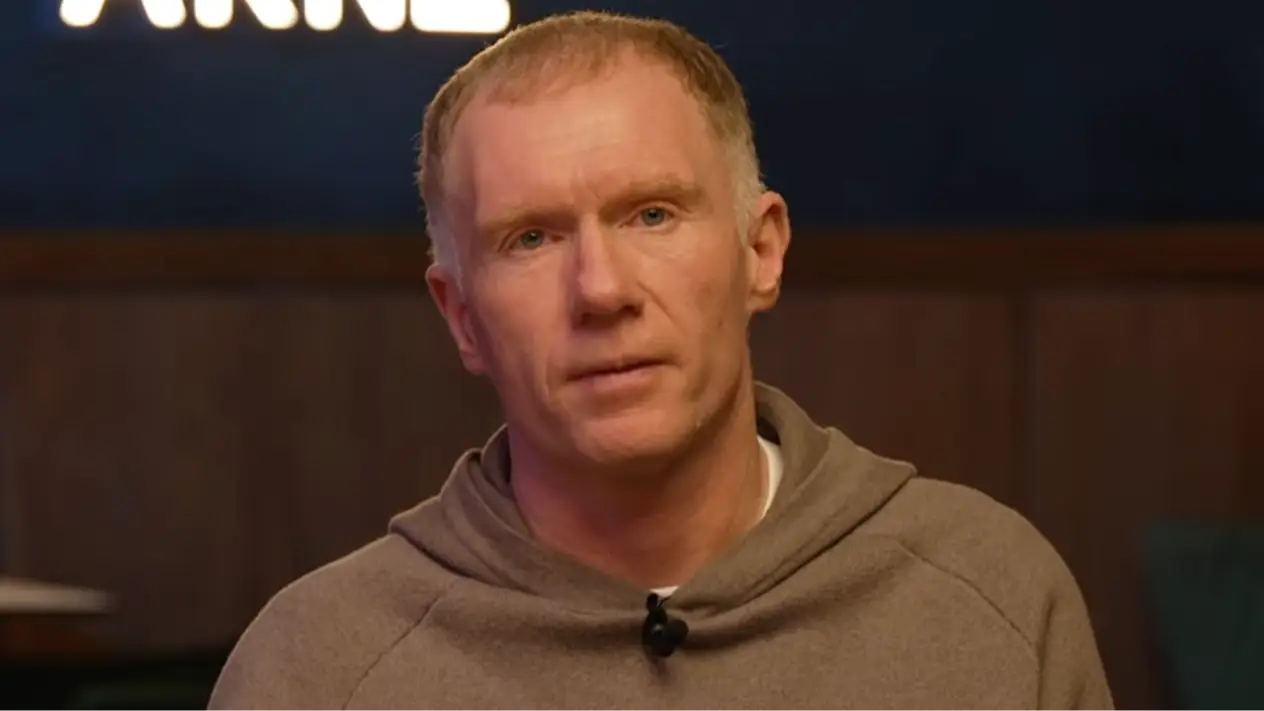
Paul Scholes has announced he will be stepping away from football punditry in order to look after his son Aiden, who is severely autistic and requires around-the-clock care.
The former Manchester United midfielder, 50, has previously discussed Aiden’s diagnosis with autism and the struggles he faced coming to terms with it.
“His diagnosis massively impacted all our lives," he told former teammate Gary Neville in March 2023. "It's not a normal lifestyle, because we can’t do things that we’d probably like to do as a family."
Scholes co-parents Aiden with his ex-wife Claire and has dedicated a significant amount of time caring for the 20-year-old, who was diagnosed with autism as a child and is non-verbal.
Advert
In fact, the former England international has not appeared on TNT Sports this season, with his last on-screen appearance for the company coming in last season’s Europa League final between Manchester United and Spurs.
Scholes addressed this decision in an open and honest chat with Neville, as well as Roy Keane, Ian Wright and Jill Scott, on the latest episode of the Stick to Football podcast.
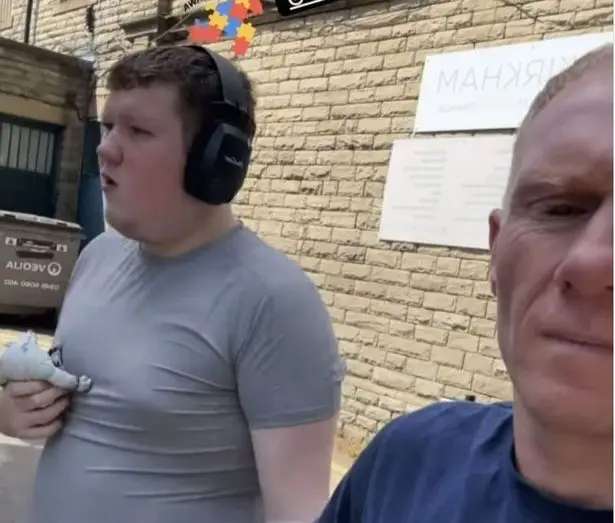
The conversation, described by The Overlap team as being "one of the most open and genuine conversations we’ve ever had", includes how Scholes' life revolves around caring for his son.
“I made a decision this year (because) of Aiden, obviously due to his special needs you might know about,” Scholes began.
“He’s non-verbal so he can’t speak. When I say he can’t speak, I think he understands a lot more than we think. He has sounds but it’s only people that are close to him that will know what he’s saying. He has autism, but it’s like a really severe autism – because you can have it and go to school normally and such.”
Scholes added: “All the work I do now is just around his routines because he has quite a strict routine every single day, so I just decided everything I’m going to do it is around Aiden.
“I’m not with Claire anymore so we have him three nights each and Claire’s mum has him on a Friday night. We always do the same things with him as he doesn’t know what day of the week it is or time. But he’ll know from what we’re doing what day it is.
“I pick him up every Tuesday from his daycare and we go swimming. (He) loves swimming then we get his pizza on the way home. Thursday, pick him up, go for something to eat, go home. Sunday, I pick him up from Claire’s house and we go to Tesco where he buys a trolley full of chocolate. So, he doesn’t know what day or time it is, but he knows from what we’re doing what day it is. He’ll be 21 in December.”
Scholes says future punditry work will revolve around Aiden.
He will also continue to appear on his new podcast, The Good, The Bad and The Football, alongside Nicky Butt and Paddy McGuinness. "Everything is built around his day,” he added.
The former midfielder went on to describe the impact his previous working pattern was having on Aiden's behaviour.
“Last season on Thursday nights I’d do the Europa League for Man United, that’s the night I’d usually have him, so he was getting all agitated, biting and scratching," said Scholes.
"He knows the pattern’s not there straight away. And I did that for years really, always thinking I’ve got to stop this at some point so I had the chance to do the podcast and I thought that would suit me more, well not me, Aiden.
“He’d bite your arm or scratch you just out of frustration for him because he didn’t understand things, couldn’t tell you how he was feeling. I never got a break from it, even when playing. It was very hard in those days, feels like it was years ago.
“I don’t think they [doctors] diagnosed it until he (was) two-and-a-half years old. But you knew early something was wrong but then you get the diagnosis, and I’d never heard of it. Then all of a sudden you start seeing everything, I don’t know if it just consciously happens, I don’t know. I remember the first time after we were playing Derby away and I just didn’t want to be there. I remember the manager dropped me the week after actually, and I hadn’t told anyone [about the diagnosis]. I ended up telling them a few weeks later, I think as it was quite hard.
“We didn’t know what was in store for us. There’s some kids who don’t speak at one-and-a-half to two years of age, then at five or six, bang they’re speaking they call it a late development stage. But we just knew it was never going to be like that.
“I didn’t speak to anyone at the club about it. Even now I don’t want sympathy or anything. I just thought even if I did speak to someone about it, it’s not going to help Aiden. I don’t know what would help me. The big concern now is because you’re getting a bit older, what happens when you’re not here? That’s the thing that’s now on my mind all the time. There are times when it’s not in your head, it’s like anything, then there’s times like now when you do start speaking about it, it’s at the front of your mind.”
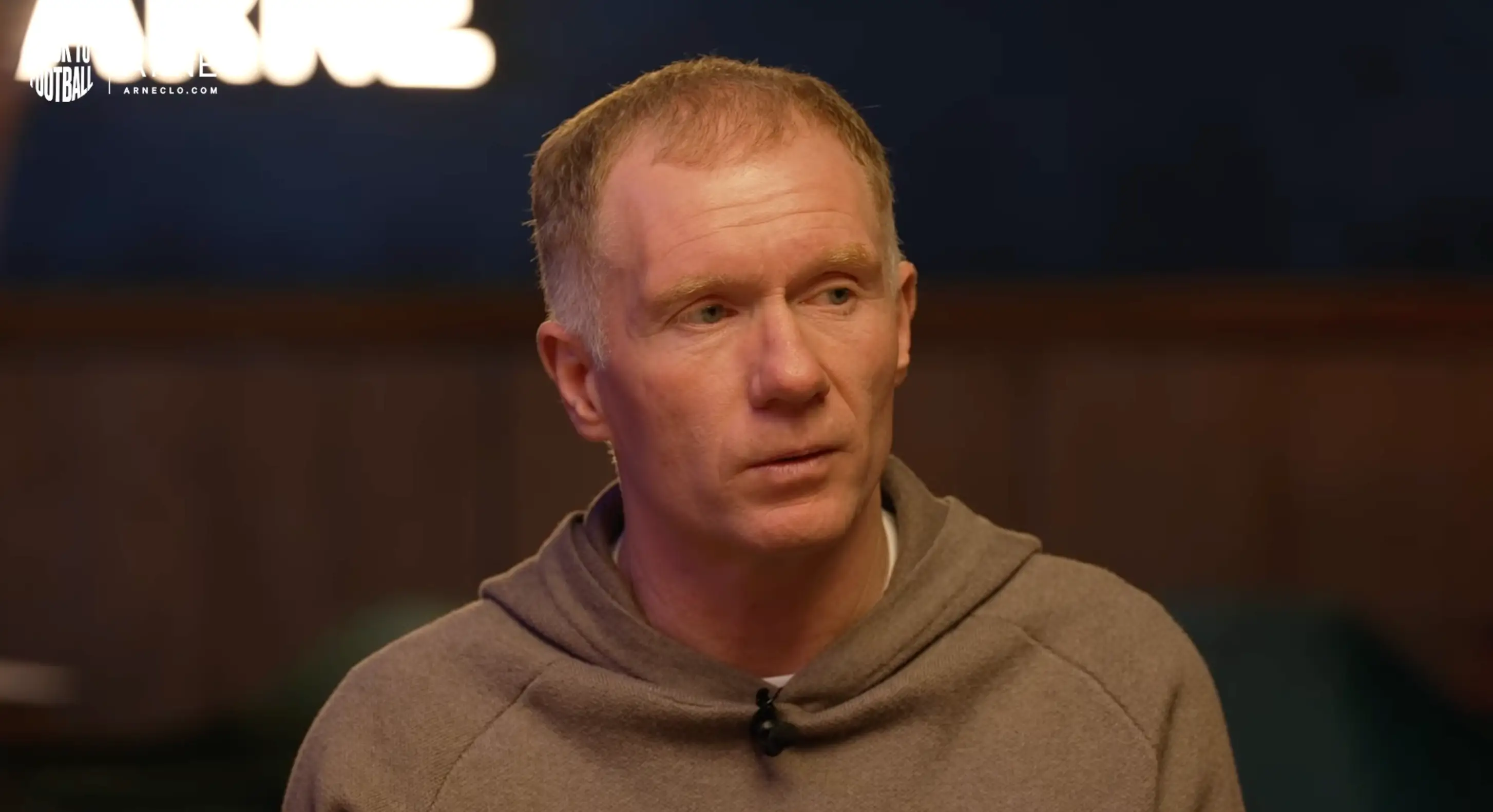
Scholes also touched on the non-verbal aspect of Aiden's condition, which left him suffering from painful toothaches for nearly a year.
“There was a time last year I took him away and he kept feeling his mouth and not sleeping and I had no idea what was wrong with him,” he said.
“He kept doing it and doing it, so I put numbing gel on his lips cos he can’t tell you what’s wrong or got pain anywhere and he won’t go to a dentist. He won’t sit there and have someone open his mouth, he just can’t do it.
“We got him to a special needs dentist and they had to put him to sleep with gas. He had to have a fillings and all sorts then had an operation because his mouth was a mess. But he can’t tell you what pain he’s in. That must have been going on eight-to-nine months, imagine having toothache for nine months?”
Paul Scholes initially kept son's diagnosis secret during his playing career
Scholes has previously opened up about covering his arms in training because of scratch marks. In fact, at one stage, he was dropped by Sir Alex Ferguson while attempting to handle the situation privately.
“The first time we were playing Derby County away when we just found out," he told The Overlap in 2023. "It was a waste of time, I didn’t want to be playing, but I wouldn’t tell anyone anything and the manager left me out the day after. I didn’t tell the manager. I told him six months or a year after.
"I don’t know why I told him, there was nothing that could be done differently. I had to cover my arms when I used to go to training because Aiden was scratching and biting. The last five years [he’s been brilliant], he’s so relaxed, so calm, so happy, but for eight or nine years, it was horrific.
“He could be in the back seat and we’re driving and he’s grabbing Claire’s hair, grabbing me and you don’t know why. It's just frustrating because he probably doesn't know what he's doing.
"Now, every single day, every single night, he asks what he's doing the day after. So, we'll say ‘school’, so you know that he's thinking about his routine tomorrow. You tell him school, you tell him if he's going swimming after school, what he's going to have to eat.
“He has got a lot better with breaking his routine, and routine for autistic children is massive, but he can cope with it, but when he was younger, he couldn't cope with it.”
Topics: Paul Scholes, Man Utd, Premier League, Gary Neville
 Jack Kenmare