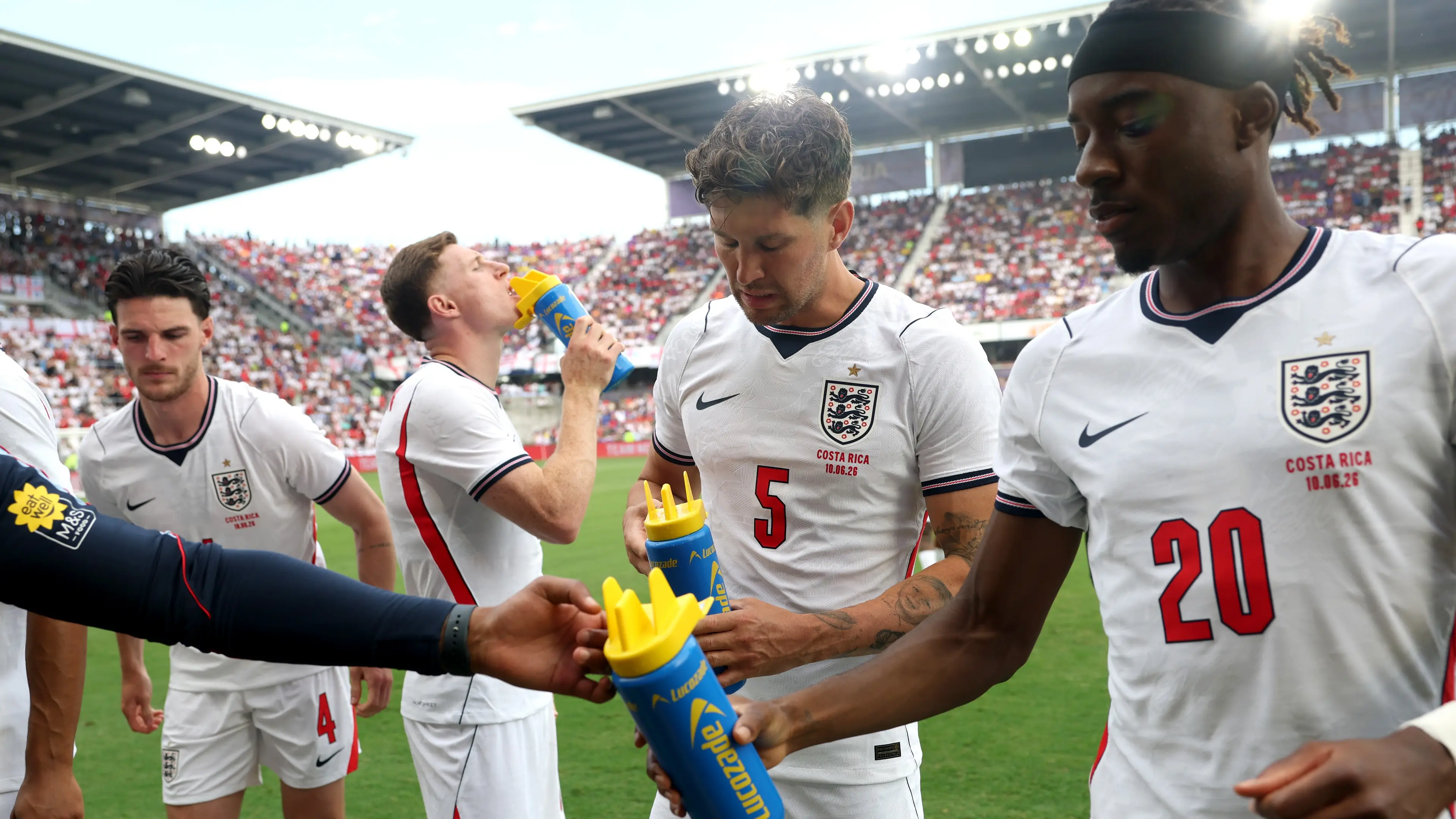
How long do World Cup drink breaks last and how many are they per game? Everything you need to know

I know why you're here. It's the 22nd or 67th minute of a World Cup game and everyone has made their way to the touchline for a drink. How long is this going to take? How many of these are there?
First of all, get used to it. Every single one of the 104 games at this summer's tournament in the United States, Canada and Mexico will feature two hydration breaks, regardless of weather conditions.
Each break is expected to last three minutes, with the referee blowing their whistle 22 minutes into each half.
Of course, that time could vary based on the on-field situation, but expect it to be around the 22nd and 67th minute mark. Fancy a cup of tea? Go and make it now – you've still got some time left.
What are England doing to cope with the heat?
The heat is going to play a major factor at this summer's World Cup. Take England's group games, for example. They will come up against Croatia in Texas on June 17 and temperatures are predicted to reach as high as 34°C.
Advert
Thomas Tuchel's side will then head to Boston to take on Ghana, with cooler temperatures of around 26°C expected for their second match in Group L.
However, the final group game against Panama at MetLife Stadium in New York is set to be another scorcher, with heat levels expected to reach the early to mid thirties on the afternoon of June 27.
England, meanwhile, will use portable palm-cooling devices to try and cool down during the planned drink breaks, according to The Sun.
As per the report, research has shown that cooling the palms can substantially lower core body temperature, which can play an important role when it comes to in-game recovery.
Why have FIFA decided to implement this rule?
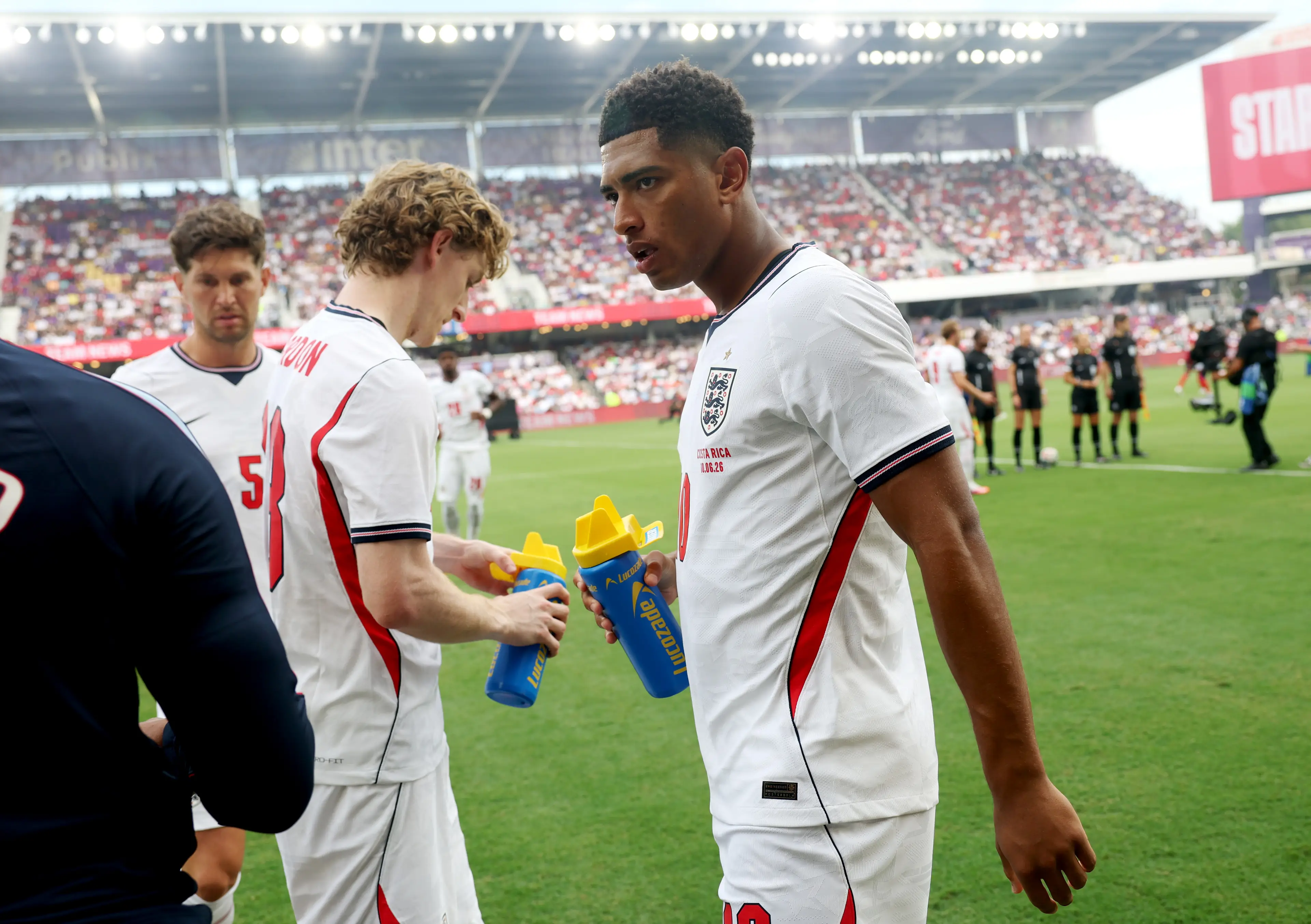
Back in December, FIFA issued a statement announcing the mandatory introduction of hydration breaks at this summer's World Cup.
Here, they mentioned the conditions of the most recent Club World Cup as playing a huge factor in their decision.
"The use of hydration breaks is part of a focused attempt to ensure the best possible conditions for players, drawing upon the experiences of previous tournaments, including the recent FIFA Club World Cup, which took place in the United States last summer," they said.
"The now-finalised FIFA World Cup 2026 match schedule has been designed to minimise travel for teams and fans, maximise rest days between matches for all participating nations, and enable the widest possible global audience to follow their teams across different time zones.
"This complex exercise included a technical analysis of all venues – from average temperatures and cooling infrastructure to public transport and security – as well as collaborative discussions between various FIFA functional areas, including competition management, team services, medical, TV and broadcasting, and ticketing."
Marcos Llorente suffered unusual injury at Club World Cup because of high temperatures
In the aftermath of last year's Club World Cup clash between Atletico Madrid and PSG, Marcos Llorente spoke about the extreme temperatures in California, which reached as high as 40°C with 60% humidity.
"We are adapting to the heat of playing at this time," he said. "No European team is used to competing with such high temperatures."
The Spaniard later claimed that his toes and nails were hurting badly due to the heat. "It's impossible," he said. "Terrifying heat. My toes hurt so badly, my nails hurt. I couldn't stop or start. Since it's the same for everyone, there's no complaint."
Topics: FIFA World Cup
 Jack Kenmare