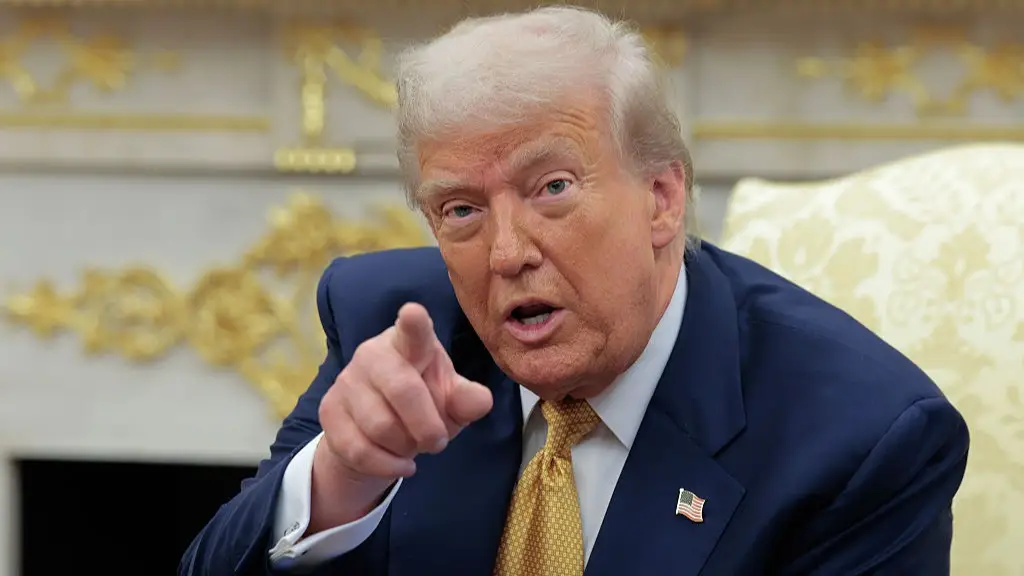
Donald Trump makes huge decision impacting World Cup nations as White House speaks out

US President Donald Trump has made a controversial decision which will impact several nations set to compete at this summer’s FIFA World Cup.
Although most supporters will be looking forward to the sport’s biggest competition, unfortunately, hosting a World Cup and global politics are intertwined.
Ahead of the tournament, which will be co-hosted by the US, neighbouring Canada and Mexico, Trump has come under criticism for his administration’s foreign policy.
In January 2025, Trump caused widespread outrage among EU nations as he insisted that the US take over Greenland – an autonomous territory of Denmark – for what he described as reasons linked to national security.
Advert
When several EU nations rejected this, Trump threatened to impose additional trade tariffs on the European allies. However, he later performed a U-turn.
The 79-year-old has also threatened military action in Iran, a nation set to compete at this summer’s tournament, calling for regime change amid ongoing civil unrest, which has led to thousands of protesters’ deaths in the Middle Eastern nation.
In January of this year, Iran’s supreme leader, Ali Khamenei, blamed the US for the deaths. Throughout the civil unrest, Trump has urged protesters to carry on before pledging that “help” was “on the way”.
Iran is one of the 38 nations named on the Trump administration’s travel ban list.
The US and Iranian authorities have fired threats back and forth, with both nations threatening military action against each other while Trump continues to pressure Iran into a nuclear deal.
Concerns also remain over the presence of US Immigration and Customs Enforcement (ICE) at the upcoming tournament after agents shot dead two US citizens – Renne Nicole Good and Alex Pretti – in Minneapolis last month.
However, the topic of trade tariffs was raised once more on Friday (21 February), after a Supreme Court ruling by six justices struck down the administration’s global tariffs.
As relayed by BBC News, Congress has the power to impose tariffs, not the president.
As expected, Trump hit back at the justices who ruled against him, suggesting that they should be “ashamed” while calling three liberals on the court “a disgrace”.
He then promised to impose a new 10 per cent global tariff to replace the ones struck down by the Supreme Court under Section 122 of the law, which allows temporary tariffs of up to 15 per cent for 150 days before Congress must then step in.
The tariffs will come into effect on 24 February, with a White House official saying countries that previously struck a trade deal with the US – including the UK and EU members – will fall under the global 10 per cent tariff rather than previous negotiated rates.
How the decision will directly impact the UK remains unclear with a Downing Street Spokeperson saying: "The UK government is working with the US to understand how the overturning of Donald Trump’s tariffs by the supreme court will affect the UK but expects our privileged trading position with the US to continue.”
The UK had previously been subjected to 10 per cent tariffs on US imports, while the EU was under a blanket 15 per cent rate.
What is a trade tariff?
As per Gov.uk, a trade tariff is effectively a tax added to products entering a country from overseas. Tariffs are used to protect companies in the nation from foreign competition by raising the price of imports.
For example, a 100 per cent tariff on a £10 product would effectively make it a £20 product. This may then cause the importing company to decide to import fewer products into the country, imposing the tariff.
Topics: Donald Trump, FIFA Club World Cup
 Luke Davies