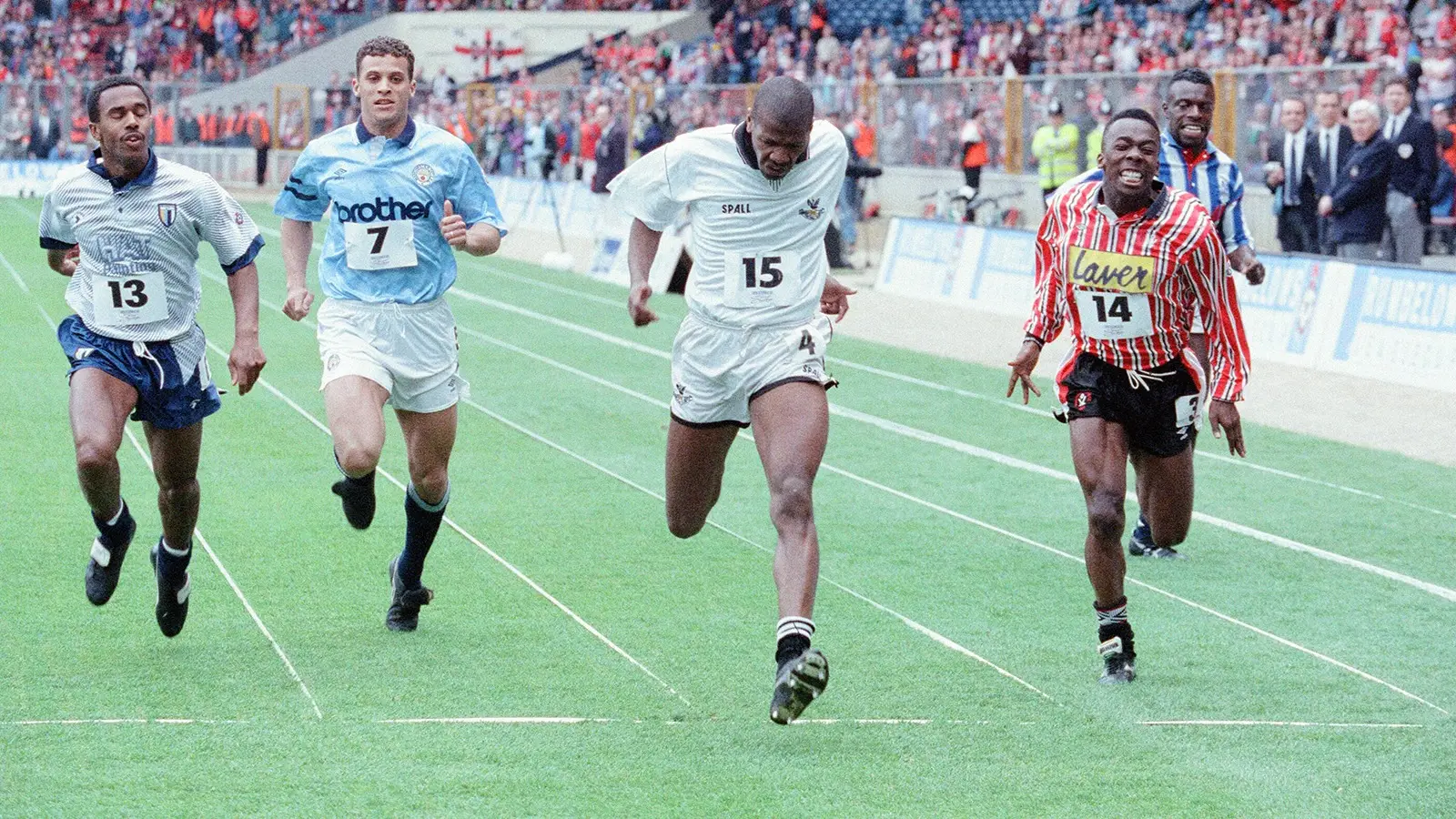
Fastest Footballers From The 92 Clubs Raced Each Other And One Player Dominated

The fastest player from each club in England's top four divisions was once invited to a race - and it turned out to be chaos.
Football fans have long had debates over who the fastest player in the world is, with YouTube simulations being created to try and define it once and for all.
Ex-Arsenal winger Theo Walcott once claimed he could cover 100 and 200 metres faster than world record holder Usain Bolt, while the Jamaican legend offered to have a race against Real Madrid star Kylian Mbappe.
But TV executives in English football once decided they would solve the dispute once and for all by having 92 different players - one from each club - race each other to determine who was the quickest.
Advert
The producers of 'Saint and Greavsie', the iconic ITV football show hosted by legendary players Ian St John and Jimmy Greaves between 1985 and 1992, came up with the idea in 1991 - the year before the 22 top flight clubs broke away from the Football League and formed the Premier League.
That last point was significant as ITV still held the rights to show matches from England's First Division at the time, before Sky Sports took over Premier League coverage from 1992.
As a result, the producers sent invitations to all 92 clubs, asking them to put forward their quickest player to take part in the challenge.
Although not every club accepted the invitation, a series of regional heats would be held in late 1991 to determine who would take part in the semi-finals and then the finals at Wembley.
The challenge was backed by the now-defunct electronics company Rumbelows, who held title sponsorship rights for the League Cup.
Therefore, the final would be held on the day of the 1992 League Cup final, with a £10,000 prize on offer for the winner.
While there were actually 93 clubs in the Football League when the competition started, with the FA admitting an extra club to the Fourth Division before the start of the 1991/92 season, Aldershot folded during the season to take the number back down to 92.
In scenes that would be almost unimaginable today, each winner of the regional heats each won £500 and a brand-new TV for their efforts.
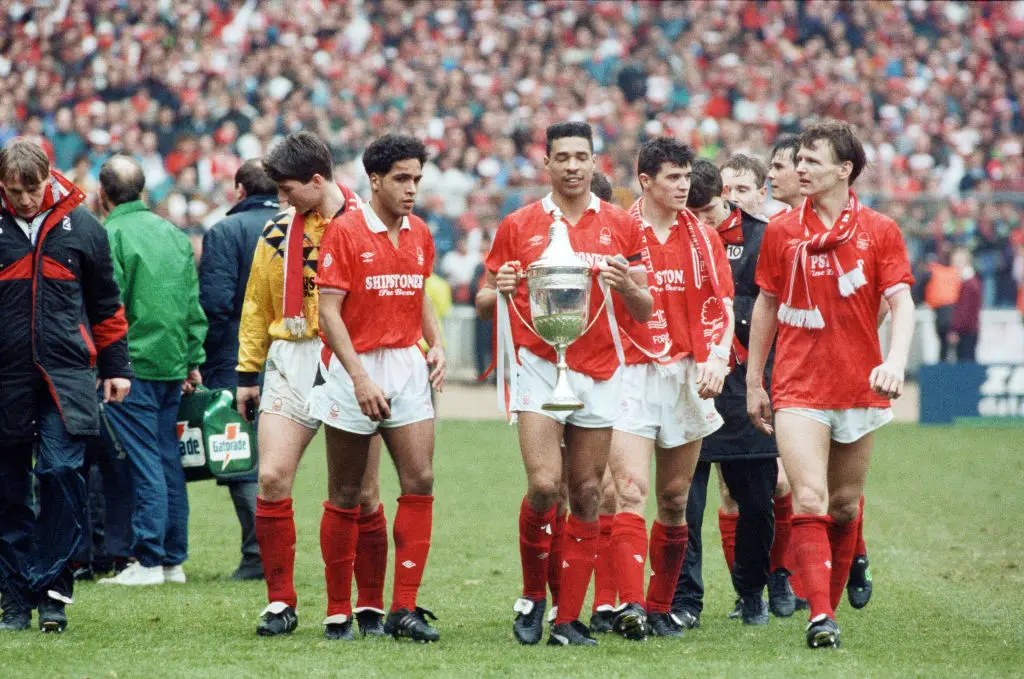
England defender Des Walker reached the final for Nottingham Forest but wasn't allowed to compete - as he was about to play in the League Cup final for Forest.
John Williams, then of Third Division side Swansea, turned up to Wembley hungover.
Notts County's Kevin Bartlett was considered the favourite to win, but had suffered an injury weeks before and wasn't 100 per cent fit.
Among the other competitors were Bournemouth's Efan Ekoku - now a Sky Sports commentator - and Reading legend Michael Gilkes.
Betting odds were even offered courtesy of Ladbrokes - and legendary horse racing pundit John McCririck, as well as former 1,500m world champion Steve Cram, were drafted in for the pre-race previews.
Commentator Alan Parry then reveals he'd backed Keith Curle - only for the Manchester City defender and future Carlisle boss to be eliminated in the semi-finals.
The race was eventually won by Swansea's Williams, who defied the fact that he was hungover to charge away from the field in the final 25 metres, setting a highly respectable time of 11.49 in the process.
And while a £10,000 prize may not mean too much to a third-tier player today, it was a different story 33 years ago.
As per SalaryLeaks, the average footballer across all four divisions earned an average wage of £2,000 per week - a figure that would of course have been considerably less if only the lower leagues were taken into account.
In 2019, Williams told FourFourTwo: "It [the £10,000 prize] was really useful. I couldn't believe it. I put a deposit down on a house and bought a car, a Peugeot 205 GT1 1.9.
"It's nothing compared to the Bentleys today, but I was just a lad from inner-city Birmingham.
"And loads of the lads had backed me to win at 16/1, so they were pretty happy!"
Topics: Premier League, EFL Championship, Football
 Ryan Smart