FIA release urgent statement just days before Japanese Grand Prix qualifying

The Fédération Internationale de l'Automobile (FIA) has released a statement confirming a huge change to the cars’ energy management ahead of qualifying for the Japanese Grand Prix.
The 2026 F1 campaign is just two races old, but already modifications are being made to the cars’ energy management systems before the third Grand Prix under new regulations.
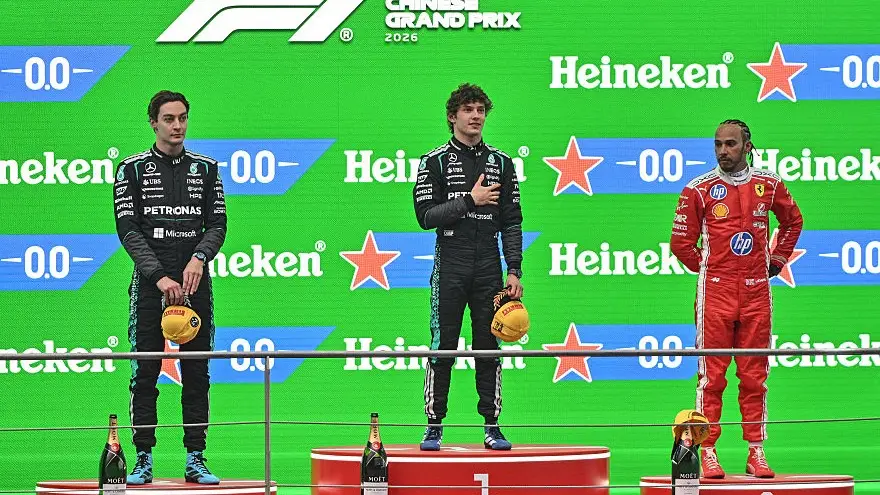
So far, Mercedes has performed best, with drivers George Russell and Kimi Antonelli racing to victory in Melbourne and Shanghai, putting the Silver Arrows at the top of the Constructors’ Championship.
Meanwhile, Ferrari has also fared well, with Charles Leclerc and Lewis Hamilton picking up a podium each, leaving them third and fourth respectively.
Advert
Four-time world champion Max Verstappen has struggled with the RB22 and has yet to secure a podium as he looks to win a fifth title with Red Bull this season.

The Dutchman has already suggested that the sport is not as fun to take part in since the split engine units came into effect. The new power units rely on a 50/50 split between electric power and internal combustion, which Verstappen has compared to Formula E.
As relayed by F1.com, the FIA has engaged in talks with drivers in relation to energy deployment, with Mercedes, Ferrari, Red Bull, Audi and Honda voting to reduce the maximum permitted energy recharge ahead of qualifying in Japan. The recharge will drop from nine megajoules to eight megajoules.
On Thursday (26 March), the FIA released the following statement confirming the change: “This adjustment reflects feedback from drivers and teams, who have emphasised the importance of maintaining qualifying as a performance challenge.
"The FIA notes that the first events under the 2026 Regulations have been operationally successful, and this targeted refinement is part of the normal process of optimisation as the new regulatory framework is further validated in real-world conditions.
"The FIA, together with F1 teams and power unit manufacturers, continues to embrace evolutions to energy management, with further discussions scheduled in the coming weeks.”
The modification effectively means less energy will be needed to charge the battery on a straight during qualifying, which will result in less lifting and coasting.
The Japanese Grand Prix takes place on 29 March before the sport takes a five-week break due to the cancellations of the Bahrain and Saudi Grands Prix due to ongoing conflict in the Middle East.
Topics: Formula 1, FIA, Max Verstappen
 Luke Davies