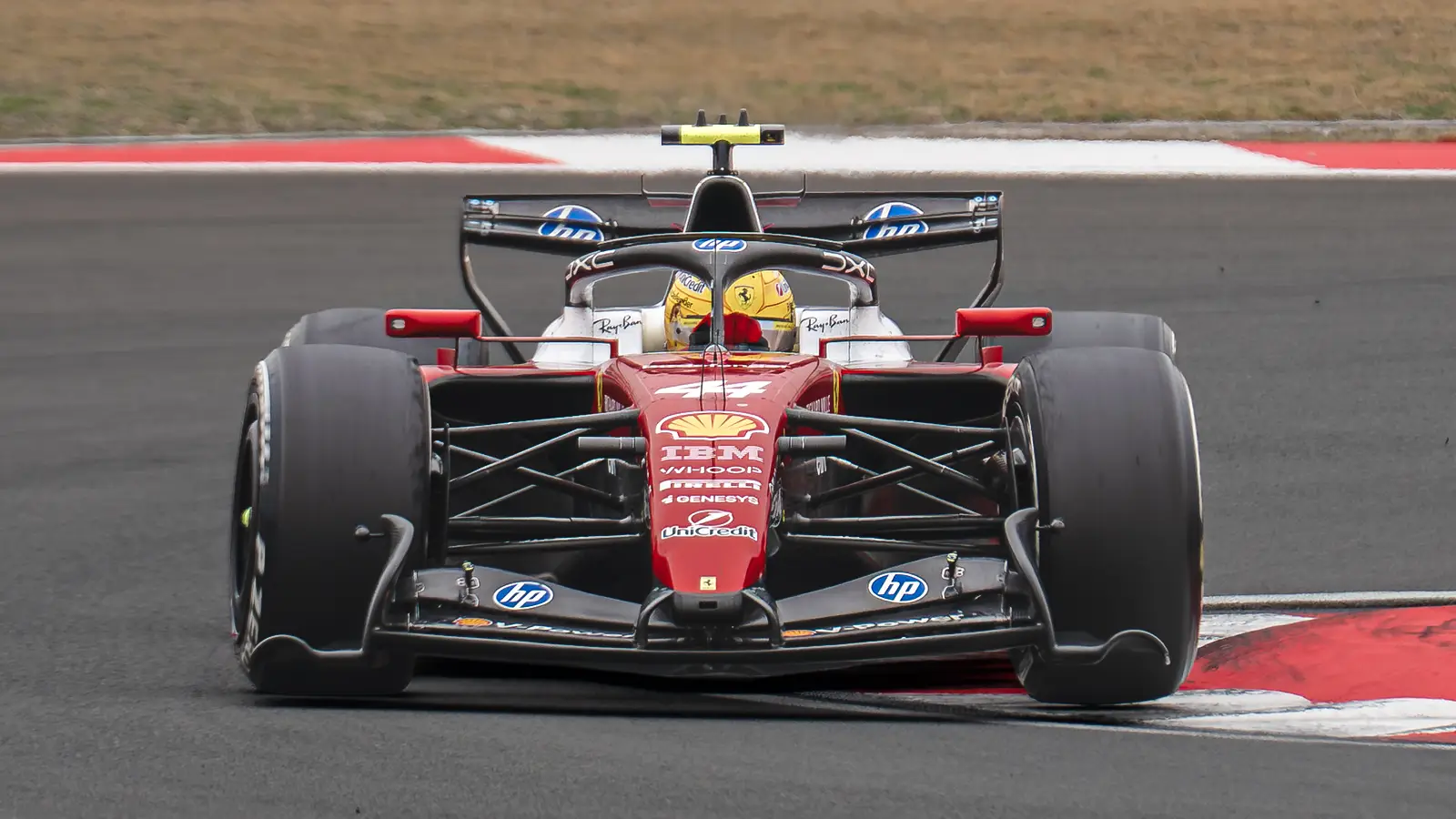
FIA give Ferrari green light to use upgrade rivals wanted banned

The FIA have allowed Ferrari to use a new upgrade for the Chinese Grand Prix which could improve their performance even further.
The two Ferraris of Charles Leclerc and Lewis Hamilton finished third and fourth in the opening races, with Hamilton finishing ahead of Leclerc in China.
Although both cars got off to strong starts in the opening races, with Leclerc taking the lead in Australia and Hamilton doing likewise in China, the superior power advantage of the Mercedes cars ultimately told.
But Ferrari also trialled another innovative concept in China - the halo winglet.
Advert
The winglets, positioned either side of the main halo structure, were placed on the car for practice, but the FIA deemed it as a potentially 'borderline' breach of their regulations.
Ferrari therefore removed the winglets in time for qualifying to avoid any potential issues.
But there has been a new development.
FIA approve Ferrari design upgrade
According to AutoRacer (via F1 Technical), Ferrari have now been given the 'green light' to apply the halo winglets from the Japanese Grand Prix onwards after talks with the FIA and its technical delegate Jo Bauer.
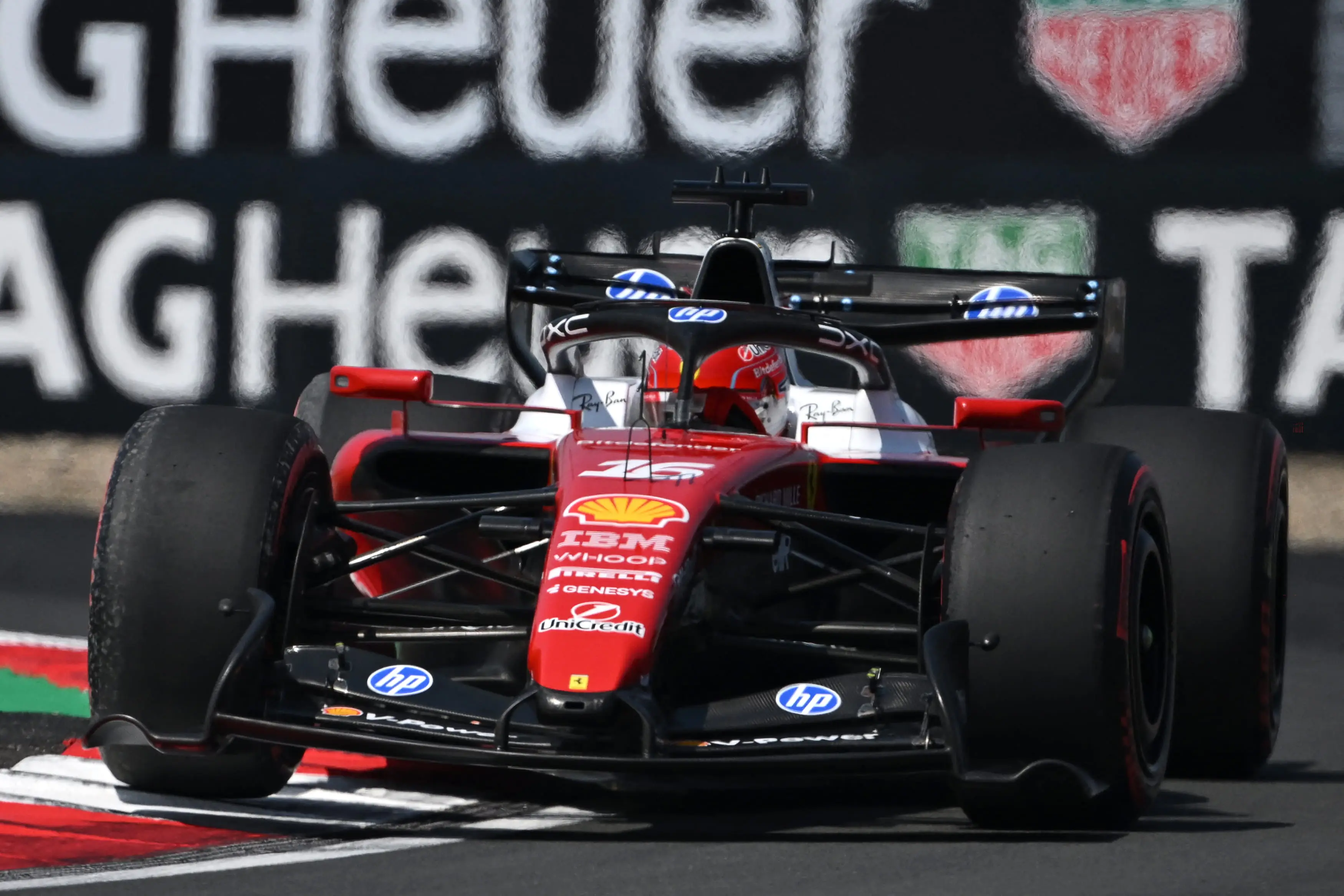
The impact of the upgrade is said to only be worth hundredths of a second rather than anything more significant, but it can still help them close the gap to Mercedes on race pace.
The winglet's function is described as apparently a 'miniature windscreen', which is permitted within the regulations.
It is added that Ferrari are 'planning to refine the concept further' by using thinner materials, which could gain them even more time back on Mercedes.
When will Ferrari add their 'Macarena' wing?
During pre-season testing, Ferrari experimented with a number of design innovations - including an extravagant rotating rear wing design.
Once the active aerodynamics system is applied by the driver, the wing fully pivots and rotates, which allows for additional straight-line speed.
The Scuderia placed the wing, dubbed the 'Macarena' wing, on the car during Friday practice in China, before deciding to delay its full implementation.
Ferrari team principal Frederic Vasseur said there were initial concerns over the part's reliability and lack of mileage, stating in China: "With the system today, you don't have a test between the races, so that means if we want to put mileage on the parts, we need to do FP1.
"We will do it again probably next week [in Japan]."
Unlike the halo winglets, the rotating rear wing should theoretically give a higher performance advantage of tenths of a second - but will naturally need more testing before it can be added to the car.
Topics: Ferrari, FIA, Formula 1, Lewis Hamilton, Charles Leclerc
 Ryan Smart