Darts 'Spotter' Reveals How TV Cameras Know Exactly Where Next Dart Is Going

The question of how the camera operators at the World Championship know exactly where a dart will be thrown on the board has finally been answered by an expert.
After nearly a month of watching the best players in action inside London's iconic Alexandra Palace, the final of the 2026 PDC World Darts Championship is nearly here.
The expanded 128-player field was narrowed down to just two as reigning champion Luke Littler will play Dutch player Gian van Veen in the final on Saturday evening.
Throughout the tournament, fans have often questioned how the TV cameras know exactly where to look as players throw their darts, ensuring that all of the most dramatic moments are caught live.
Advert
Thankfully, this question has been answered by a 'spotter', which is one of the most important figures involved in a darts match.

The job of a darts spotter involves telling the television cameras where the next dart is likely to land, which is no easy task.
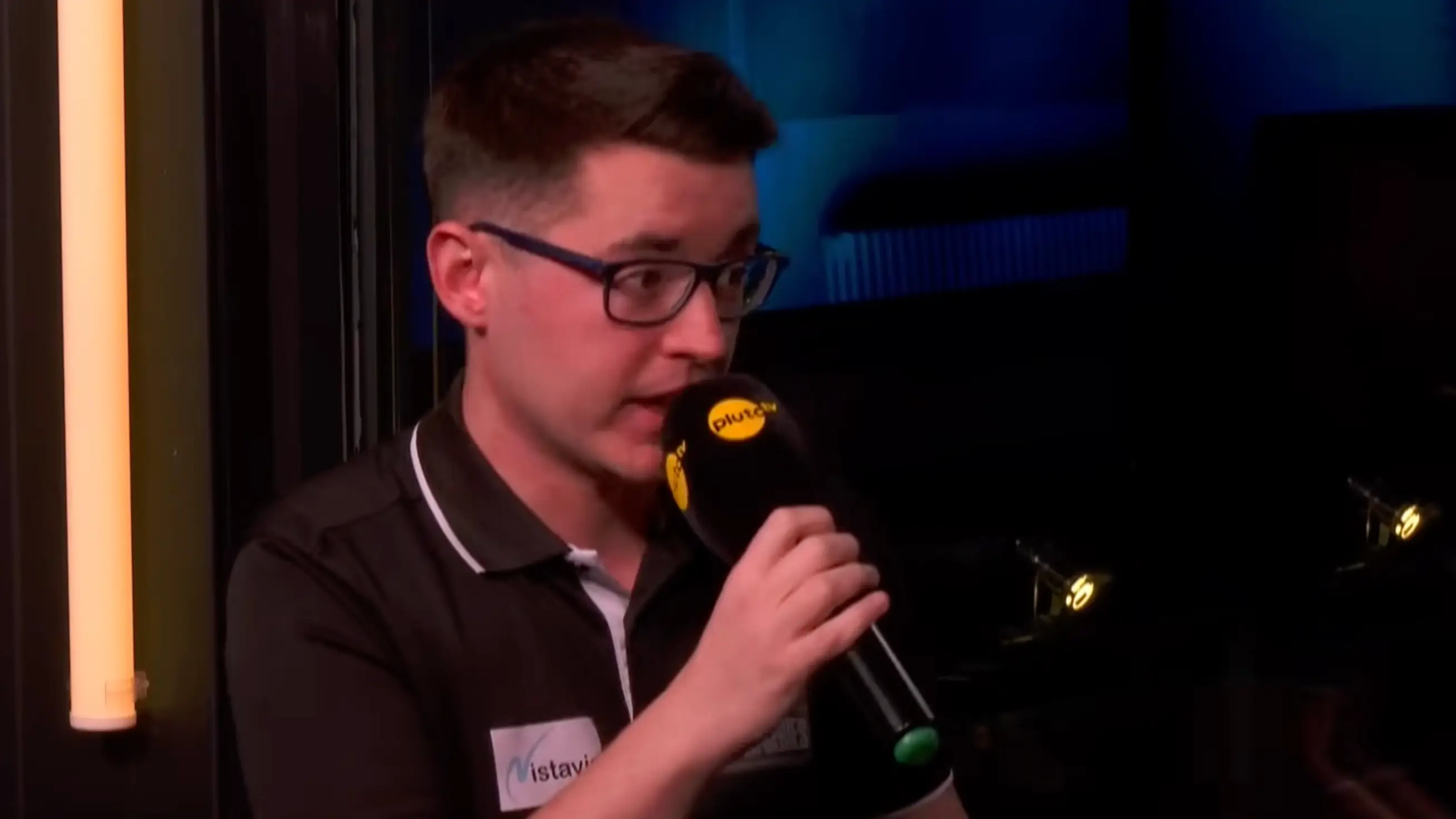
Owen Binks has been working as a spotter at this year's World Darts Championship and explained exactly how his role works during a behind-the-scenes' post on social media.
"This is how you see the World Championship live on Sky Sports," he begins. "This is what we've got for you. The truck..."
- If you want to see even more from SPORTbible, make us a preferred source on Google.
In an interview with Dutch publication Het Nieuwsblad, Binks further explained the details of what is no doubt one of the toughest jobs in the sport.
"Even many darts fans have no idea my job exists," he said. "Can I describe it in two sentences? A 'darts spotter' works in the production room with the director and says what the cameras should focus on during each throw.
"We give the instructions and everyone else has to listen. TV directors often have no idea what darts is about, so they follow what we say. So we have some power, but we are also under a lot of pressure. Because you are responsible."
"I can say it's a tough job," Binks continued. "It's certainly a lot harder than being a referee. Then you have the answer right in front of you and usually a few seconds to think about it. Then it's mostly good math.
"But as a spotter I have to think faster than the darters themselves, in other words I have to think ahead. This is then based on habit of a player, my experience or the standard routes you know, but also on, for example, the eyes.
"You can often see from that where they are going to throw. But even then it is not simple. We often have people who try it because they want to become one, but they quickly realize that it is not their thing.
"We've also had players pass, world-class players, but then they often passed on what they themselves would do instead of what the player would do on camera. That, of course, is something completely different."
Topics: Darts, World Darts Championship, Sky Sports
 Ben McCrum