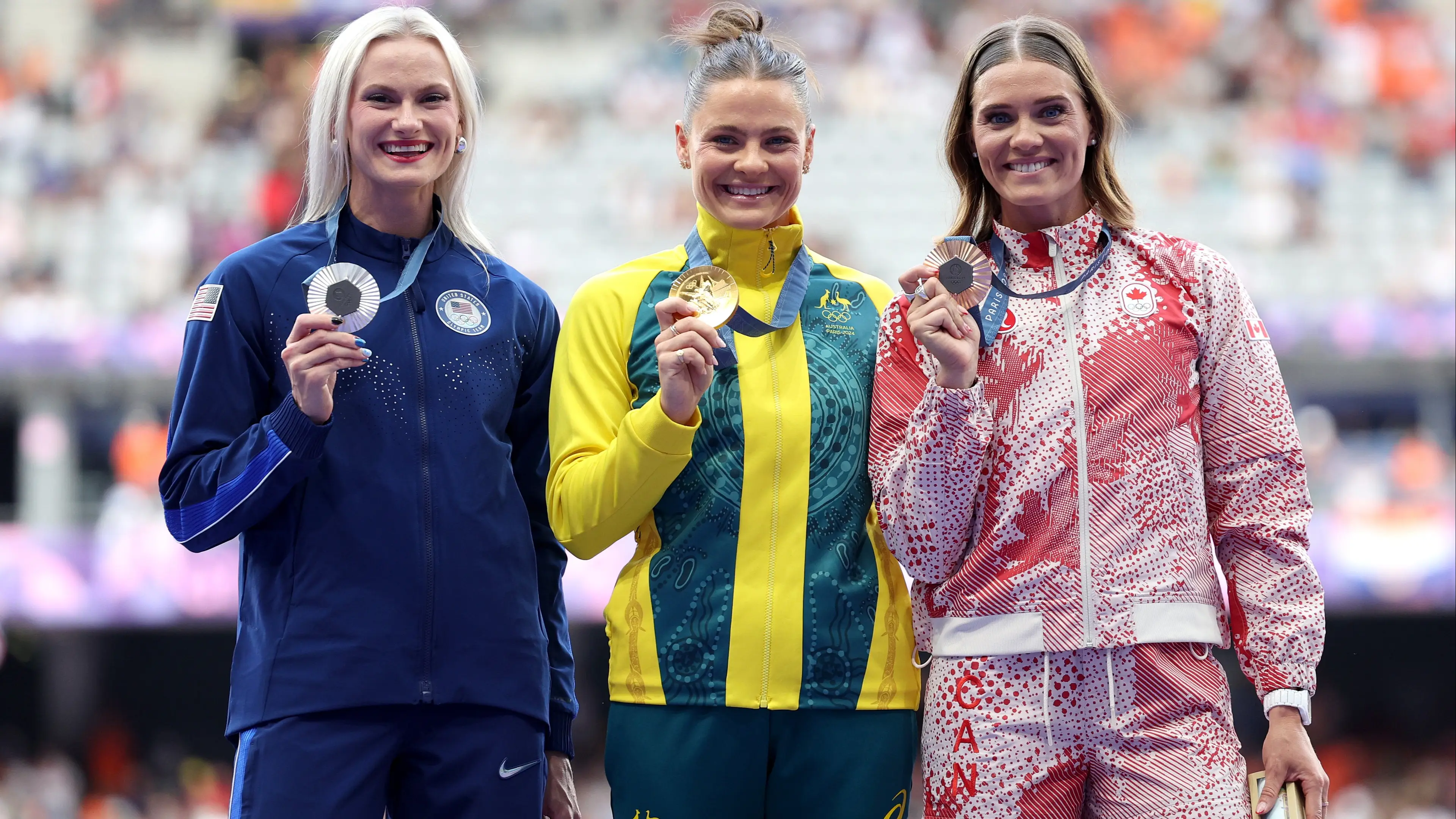
Olympian with OnlyFans account who went viral for R-rated celebration gets 20-month ban from sport

An Olympic bronze medallist who went viral for her R-rated celebration after she earned this achievement in Paris in 2024.
This gesture shocked the sporting world due to the nature of the celebration and the stage on which she did it – in the biggest competition for most athletes, the Olympics.
As Canadian Alysha Newman won the bronze medal in the pole vault, finishing behind Team USA’s Katie Moon and Australian Nina Kennedy, she bent her legs, put her hands on her thighs and started to twerk, with the Canadian explaining the reason behind the celebration.
The 32-year-old is used to the headlines after it was revealed that she also has an OnlyFans account explaining her decision in an interview with German news outlet BILD.
Advert
She said: “I post a lot of my training sessions, talk about nutrition and lots of tips and tricks. I earn money with what I post - you have to log in to find out. It makes me confident and I feel good about it.
“Of course, many people have a certain cliché when they think of OnlyFans. I can't change many people's minds. But this website has connected me with many fans, more than any other pole vaulter before.”

Now, Newman has been hit with a fresh controversy, as she has been banned for 20 months after getting a ban for missing a drugs test; however, track and field investigators accepted she had ended her career as a pole vaulter.
The last time the Olympic medallist competed was at a pair of Diamond League meetings in May 2025 in Qatar and Morocco.
Newman was unavailable for an unannounced doping control session in February 2025 and twice more in August, as reported by The Athletics Integrity Unit.
An anti-doping rules violation can be prosecuted when three so-called "whereabouts" failures occur in a 12-month period.
After the third incident, the AIU said in its published verdict, the athlete told a sample collection official "she had to leave immediately to participate in the filming of a television game show".
Newman’s suspension expires in August 2027 and is shorter than the standard two years for whereabouts cases because the AIU accepted that she had decided to end her career.
The AIU said, "is a sufficiently unique/exceptional factor that may be considered in assessing her level of fault in the matter."
 Brendan McGilligan