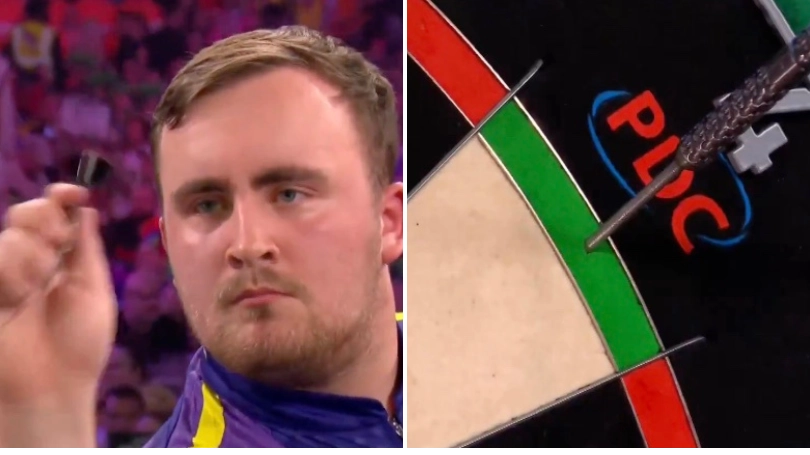
'Spotter' explains how the camera knows exactly where the next dart is going before it lands

How do they know what camera angle to show as a player prepares to throw his arrow? If you're watching tonight's World Darts Championship final between Luke Littler and Luke Humphries asking this very question, then you're not alone.
In the past, some have suggested the footage is on a delay, which gives them time to choose the angle. That theory, however, is false.
The person responsible has a job title. The 'spotter' is one of the most important aspects behind a game of darts.
Advert
Basically, 'spotting' involves prompting the television cameras where the next dart will land. Huw Ware, who has been a so-called 'spotter' for over a decade, gave a fascinating insight into his role during an interview with the Irish News in 2017.
“I’m in charge of telling the cameras where the next dart’s going to land,” Huw began.
“I’m in contact with the director, the commentators and the cameramen telling them which ways the players are likely to go, and then I take them through dart by dart as they’re actually throwing on the oche.
”As with any sport, unpredictability is rife – certain players prefer different tactics, while a missed shot often means a player will have to find an alternative route.
“A lot of the time they surprise us,” he continues. “Particularly the BDO where a lot of the players do go with what they feel on instinct.
“Our cameraman who is on the doubles has been doing every single Lakeside World Championship since 1986 though. He’s done more checkouts than I’ve had cooked dinners, so he knows what he’s doing!”
Huw, from Portsmouth, was only 17 when he took charge of his first televised match. It made him the youngest darts referee in history.
In the interview, he opened up about a recent 'spotting' experience.
“We’ve just had the youth final, which went along at such a pace that there were a couple of times where I missed the first dart and literally had no time to readjust whatsoever,” he added.
“It was very tough. I think spotting is more difficult than refereeing. There’s more room for enjoyment as a referee. With the spotting you’re very conscious of the fact that you’re an integral part of what everybody at home and in the crowd can see, and you really don’t want to go wrong once.
“Every single time we’re on a checkout you do feel a certain pressure to make sure you get it right and to get the darts in shot.”
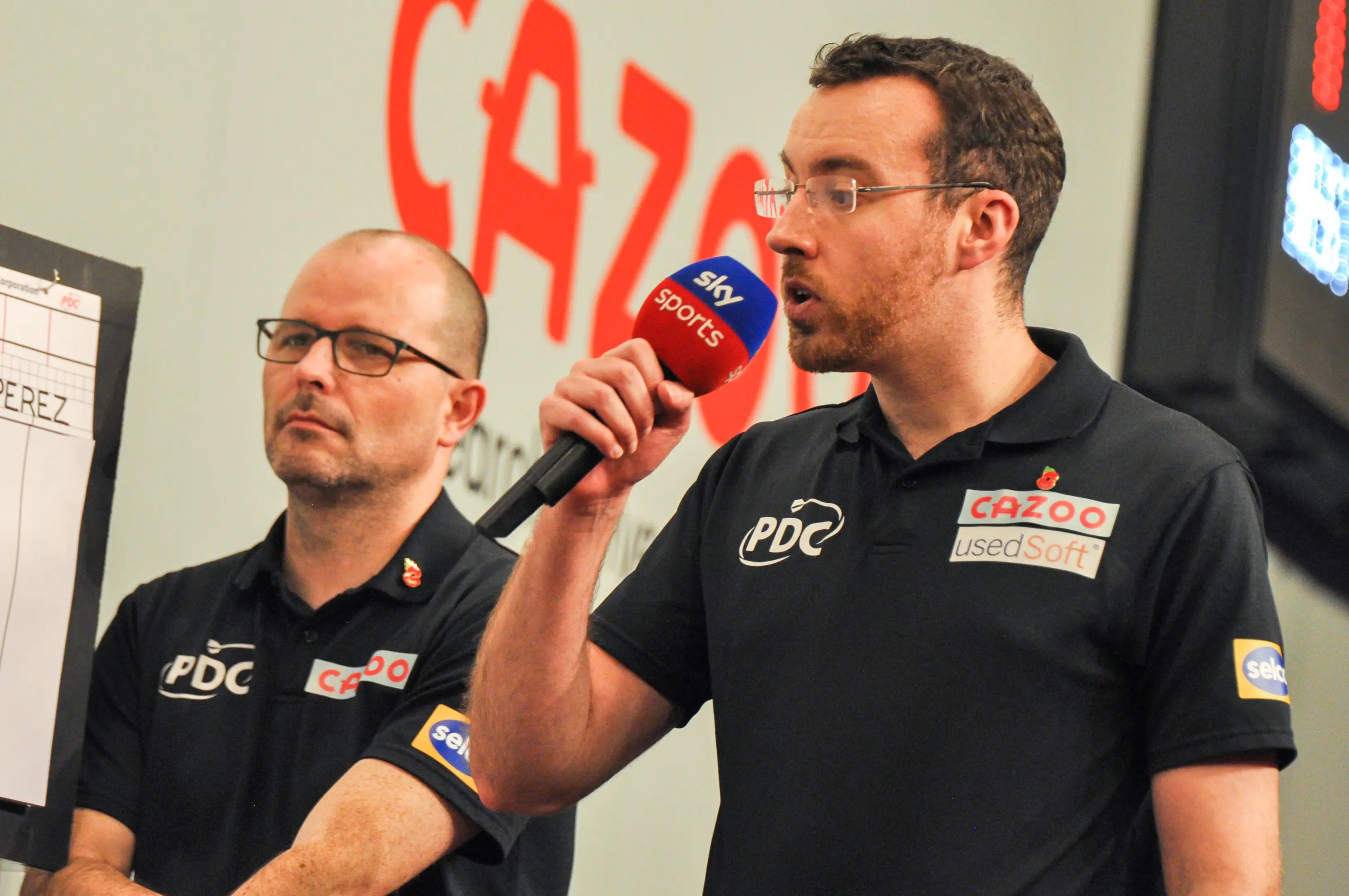
Former BDO World champion Keith Deller, another well-known 'spotter', also opened up about the job in an interview with Daily Star Sport.
“When you see the player needing, say, 106, ‘I’ll go treble 20, single 14, double 16’ so I’ll tell the remote cameras, the director, where I think they’re going to go,” said Deller.
“I think I’ve been the longest spotters there’s ever been. I’m there at all the big tournaments, I feel the atmosphere, it’s great. It’s a tough job to do. No disrespect to the commentators but they can say they’ll go one way and, if they don’t, it doesn’t really matter to them because they’re not the one telling the camera where to go.
"You really have to be alert all the time when you’ve got the likes of Jonny Clayton, who decides to go his own ways. I love doing it and Sky are a brilliant team. It keeps me sharp.”
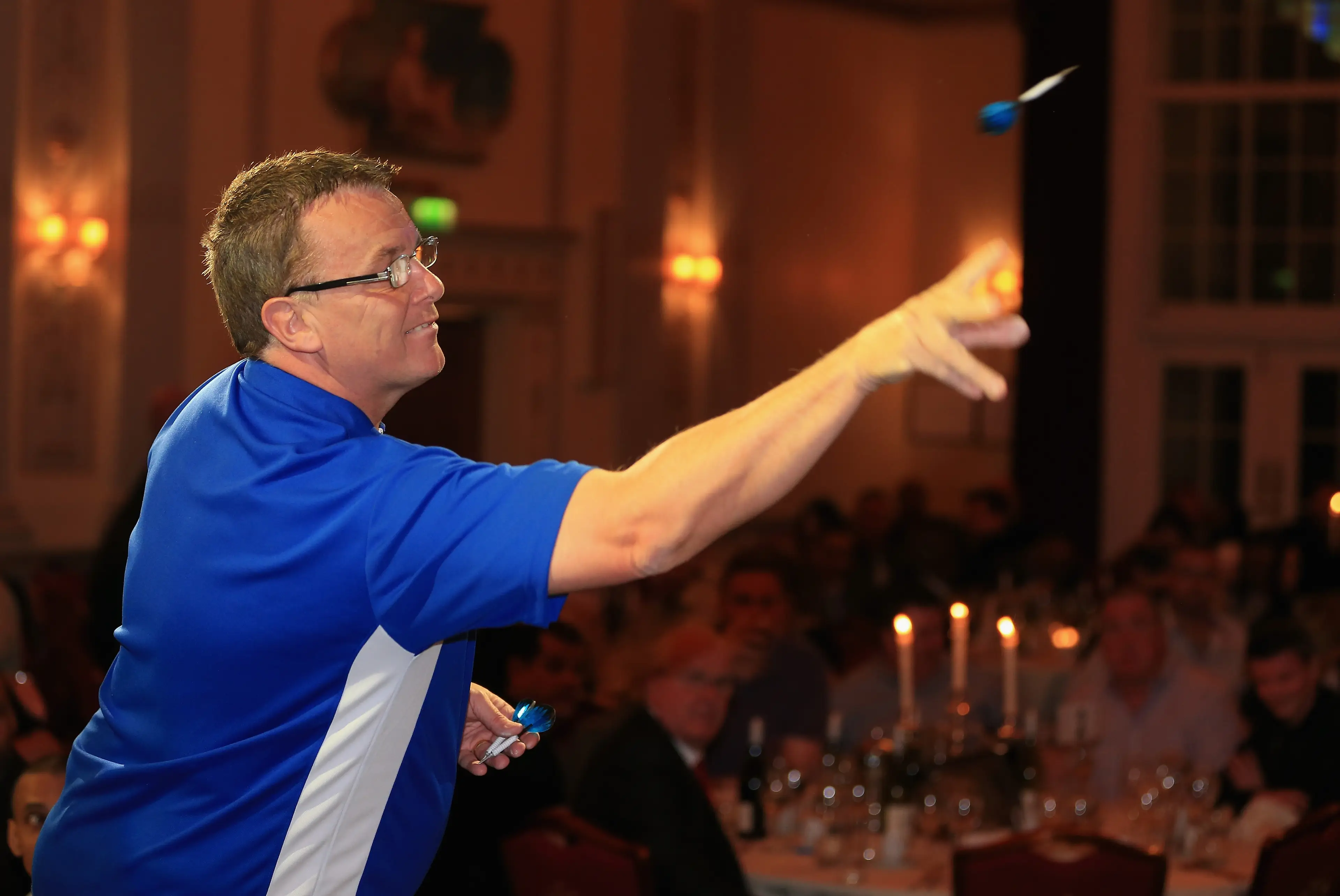
Deller added: “It’s all the different combinations. The most important thing is not to panic. When you’ve got the likes of Michael Smith, who throws very quick, you’ve really got to be on your mettle.
“For instance, if someone wants 25, it’s nine, double eight for quite a few of them. But you’ve got to think ‘what happens if they hit a 12?’ You’ve got to keep an eye out in case they go either side because, when they’re quick, you haven’t got the time to do it.”
Topics: Darts, Luke Littler
 Jack Kenmare