FIFA Has Banned Three Countries From World Cup For 'Political Reasons'

Three countries have been banned from competing at previous editions of the World Cup for political reasons, including Russia, who are still suspended from participation in both FIFA and UEFA competitions.
We are just six months away from the 23rd edition of the FIFA World Cup, which will be the first to feature 48 teams and three host countries – Canada, Mexico and the United States.
On Thursday, a play-off draw was conducted to determine the final four European qualifiers, with Northern Ireland, Wales, and the Republic of Ireland finding out who they will face in March next year.
And in just over two weeks, at the Kennedy Center in Washington, the final draw for the 2026 World Cup will take place at 5pm UK time.
Advert
Among those involved in the 48-team draw are co-hosts Canada, Mexico and the USA, as well as previous competition winners England, France, Germany, Brazil, Spain, Argentina and Uruguay.
Both before and during qualifying, two nations were technically barred from next year's tournament. Russia are currently suspended from playing in FIFA-sanctioned tournaments due to their February 2022 invasion of Ukraine.
They appealed to the Court of Arbitration for Sport but were unsuccessful in their efforts.
Meanwhile, FIFA suspended FECAFOOT, the governing body of the Republic of the Congo, due to 'third-party interference in its affairs'.
Congo are not officially banned from the World Cup, but FECAFOOT cancelled its remaining qualifying matches following the announcement of the suspension.
There were calls for Israel to be banned from the upcoming World Cup over the atrocities in Gaza.
Republic of Ireland boss Heimir Hallgrimsson said he believed the country should be kicked out by both FIFA and UEFA – like Russia were after they invaded Ukraine in 2022.
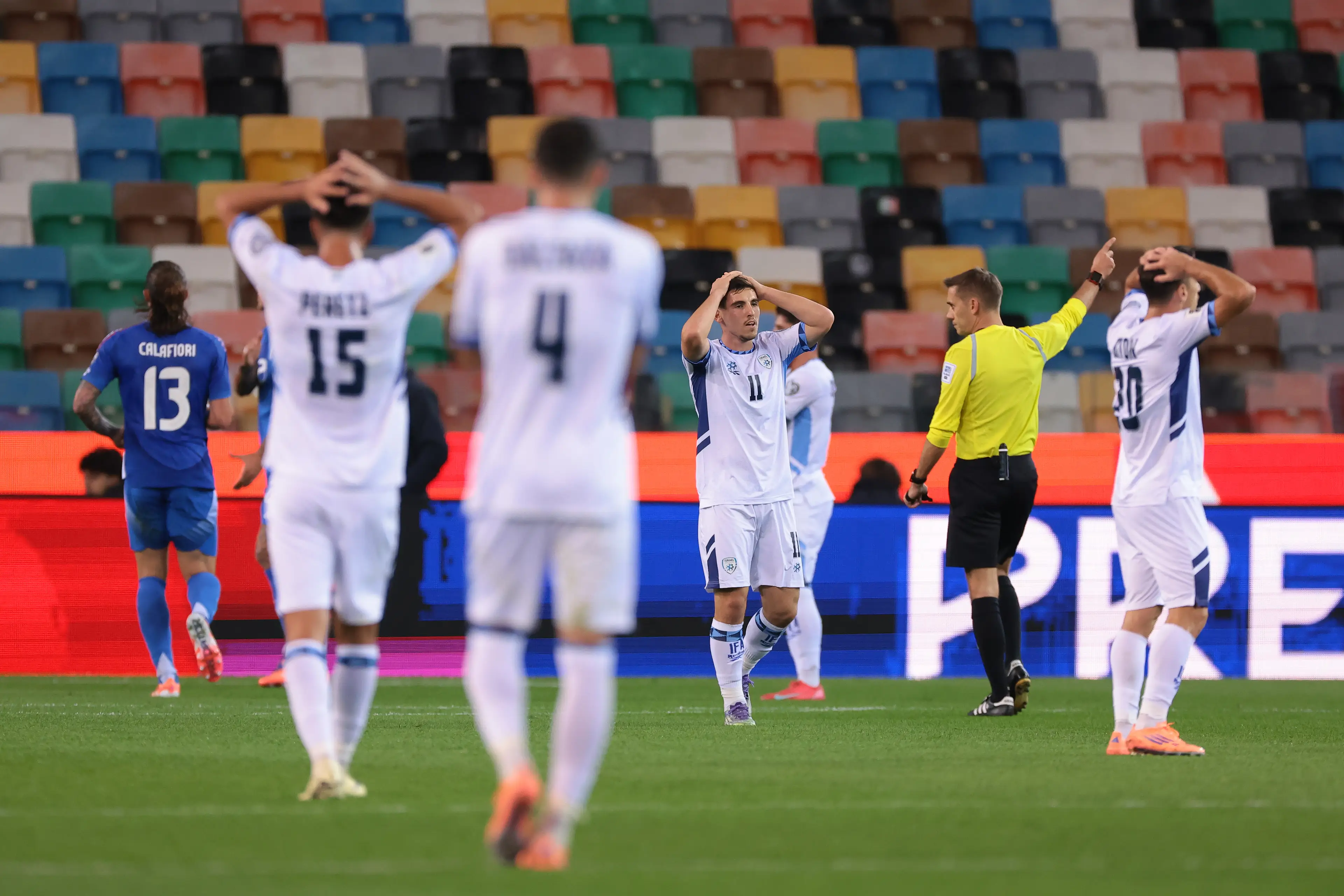
But despite pressure, Israel finished their qualifying campaign, finishing third in Group I behind Italy and Norway.
Over the years, three nations have been banned from the World Cup specifically due to political reasons.
South Africa
During the period of racial apartheid in the country, South Africa were suspended by FIFA in 1961.
The ban would be lifted several years later in 1963, with then-FIFA President Stanley Rous being in support of the apartheid-era South African FA.
FIFA even put South Africa in an Asian qualifying group to avoid them facing African opposition, but other African nations successfully lobbied for the country to be suspended again.
South Africa would be expelled from FIFA entirely in 1976 after Rous was replaced by Joao Havelange, with other sports also choosing to boycott the country entirely.
They were reinstated in 1992 and won the African Cup of Nations in 1996, before hosting the World Cup in 2010. They have also qualified for the 2026 edition.
Yugoslavia
Back in 1992, the Federal Republic of Yugoslavia was banned from international football as part of United Nations sanctions against the country.
Following the breakup of Yugoslavia, the FRY name continued to be used by Serbia and Montenegro, who were still part of Yugoslavia until 2003.
The two nations would then play as Serbia and Montenegro on the international stage, qualifying for the 2006 World Cup. Both nations gained full independence in June 2006.
Russia
After being hosts for the 2018 edition, Russia were banned from both the 2022 and 2026 World Cup tournaments because of the Ukraine invasion.
The ban extends to the youth and women's teams and also applies to the European Championships, with Russian sides also not permitted to play in UEFA competitions.
In 2022, Russia had progressed to play-offs for World Cup qualifying, but their tie with Poland was cancelled and their opponents received a bye to the next round.
Topics: FIFA World Cup, FIFA, US Sports
 Jack Kenmare