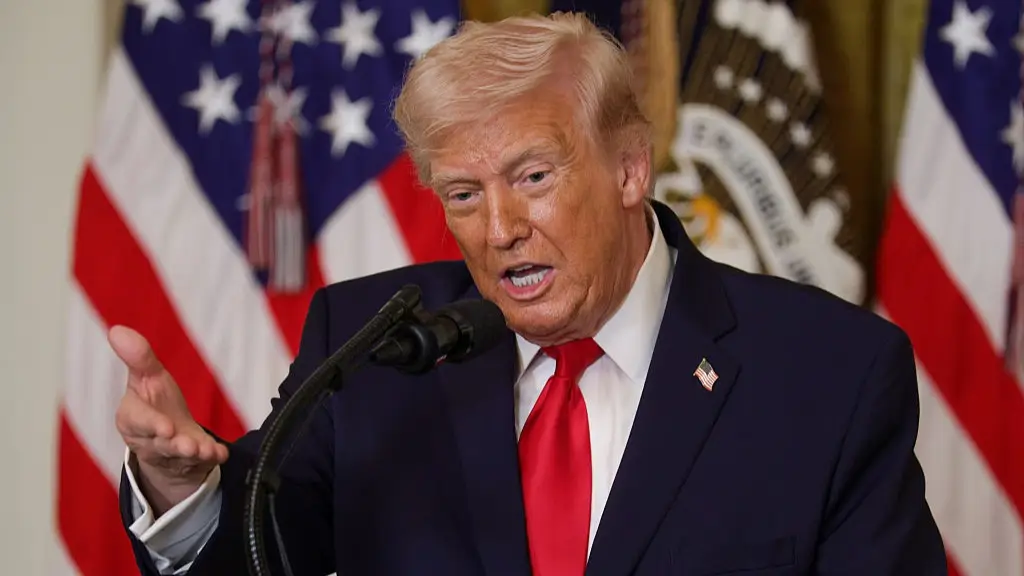
Why Donald Trump lacks power on Iran's participation at World Cup as 'likely decision date' revealed

Despite suggesting that it would not be “appropriate” for Iran to take part in the 2026 FIFA World Cup, US President Donald Trump has little to no say on whether the nation will compete in the tournament, according to a geopolitics expert.
Following a joint US-Israeli strike that killed Iran’s Supreme Leader, Ayatollah Ali Khamenei, in Tehran on 28 February, conflict has spread across the Middle East, with the Islamic Republic responding with retaliatory strikes against Israel, Bahrain, Qatar, Kuwait, the UAE, Oman, Saudi Arabia and Cyprus.
Conflict has also broken out between Israeli forces and the Iran-backed Shia militant group Hezbollah in Lebanon.
Thousands of fatalities have been reported throughout the region, with many more displaced.
Advert
Sport has also been impacted, with Iran’s participation in the World Cup still up in the air.
Iran have already qualified for the tournament and are set to play all three of their group matches – against New Zealand, Egypt and Belgium – in the US.
On 11 March, FIFA President Gianni Infantino addressed the matter and claimed that Trump told him that Iran are “welcome to compete in the tournament in the United States”, despite the nation's sports minister Ahmad Donyamali having suggested that the country will not take part in the 2026 World Cup.
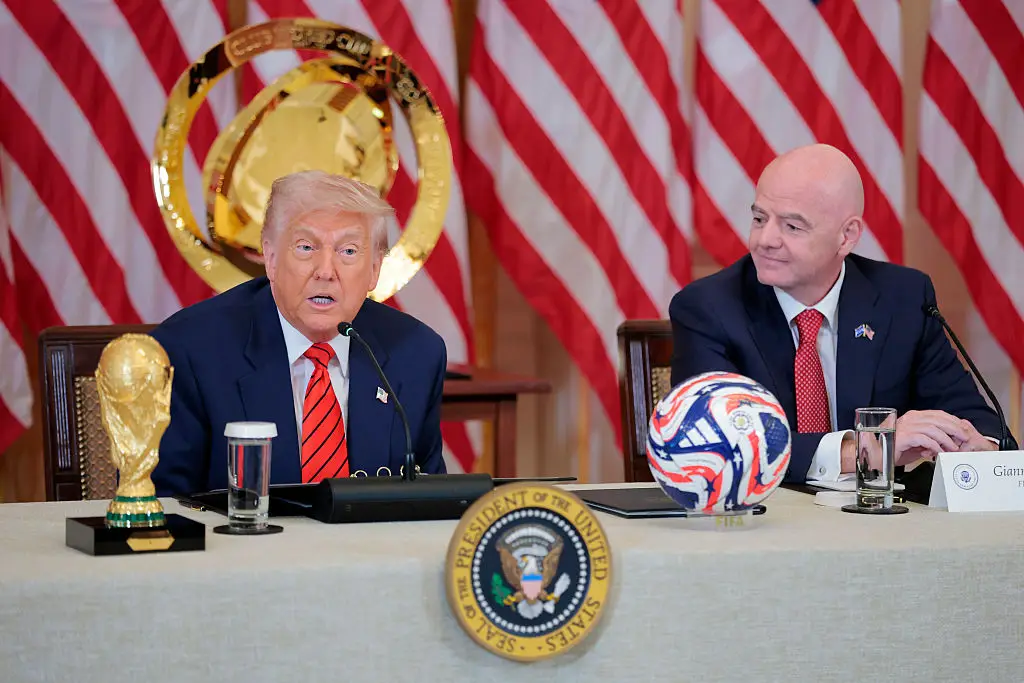
Trump provided an updated stance on the matter via Truth Social on 12 March.
“The Iran national soccer team is welcome to the World Cup, but I really don’t believe it is appropriate that they be there, for their own life and safety,” the 79-year-old wrote.
But Trump is effectively powerless on whether Iran are allowed to compete, with the World Cup under the control of FIFA, not the US government or any other political organisation.
Speaking exclusively to SPORTbible, geopolitics expert Professor Simon Chadwick, who has advised global organisations such as FIFA and Barcelona, explained how Trump has “little if any influence” on the decision-making process with regards to Iran’s participation.
However, he added: “But in practice, and especially given his relationship with Infantino, there could be both diplomatic pressure and tangible measures put in place by the government in DC that ultimately lead to a more favourable outcome for the US administration.”
Given the fact that no nation has ever withdrawn from a World Cup after qualifying, a precedent is not in place, meaning the exact process of how a decision will be made is unclear.
However, Chadwick suggests that an official call may be made next month.
He said: “One imagines that late April is perhaps the latest possible point at which a decision can be made, though realistically such a decision needs to come sooner. If Iran is to be excluded, then one imagines that this will be confirmed by early to mid-April.”
If Iran were excluded, either Iraq or the United Arab Emirates would likely replace them at the World Cup after finishing second in their respective qualifying groups.
Topics: FIFA World Cup, Donald Trump, Gianni Infantino, Spotlight
 Luke Davies