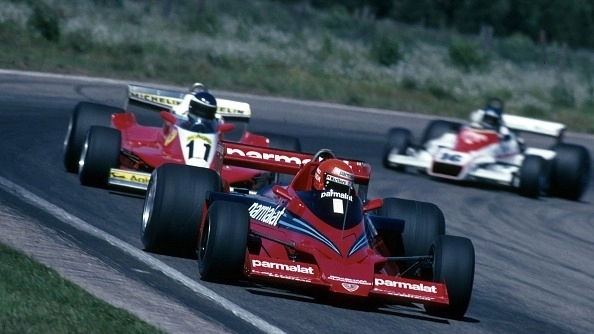
F1 Team Were Forced to Withdraw Car That Won Grand Prix In Its Only Race

One Formula 1 car holds the record of having a 100 per cent win rate - because its team were forced to withdraw it after just one Grand Prix.
Back in 1978, F1 icon Niki Lauda was the defending Drivers' Champion, having won the title in what proved to be his final season with Ferrari in 1977.
Throughout the season, it was widely expected that team owner Enzo Ferrari was planning to replace Lauda.
The Austrian pulled out of the season-ending and rain-soaked 1976 Japanese Grand Prix over visibility issues caused by his infamous fireball crash at the Nurburgring - a decision that ultimately allowed rival James Hunt to win the championship instead.
Advert
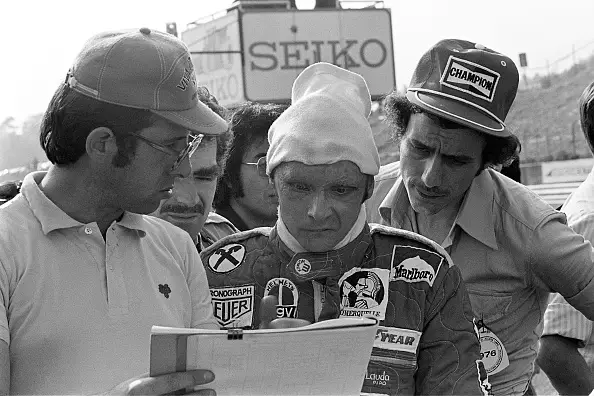
After winning the 1977 title with two races to spare, Lauda immediately walked out of Ferrari and signed for Brabham for 1978.
On paper, it wasn't exactly the obvious move for the defending champion, with Brabham only finishing fifth in the 1977 season.
But the FIA brought in a series of regulation changes for the 1978 season, and Brabham's South African chief designer Gordon Murray had began work on the new car early in 1977.
For the first two races, however, Brabham continued to run their 1977 car, with Lauda picking up second and third-placed finishes.
The Brabham BT46, as it was known, was extremely unreliable, with Lauda retiring from four of the opening seven races.
But when it did complete a full race distance, it was competitive, with Lauda finishing second in Monaco and team-mate John Watson finishing third, fourth and fifth in the three of the opening seven races he completed.
The other problem Brabham, Murray and team boss Bernie Ecclestone had was the sheer pace of the Lotus team.
At race seven in Spain, Mario Andretti and team-mate Ronnie Peterson locked out the front row, with Andretti qualifying a second faster than the Ferrari of Carlos Reutemann in third.
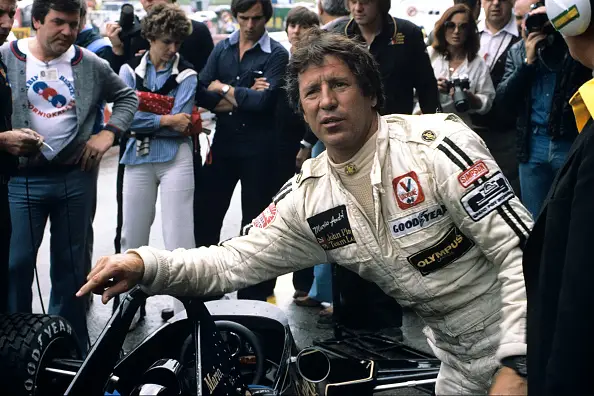
Andretti delivered three commanding victories in the first seven races, leaving rival teams scrambling to find a way to match him.
Murray believed he had found just the solution, with a revolutionary concept that had only ever been tried in sports car racing.
Lotus design engineers Colin Chapman and Peter Wright had devised ground effect technology on their cars from 1977 onwards, which essentially reduced air pressure under the car and created significantly increased downforce levels.
In 1978, they added Venturi tunnels under the car to further improve downforce and reduce drag, as well as solving major reliability issues.
The tunnels were wing-shaped and placed underneath the sidepods on each side.
In an era where downforce on F1 cars was still in an experimental phase, Lotus' concept was pioneering, and left other teams desperate to try and rival it.
Murray decided to install a fan at the rear of the car's gearbox, which both assisted in cooling the car's Alfa Romeo engine and create negative air pressure underneath the car.
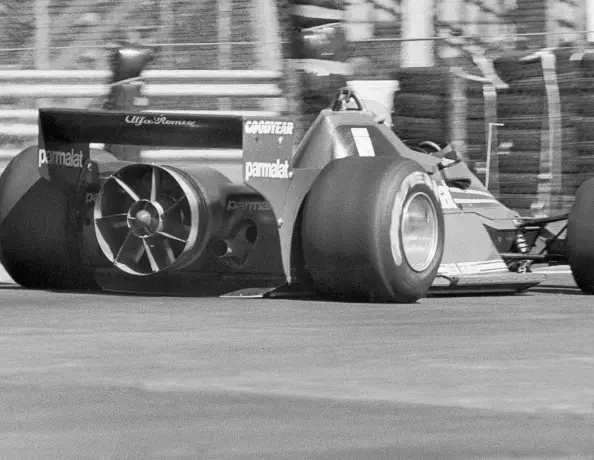
It also had a large single water radiator which was placed on top of the engine.
The fan was able to suck the air away from the gearbox area and instead funnel it through the radiator.
The FIA had banned what were described as 'moveable aerodynamic devices', but Murray and Brabham successfully argued within the rules that the fan's main purpose was to cool the engine.
But the car, now known as the Brabham BT46B, was also significantly effective in closing the huge gap to the Lotus cars.
As part of the new design, a clutch system was added and the engine bay sealed, while Lauda and Watson had to alter their driving style to avoid the car being 'sucked' towards and into the ground when accelerating out of corners.
What happened next?
Lauda himself would state years later that he did not enjoy driving the car, but took a commanding win by 34 seconds in the 'fan' car's debut race at the Swedish Grand Prix.
There were some caveats to the win, as Andretti had been battling Lauda closely for first place before his engine blew on lap 46 of 70.
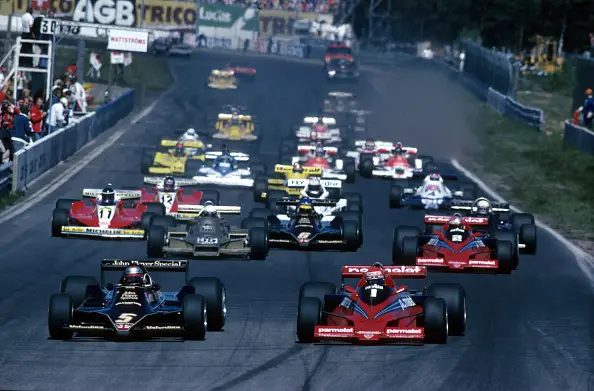
But there were suggestions that Lauda had purposely managed his car's pace so as to not show off its true performance.
As per reporter Denis Jenkinson, five teams had lodged official protests against the 'fan' car before the race got underway, as they disagreed with Brabham's argument that the primary function of the 'fan' device was to 'draw air through the radiator and cool the engine'.
McLaren, Tyrell, Surtees and Williams, as well as Lotus, all argued against the car's design, claiming it enhanced and influenced aerodynamic performance and therefore had to be fixed in place.
With the teams failing to get the car banned before the race, Brabham boss Ecclestone - who was also head of the Formula One Constructors' Association (FOCA) - told his driver to qualify on full tanks of fuel and on hard tyres.
They still qualified second and third, however, before Lauda's dominant victory.
Andretti and Lotus boss Chapman would later argue that the Brabham was extracting stones and dirt from the back of the car, and was therefore a safety concern for other drivers - something Murray disagreed with.
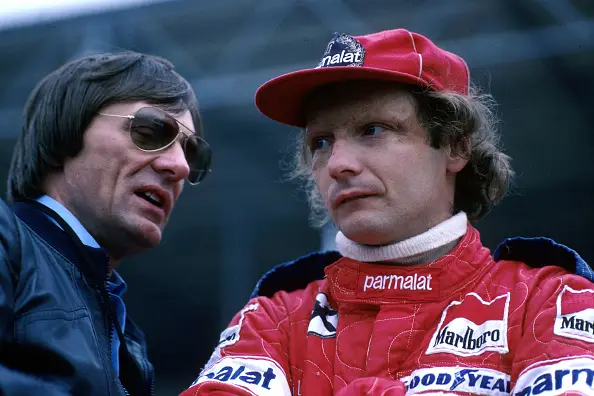
That was eventually what caused the car to be withdrawn and never used again, with Ecclestone deciding to do so amid increasing pressure from FOCA.
He had attempted to continue using the car for a limited amount of time, but Brabham were forced to change their design and eventually finished in third place in the Constructors' Championship.
Andretti, meanwhile, won the Drivers' Championship with two races to spare, though Lotus' season ended in tragedy as his team-mate Peterson was involved in a fatal crash at the Italian Grand Prix.
Lauda was fourth in the standings, having recorded finishes of second, third and first after the banning of the 'fan' car.
The Austrian had an incredible record of finishing on the podium in every race he completed - but sadly for him, he only finished seven races and retired from the other nine.
 Ryan Smart