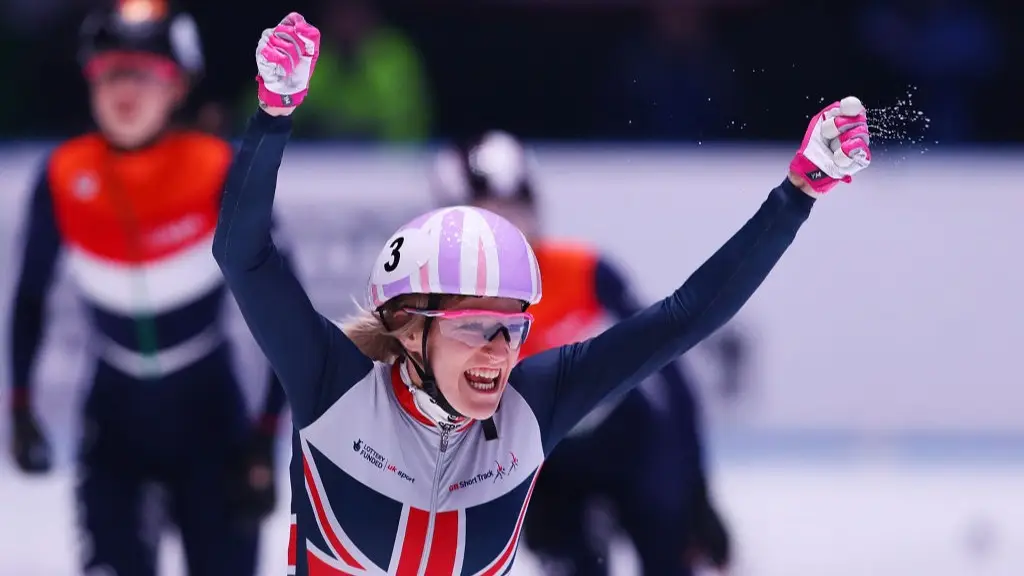
Ex-Team GB Star Turned to OnlyFans After Olympic Dream Ended

A former Winter Olympics speed skater has seen her life take a completely different path since retiring from the sport.
After retiring from sport, many athletes are set for life financially, while others lean on their experiences before going into coaching, mentoring or the media.
However, this is not always the case for Olympic athletes, who often struggle to make ends meet during and after their careers.
As reported by BBC Sport, Team GB athletes do not receive additional money for winning medals but do receive funding to train.
Advert
Living and sporting costs are covered by the Athlete Performance Award (APA), which is funded by the National Lottery.
UK Sport assesses recipients each year, with the awarded funds decided based on a grading system.
Grade A and B athletes are seen as likely medal winners, while Grade E athletes are deemed entry-level.
The highest payment awarded is thought to be around £65,000.
As a result of the relatively low wages compared to other athletes, such as footballers, some athletes have struggled to live once their careers were over.
This has been the case for former speed skater Elise Christie.
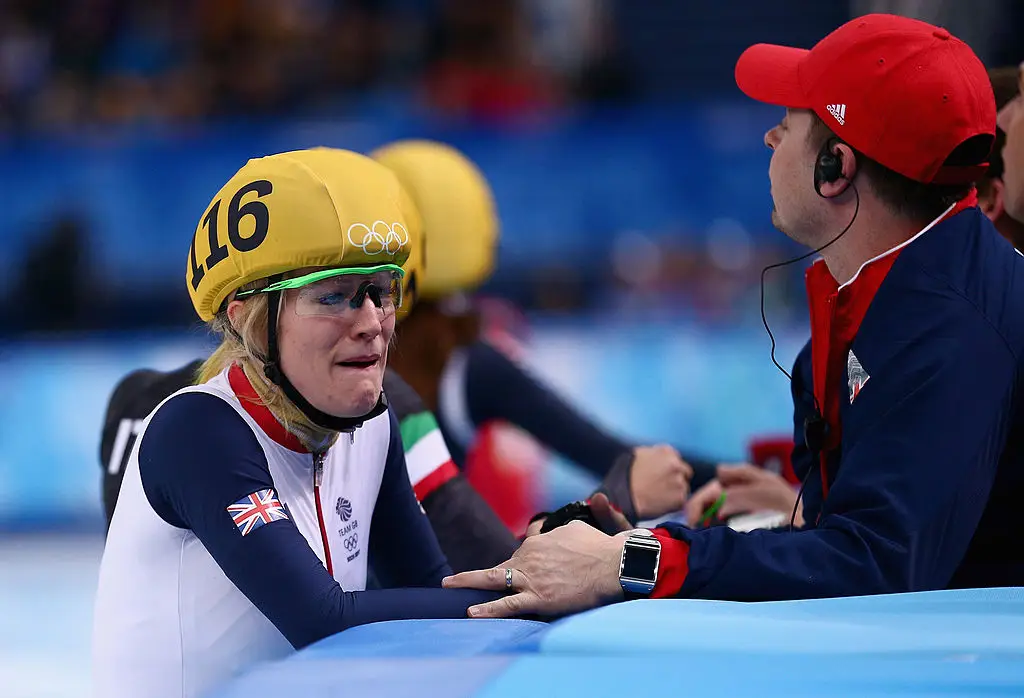
Christie, 35, is considered to be one of Great Britain’s greatest short track speed skaters, having competed at three Winter Olympics in Vancouver, Sochi and PyeongChang between 2010 and 2018.
After being disqualified from three events in Sochi, she later crashed and missed out on two further races in PyeongChang.
Christie then missed out on qualifying for the 2022 Games in Beijing after suffering an ankle injury.
She retired in 2021 and has since created an OnlyFans account, selling adult content, while also working at Pizza Hut.
The 35-year-old opened up about her struggles during an in-depth interview with The Telegraph released on Saturday (February 14).
Christie explained how she receives around £5,000 for every 700 subscribers to her account.
“I’m trying to get to the point where I’m not doing it, but it’s not easy financially,” she explained.
“It’s very different from anything I would have imagined doing. It all started before I was diagnosed with bipolar disorder.
"I probably never would have done it with that diagnosis, but I do believe that it got me out of a very difficult time.
"I learned to use it in a way that I felt comfortable. And everyone does use it differently – it isn’t just what people think it is.
"At the same time, I did go over it for a long time in my head. In the end, I decided that being slagged off for this had nothing on being slagged off for my skating, something I dedicated my life to and apparently failed at.
"I just thought: ‘What are they actually going to say?’”
The Scot then detailed how, despite some of her close friends being supportive of her venture, others have cut ties with her as a result of her content creation.
She added: “This isn’t my long-term goal in life. I want to be involved in sport. But at the minute, it helps keep me afloat. My full-time job is difficult for the money I make. It was lovely to be funded to skate, but unless you’re in a very heavily sponsored sport, it doesn’t give you a life once you stop. I imagine that if I were a 100-metre runner, it would be a different story. If you spent 17 years of your life on something else, you wouldn’t be in this financial situation. People need to consider that a little before judging Olympic athletes.”
 Luke Davies